
In this article5 sections
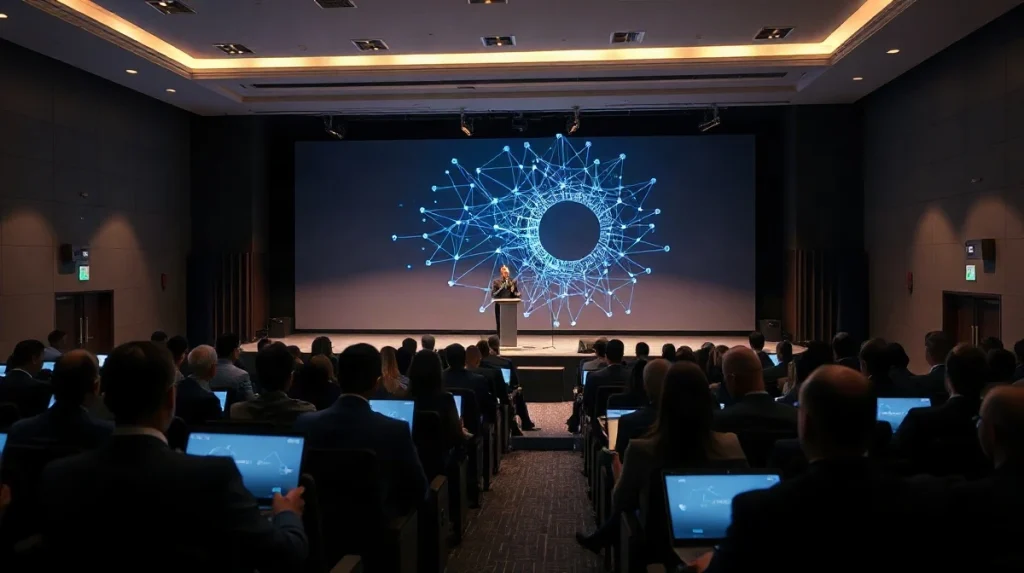
Ripple used its XRP Seoul 2026 keynote to put numbers behind its agentic-payments pitch: the XRP Ledger is now processing more than 2.7 million transactions per day, and AI agents account for 25% of that activity, Coinpedia reported from the event. Ripple President Monica Long framed the shift around two growth curves, saying tokenized real-world assets are projected to expand from $6 billion to $30 billion while AI agent transactions climb from 10 million to 100 million.
Key facts
- XRPL daily throughput exceeds 2.7 million transactions, with AI agents at 25% of activity, per the XRP Seoul 2026 keynote.
- Ripple unveiled XRP Asia, an independent entity led by Sabrina Tachdjian, formerly a VP at the Hedera Foundation, with backing from Ripple, the XRPL Foundation and XRPL Commons.
- JB Bank signed with Ripple Payments to launch personal remittances to Southeast Asia, including Vietnam, by mid-December, with corporate remittances and a stablecoin service to follow.
- Woori Bank and Kbank said they are exploring blockchain-based settlement infrastructure to cut T+1 and T+2 delays.
- Tria rolled out a self-custodial neobank for XRP and RLUSD across 150 countries, including borrowing against XRP and a Visa card offering up to 6% cashback.
Korean banks move from pilots to timelines
The most concrete commitments on the agenda came from Korean institutions. JB Bank has signed with Ripple Payments to run personal remittances into Southeast Asia, Vietnam among the corridors, with a mid-December target. Corporate remittances come later, and the bank is aiming at a stablecoin-based remittance product once expected legislation lands in the first half of next year.
 Also readXRPL's Batch and Permission Delegation Amendments Near Mainnet Activation
Woori Bank and Kbank took a different angle, describing work on back-end settlement infrastructure. Their stated goal is to move past fragmented legacy ledgers and the T+1 and T+2 settlement windows that still govern much of the system, arguing on-chain rails could support near-instant transactions and continuous operations. On a separate panel, Kyobo Securities pointed to money market funds as one asset class where tokenization could allow collateral and liquidity to move around the clock, a shift that would push banks from pure intermediation toward running platforms for both digital and traditional assets.
XRP Asia and the agentic wallet stack
Ripple’s new regional vehicle, XRP Asia, is modeled on Europe’s XRPL Commons and is meant to work with local hubs such as XRPL Korea. Its stated focus spans developer training, micro-grants, early-stage investments and go-to-market help, organized around technology, startup success, community and marketing. South Korea is singled out as an important ecosystem market, with retail applications, AI-powered payments and enterprise use cases beyond traditional fintech on the target list.
 Also readRippleX Ships XRPL AI Starter Kit v1.1 With Stripe and Tempo MPP Support
On the product side, T54 introduced a native agentic wallet on the XRP Ledger that lets AI agents execute payments in XRP or RLUSD within pre-approved, user-set limits. T54 is also building identity and dispute tooling around it — Know Your Agent verification, spending caps, and on-chain chargeback mechanisms — with Ripple, Mastercard and AWS named as partners. Tria, meanwhile, expanded its self-custodial platform to 150 countries and added the ability to borrow against XRP and route yield to a Visa card rather than sell holdings.
Why it matters
The AI-agent share of XRPL activity is the figure that reframes the network’s pitch. An agentic wallet and a KYA verification layer are attempts to solve the trust problem that keeps autonomous payments at pilot scale, and the partners attached to that work matter as much as the technology. For Korean banks, moving settlement on-chain would change their role from intermediaries to operators of programmable asset platforms — and the remittance and stablecoin timelines suggest at least some of that is now scheduled rather than theoretical.
What to watch
JB Bank’s mid-December target for personal remittances to Southeast Asia is the nearest hard date. The stablecoin remittance service depends on legislation expected in the first half of next year, and whether XRP Asia converts its grants and training programs into measurable XRPL activity will test the regional strategy.
This article is not financial advice, and cryptocurrency markets are volatile and uncertain.
Source: Coinpedia