Why Decentralized Exchanges Are Gaining Ground: A Q&A with Truth Ventures Founder Varun Datta
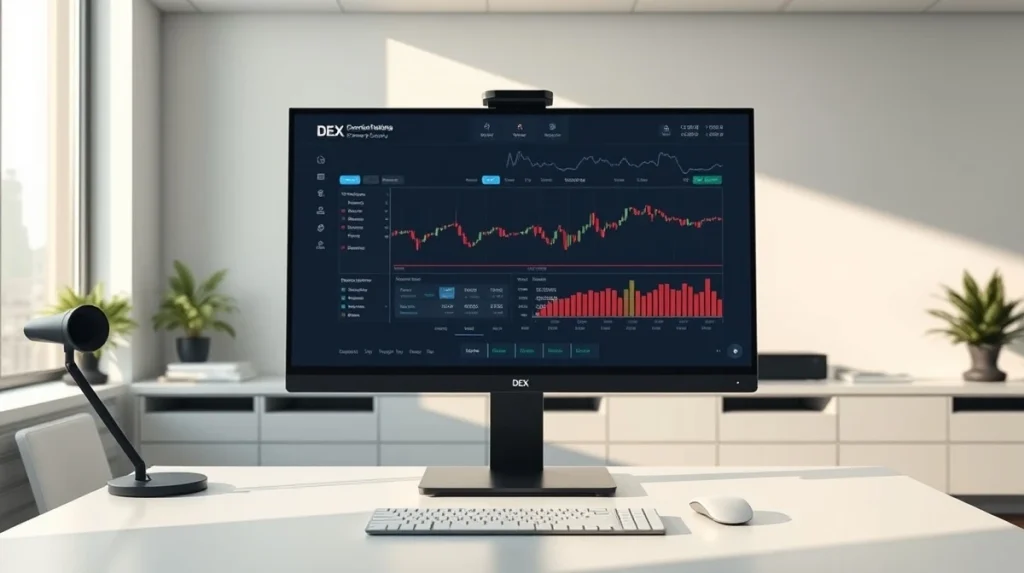
Decentralized exchanges (DEXs) are experiencing a notable surge in trading volume and user adoption, challenging the dominance of centralized platforms. To understand the driving forces behind this shift, we spoke with Varun Datta, founder and CEO of Truth Ventures, a venture capital firm focused on decentralized finance and blockchain infrastructure.
The Shift Toward Self-Custody and Trust
According to Datta, the primary catalyst for DEX growth is a fundamental change in user priorities. Following several high-profile failures of centralized exchanges, traders are increasingly seeking platforms that allow them to retain control of their private keys. “The market has learned a painful lesson about counterparty risk,” Datta explained. “Users now value self-custody and transparency over convenience.”
Also read: NIGHT Price Stays Under Pressure Despite Midnight’s Token Terminal Partnership
Data from industry trackers supports this trend. Monthly trading volumes on major DEXs have grown steadily over the past year, with some weeks seeing volumes exceeding $100 billion across all chains. This growth is not limited to Ethereum; Solana, Arbitrum, and Base have all seen significant DEX activity, driven by lower fees and faster transaction times.
Regulatory Environment and Innovation
Datta also highlighted the role of regulatory uncertainty in the United States. While centralized exchanges face increasing scrutiny from the SEC and CFTC, DEXs operate in a more decentralized legal gray area. “Regulators are still figuring out how to apply securities laws to code-based protocols,” he noted. “This ambiguity, while risky, has allowed DEXs to innovate faster without the same compliance overhead.”
Also read: Telegram-Linked TAC Token Crashes 90% in 15 Minutes: What Happened?
However, Datta cautioned that this window may not remain open indefinitely. He pointed to the European Union’s Markets in Crypto-Assets (MiCA) regulation, which includes provisions for decentralized platforms, as a potential template for future U.S. policy. “The industry needs clear rules to thrive long-term. Uncertainty helps in the short term, but clarity builds sustainable markets.”
What This Means for Retail and Institutional Investors
For everyday traders, the rise of DEXs means more options for trading without intermediaries, but also greater personal responsibility. Unlike centralized exchanges, DEXs do not offer customer support or fraud recovery. Users must manage their own security, including seed phrases and wallet connections.
Institutional investors, meanwhile, are beginning to explore DEXs through aggregators and compliance-friendly interfaces that offer know-your-customer (KYC) layers on top of decentralized protocols. “We are seeing a hybrid model emerge,” Datta said. “Institutions want the security of self-custody combined with the regulatory compliance of traditional finance.”
Conclusion
The momentum behind decentralized exchanges reflects a broader maturation of the cryptocurrency market. As users become more educated about the risks and benefits of different trading venues, DEXs are positioned to capture a growing share of global crypto volume. For investors, understanding the operational and security differences between centralized and decentralized platforms remains essential. The conversation with Varun Datta underscores that while DEXs offer compelling advantages, they also demand a higher level of user diligence.
FAQs
Q1: What is the main advantage of using a decentralized exchange over a centralized one?
Users retain full control of their private keys and funds, eliminating counterparty risk from the exchange operator. Transactions are executed directly on-chain via smart contracts.
Q2: Are decentralized exchanges regulated?
Regulation varies by jurisdiction. In most countries, DEXs operate in a less regulated environment than centralized exchanges, but regulators are increasingly examining how to apply existing securities and anti-money laundering laws to decentralized protocols.
Q3: Is it safe to trade on a DEX?
DEXs are generally secure if the underlying smart contracts are audited and the user follows best practices, such as using hardware wallets and avoiding phishing sites. However, users are solely responsible for their own security, as there is no customer support to reverse transactions.