Can Solana Flip XRP? A Data-Driven Analysis of Market Cap and Network Momentum
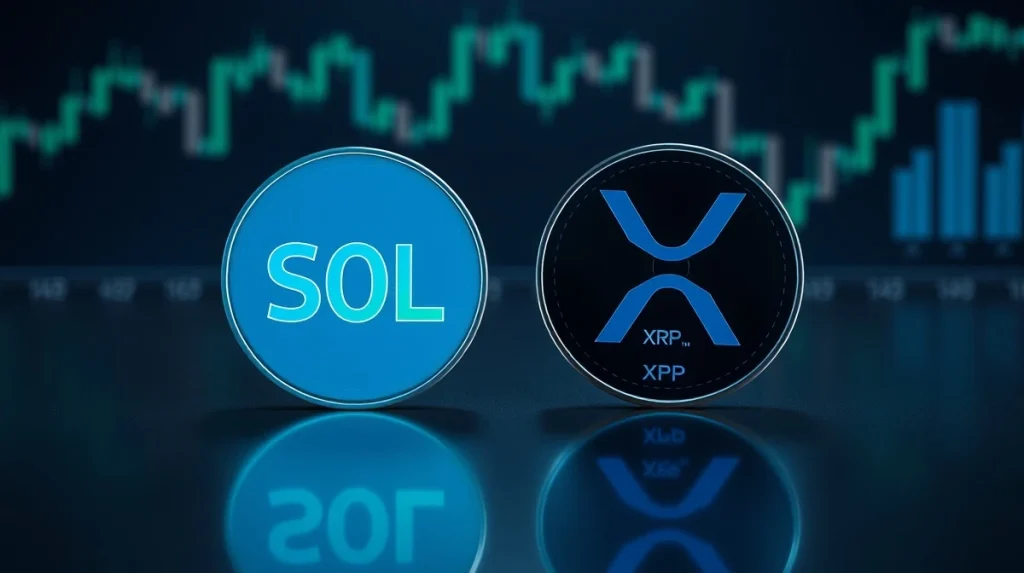
Solana (SOL) and XRP (Ripple) have been locked in a tight race for the fourth-largest cryptocurrency by market capitalization since late 2025. As of March 15, 2026, XRP holds a market cap of approximately $85 billion, while Solana sits at roughly $80 billion — a gap of just $5 billion that has narrowed by 40% over the past six months.
The question of whether Solana can “flip” XRP is not merely a speculative parlor game. It reflects deeper shifts in investor preference, network utility, and regulatory perception that have real consequences for portfolio allocation, developer mindshare, and institutional adoption.
Also read: How Much XRP Do You Really Need to Retire? A 2026 Reality Check
Network Activity and Developer Momentum
Solana’s edge is most visible in on-chain activity. The network processes over 2,000 transactions per second on average, with daily active addresses exceeding 1 million, according to data from Artemis. XRP’s ledger, by contrast, handles around 1,500 TPS with fewer daily active addresses, though the average transaction value on XRP is significantly higher due to its wholesale cross-border payment use case.
Developer activity also favors Solana. Electric Capital’s 2025 Developer Report ranked Solana second only to Ethereum in total monthly active developers, while XRP did not crack the top ten. This developer concentration has fueled a surge in Solana-based DeFi protocols like Jupiter and Marinade, which now collectively hold over $12 billion in total value locked.
Also read: Cardano (ADA) Jumps 27%: Network Records, ETF Hopes, and the Road to $1.50
Regulatory Clarity: XRP’s Trump Card
XRP’s partial legal victory against the U.S. Securities and Exchange Commission in July 2023 — when a federal judge ruled that programmatic sales of XRP on exchanges did not constitute securities transactions — gave Ripple a regulatory clarity that Solana currently lacks. That ruling has allowed XRP to maintain listings on major U.S. exchanges and pursue institutional partnerships with banks like Santander and SBI Holdings.
Solana, meanwhile, faces an unresolved question: the SEC’s lawsuit against Binance, filed in June 2023, named SOL as an unregistered security. That case remains ongoing, and until it is resolved, some U.S. institutional investors remain cautious about allocating to Solana.
The ETF Factor
Both assets are awaiting potential spot ETF approvals in the United States. XRP’s ETF filings from Bitwise and 21Shares have been acknowledged by the SEC, with a final decision expected by mid-2026. Solana’s ETF applications from VanEck and 21Shares face a similar timeline, though the SEC has historically been more hesitant to approve products for assets named in enforcement actions.
Bloomberg Intelligence ETF analyst James Seyffart has noted that “an XRP ETF is more likely to be approved first given the existing regulatory clarity, but a Solana ETF would have a larger addressable market of retail investors.” A spot ETF approval for either asset would likely trigger a significant price rally and could determine which asset flips the other.
Institutional Adoption and Real-World Use
XRP’s primary use case — cross-border payments — has seen measured adoption. Ripple’s payment network, RippleNet, now processes over $20 billion in annual payment volume, according to the company’s 2025 year-end report. However, the broader market for blockchain-based payments has grown more slowly than many predicted, and competition from stablecoins and central bank digital currencies has intensified.
Solana’s institutional adoption has centered on decentralized finance and non-fungible tokens. Major brands like Shopify and Visa have integrated Solana for payments and settlement, while the network’s low transaction costs have made it a preferred platform for micropayments and gaming. Solana’s validator set also includes institutional participants like Jump Crypto and Coinbase Cloud, providing a degree of institutional validation.
Frequently Asked Questions
What is the current market cap difference between Solana and XRP?
As of March 2026, XRP holds a market cap of approximately $85 billion, while Solana is around $80 billion, a gap of roughly $5 billion.
Why are analysts comparing Solana and XRP?
Both are major Layer-1 blockchains with strong communities and institutional interest, and their market capitalizations have converged as Solana’s DeFi and NFT ecosystems have grown rapidly.
What could cause Solana to flip XRP?
Key catalysts include a spot SOL ETF approval in the U.S., continued growth in Solana’s daily active users and transaction fees, and any negative regulatory news for Ripple.
What advantages does XRP still hold over Solana?
XRP benefits from clearer regulatory status in the U.S., established cross-border payment partnerships with major banks, and a more centralized governance model that some institutions prefer.
How does network activity compare between Solana and XRP?
Solana processes over 2,000 transactions per second with daily active addresses exceeding 1 million, while XRP’s network handles around 1,500 TPS with fewer active addresses, though XRP’s transaction value is often higher.