Why Crypto and Stocks Are Falling Today: March 10 Market Sell-Off Explained
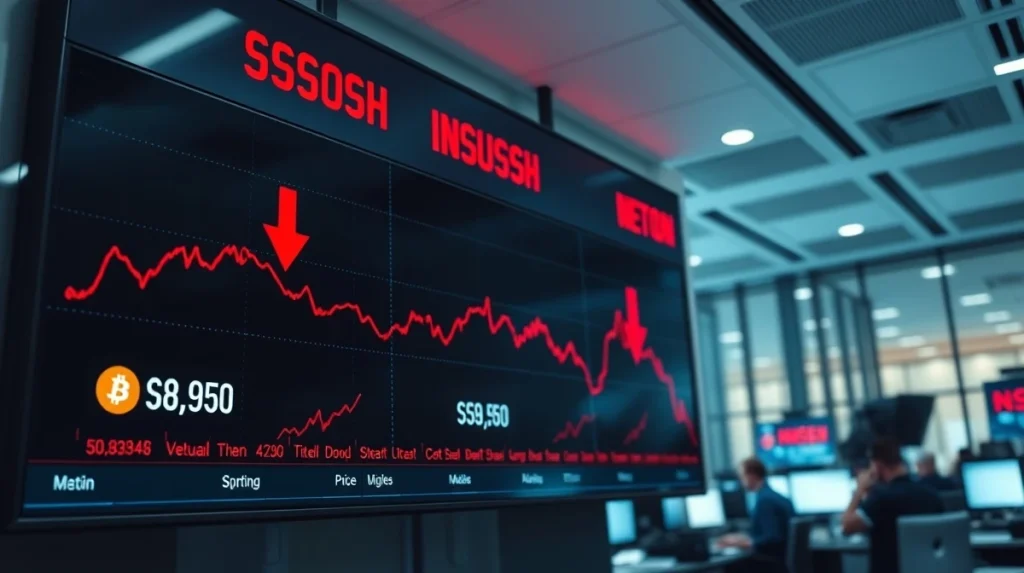
Bitcoin fell below $60,000 for the first time in two weeks on March 10, 2026, as a broad market sell-off swept through both cryptocurrency and traditional equity markets. The S&P 500 dropped 2.1% by early afternoon trading, while the tech-heavy Nasdaq Composite lost nearly 3%, its steepest single-day decline since December 2025.
The coordinated downturn follows a series of economic data releases and policy signals that have reignited recession fears among institutional investors. Friday’s U.S. jobs report showed only 112,000 new nonfarm payrolls added in February, well below the 185,000 consensus estimate, while the unemployment rate ticked up to 4.2%. That weak labor market data, combined with fresh tariff announcements from the White House over the weekend, sent risk assets into a tailspin.
Also read: Bitcoin ETF Outflows Hit $389.71M, Largest in Six Weeks, as Ethereum ETFs Show Resilience
Tariff Escalation and Recession Fears Drive the Sell-Off
President Trump announced on March 8 an additional 10% tariff on all Chinese imports, effective immediately, citing stalled negotiations over intellectual property enforcement. China’s Ministry of Commerce responded within hours, vowing “countermeasures that will protect Chinese interests,” though specific retaliatory tariffs have not yet been detailed.
The renewed trade tensions come at a fragile moment for global supply chains. The Institute for Supply Management’s February manufacturing index had already dipped to 48.6, indicating contraction. Analysts at Goldman Sachs revised their Q1 2026 GDP growth forecast down to 1.2% annualized, down from 2.1% just a month ago.
Also read: Citi Rolls Out Bitcoin Custody for Institutional Clients via Custody+ Platform
“Investors are pricing in a higher probability of recession,” said Lisa Chen, chief market strategist at Sterling Capital Advisors, in a note to clients. “When you combine weak hiring data with escalating tariffs, it’s a one-two punch that hits corporate earnings expectations hard. Tech and crypto, which trade on future growth narratives, are getting hit the hardest.”
Bitcoin and Crypto Markets: Correlation with Tech Stocks Intensifies
Bitcoin’s 4.5% drop on March 10 pushed it to $58,300, erasing gains accumulated over the previous week. Ethereum fell 5.8% to $2,950, while Solana and Cardano each lost more than 7%. The total cryptocurrency market capitalization declined by roughly $80 billion in a single day, according to CoinGecko data.
The sell-off underscores a trend that has been strengthening since late 2025: Bitcoin’s 90-day correlation with the Nasdaq-100 now stands at 0.72, up from 0.45 a year ago. When tech stocks fall on macroeconomic concerns, crypto increasingly falls with them.
“Bitcoin is no longer a non-correlated asset,” noted James Park, a crypto market analyst at Blockfyre Research. “It behaves like a high-beta tech stock in this macro environment. Until we get a clear signal on rates or a resolution on tariffs, the downside risk remains.”
The sell-off also triggered a wave of liquidations in the crypto derivatives market. Over $320 million in long positions were liquidated across major exchanges in the 24 hours ending at 2 p.m. Eastern Time, according to Coinglass data, the largest single-day liquidation event since January.
What to Watch Next: Fed Meeting and Trade Talks
The Federal Reserve’s next policy meeting is scheduled for March 18–19. Markets are now pricing in a 68% probability that the Fed will hold rates steady, but the CME FedWatch Tool shows a growing minority — 32% — expecting a quarter-point rate cut to cushion the economic slowdown.
Trade negotiations between the U.S. and China are expected to resume virtually later this week, though both sides have signaled a hardening of positions. Any sign of de-escalation could trigger a sharp relief rally in both stocks and crypto, analysts say.
For now, the message from the markets is clear: until macroeconomic uncertainty clears, both crypto and equities remain vulnerable to further downside. Investors should watch the Fed’s tone on Wednesday, March 19, for the next major directional signal.