Nikkei 225 Plunges Over 1,700 Points as Japan Stocks Extend Global Selloff
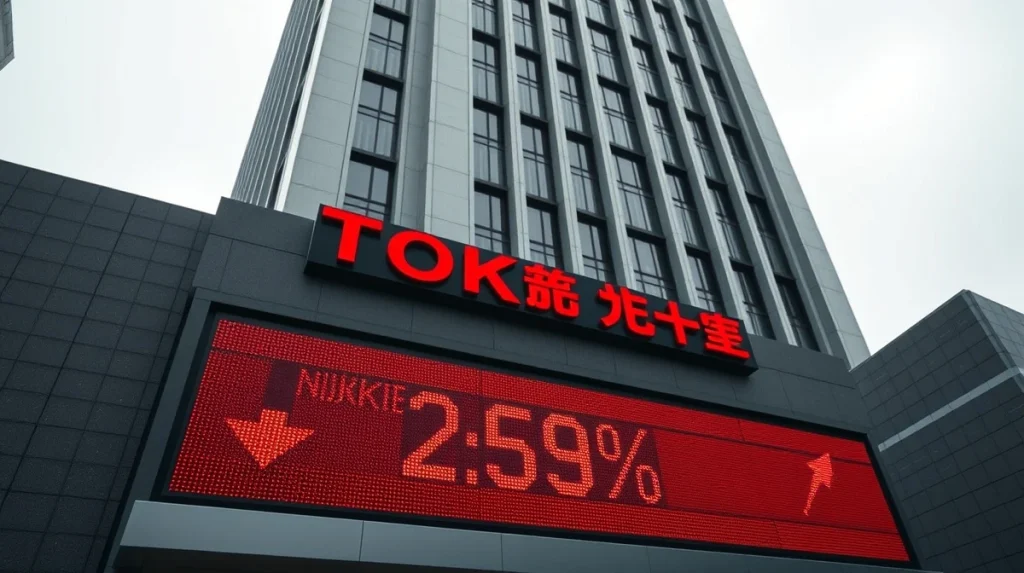
Japan’s benchmark Nikkei 225 stock index tumbled more than 1,700 points on Monday, closing at 37,500.00, as a global selloff intensified amid growing fears of a U.S. economic recession and a surging yen. The drop, which exceeded 4%, marked the index’s worst single-day decline in several months and extended a rout that began on Friday after weaker-than-expected U.S. jobs data rattled markets.
Global Recession Fears Drive Panic Selling
The selloff in Tokyo was part of a broader wave of risk aversion sweeping across global markets. The trigger was Friday’s U.S. nonfarm payrolls report, which showed the economy added only 120,000 jobs in July, well below the 185,000 forecast by economists. The data reignited concerns that the Federal Reserve’s aggressive interest rate hikes over the past year may be pushing the world’s largest economy into a downturn.
Also read: Bitcoin, Ethereum, XRP Rally as $1B Short Squeeze and ETF Inflows Fuel Crypto Gains
“The market is pricing in a higher probability of a U.S. recession,” said Hiroshi Watanabe, senior economist at Nomura Research Institute in Tokyo. “Investors are rushing to unwind risk assets, and Japan is bearing the brunt because of its high sensitivity to global trade.”
The Nikkei’s losses were broad-based, with nearly all 225 components trading in negative territory. Export-heavy sectors, including automakers and electronics manufacturers, were hit hardest.
Also read: Bitcoin ETF Outflows Hit $389.71M, Largest in Six Weeks, as Ethereum ETFs Show Resilience
Yen Strength Compounds Exporters’ Woes
Compounding the pain for Japanese stocks was a rapid appreciation of the yen, which surged to 145 against the U.S. dollar, its strongest level in over four months. A stronger yen reduces the value of overseas profits for Japan’s export giants when repatriated, directly hitting their bottom lines.
Shares of Toyota Motor Corp. fell 5.2%, while Sony Group Corp. dropped 4.8%. Chip-making equipment maker Tokyo Electron Ltd., a major supplier to the global semiconductor industry, slid 6.1% as the tech sector also came under pressure.
The yen’s rally has been fueled by a narrowing interest rate differential between Japan and the U.S., as markets increasingly expect the Federal Reserve to begin cutting rates as early as September. Meanwhile, the Bank of Japan has signaled it may continue to normalize its own ultra-loose monetary policy, further supporting the yen.
What to Watch Next
Investors are now focused on the Bank of Japan’s policy meeting later this month, where any further hawkish signals could accelerate yen gains and deepen the selloff. U.S. inflation data due next week will also be critical in shaping the Fed’s next move.
Analysts caution that volatility is likely to persist. “We are in a period of high uncertainty,” said Masahiro Yamaguchi, a market strategist at SMBC Nikko Securities. “The Nikkei could test the 36,000 level if the yen continues to strengthen and U.S. recession fears remain elevated.”
For Japanese retail investors, who have been major buyers of domestic stocks through the Nippon Individual Savings Account (NISA) program, the selloff serves as a sharp reminder of the risks inherent in equity markets after a prolonged rally.