Ethereum Price Outlook: Institutions Rotate Into ETH as Whales Accumulate

Ethereum has drawn renewed attention from institutional investors and large holders over the past several weeks, with on-chain data revealing a notable shift in capital flows. According to analysis from Glassnode and CoinShares, ETH-focused investment products saw net inflows of roughly $45 million in the week ending March 14, 2026, while whale wallets holding at least 10,000 ETH have added to their positions for three consecutive weeks.
The pattern marks a departure from the broader crypto market’s sideways drift, suggesting that some sophisticated investors see current prices as an entry point. Ethereum has traded in a range between $2,800 and $3,200 for most of March, underperforming Bitcoin’s year-to-date gains but drawing interest from those betting on a catch-up trade.
Also read: Ethereum Bearish Sentiment Hits Extreme: Why a Rebound Could Be Next
On-Chain Signals Point to Supply Squeeze
Exchange reserves for Ethereum have declined to their lowest level since November 2025, according to data from CryptoQuant. The metric, which tracks the amount of ETH held on trading platforms, has fallen by roughly 12% over the past month. When exchange reserves drop, it typically indicates that holders are moving coins to cold storage or staking contracts, reducing immediate selling pressure.
Staking activity has also remained elevated. The total amount of ETH staked in the Beacon Chain deposit contract now exceeds 38 million ETH, representing over 31% of the circulating supply. The shift has reduced the amount of liquid ETH available for trading, a factor analysts cite as supportive for prices if demand continues.
Also read: Ethereum Price Lags at $2,500 While Bitcoin Hits $82,000: On-Chain Data Reveals Why
Institutional interest is not limited to spot accumulation. The CME Group reported a 22% month-over-month increase in open interest for Ethereum futures contracts in February, suggesting that hedge funds and asset managers are increasing their exposure through regulated derivatives.
What the Rotation Means for Retail Traders
The rotation into Ethereum comes as some institutional portfolios have rebalanced away from Bitcoin after its rally to new all-time highs above $95,000 in late 2025. The ETH/BTC ratio, which measures Ethereum’s price relative to Bitcoin, has been hovering near multi-year lows, a setup that historically preceded periods of Ethereum outperformance.
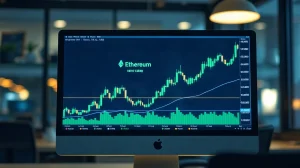
For retail traders, the key question is whether the current accumulation phase will translate into a sustained breakout. The technical picture shows Ethereum testing resistance near the $3,200 level, a zone that has capped rallies since mid-February. A clean break above that level, accompanied by rising volume, would likely confirm the bullish thesis.
However, macroeconomic headwinds remain. The Federal Reserve’s cautious stance on interest rate cuts and lingering regulatory uncertainty in the U.S. continue to weigh on risk assets broadly. Ethereum’s price trajectory may ultimately depend on whether broader market conditions cooperate.
Analysts at K33 Research noted in a March 12 report that Ethereum’s current valuation relative to its network activity — measured by metrics like daily active addresses and transaction fees — suggests the asset is trading below its fundamental value. They pointed to the Dencun upgrade’s ongoing impact on Layer-2 scaling as a structural catalyst that could drive adoption and fee revenue higher over the next six months.
The coming weeks will test whether the accumulation trend has enough momentum to push Ethereum past resistance. For now, the data points to a market where large players are positioning for a move, even as the broader crypto market waits for a clearer directional signal.