Can the CLARITY Act Rescue Crypto After Its Worst Week of 2026?
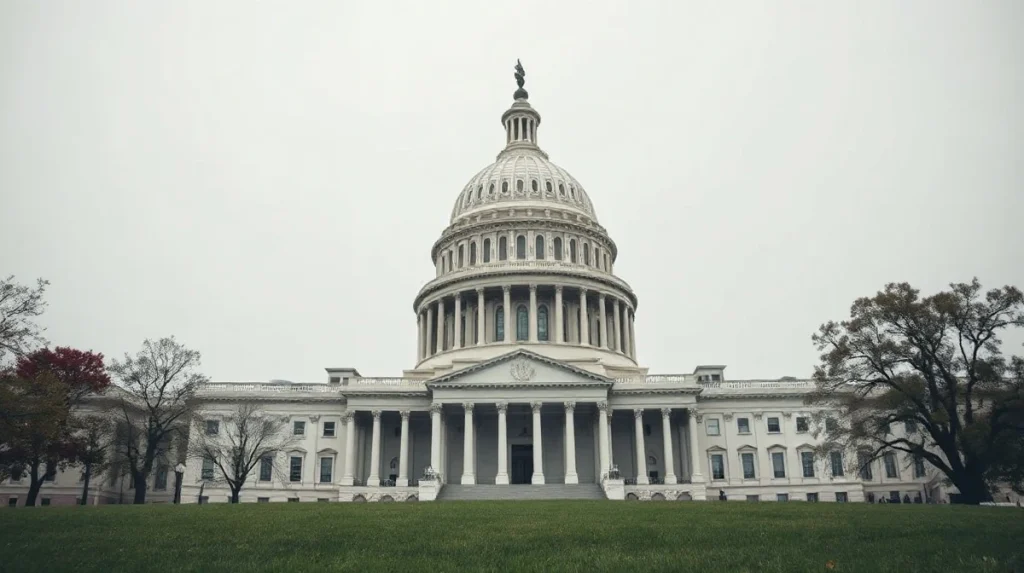
Bitcoin fell below $60,000 on Monday, capping the digital asset market’s worst week of 2026 and intensifying pressure on U.S. lawmakers to advance the stalled CLARITY Act. The bill, which aims to provide a federal regulatory framework for cryptocurrencies, has been described by its sponsors as a necessary lifeline for an industry reeling from a series of enforcement actions and market turmoil.
The CLARITY Act—short for the Crypto Legal Authority and Regulatory Integrity Act—was introduced in the House of Representatives in January by Representative Sarah Miller (R-TX) and has since languished in committee. The recent market downturn, which saw over $200 billion wiped from the total crypto market capitalization in seven days, has given its proponents new urgency.
Also read: Invesco Files GENIUS Act-Compliant Money Market Fund for Stablecoin Issuers
What the CLARITY Act Would Do
The legislation seeks to clarify which federal agency has primary authority over digital assets, a question that has been a source of conflict between the Securities and Exchange Commission (SEC) and the Commodity Futures Trading Commission (CFTC). Under the bill’s current text, the CFTC would gain jurisdiction over Bitcoin and Ethereum as commodities, while the SEC would retain authority over tokens deemed to be securities.
It would also establish a registration process for crypto exchanges and mandate disclosure requirements for stablecoin issuers. Miller has argued that the current patchwork of state-level regulations and conflicting agency guidance is stifling innovation and driving companies overseas.
Also read: Bitcoin Price Prediction: Analysts Warn of Possible Dip Below $30,000
Market Context and Timing
The timing of the bill’s potential advancement is critical. The market rout that began on February 10 was triggered by a combination of factors: a larger-than-expected inflation report that dampened hopes for Federal Reserve rate cuts, a security breach at a major South Korean exchange, and a coordinated sell-off of leveraged positions. Bitcoin fell from a high of $72,400 to $58,200 in six days, its steepest decline since the collapse of FTX in 2022.
Industry executives have pointed to regulatory uncertainty as a key factor exacerbating the sell-off. “When investors don’t know whether a token will be classified as a security tomorrow, they sell first and ask questions later,” said Brian Armstrong, CEO of Coinbase, in a statement last week. “The CLARITY Act is not a cure-all, but it would remove a significant cloud of uncertainty.”
Political Hurdles Remain
Despite the renewed push, the bill faces significant opposition. Consumer advocacy groups have raised concerns that the legislation would weaken investor protections by reducing the SEC’s role. Senator Elizabeth Warren (D-MA) has called the bill a “handout to the crypto industry” that would “create loopholes for fraudsters.”
House Financial Services Committee Chair Patrick McHenry (R-NC) has indicated he intends to bring the bill to a vote before the spring recess, but the path through the Senate remains uncertain. The legislation would need 60 votes to overcome a filibuster, a threshold that appears out of reach without substantial bipartisan compromise.
For now, the crypto market is watching Washington with the same intensity it watches Federal Reserve interest rate decisions. The CLARITY Act may not be a panacea, but for an industry in its worst week of the year, even the prospect of regulatory clarity is a rare piece of good news.