In this article5 sections
The Cardano Foundation said 100,000 farms in India are now recorded on the Cardano blockchain through 5am.earth, the agricultural data project it has been backing alongside Syngenta Foundation India. The October 21, 2026, announcement marks a jump from the roughly 15,000 farms the Foundation‘s case study had listed after mainnet deployment and early field trials, Crypto.news reported.
The Foundation pointed readers to a Cardanoscan address and said each transaction there corresponds to an individual farm. It attributed the work to a group of contributors including AIQUANT, Anastasia Labs, Andamio, Catalyst, Veridian, NMKR, Zengate Global, Elkconnect, Digifarm and the Syngenta Foundation’s India arm, according to Crypto.news.
 Also readPetrobras tests Cardano to track SAF claims and Diesel R
Key facts
- 100,000 Indian farms are registered on Cardano via 5am.earth, against about 15,000 listed earlier in the Foundation’s case study.
- Each farm record combines field-level information gathered by an Agri-Entrepreneur, satellite-verified field boundaries and historical sustainability data drawing on 12 years of biomass and crop records.
- A proposed Seedstars pilot covers 1,000–5,000 farmers, with initial input loans and working capital of $100–$500 and a later scale of $1,000.
- 5am.earth’s treasury proposal seeks 10 million ADA over 18 months: 5 million ADA on approval, then installments of 2 million and 3 million ADA tied to milestones.
- The proposal, which names the operating project Swaminathan after Indian agricultural scientist M.S. Swaminathan, covers six active districts in Maharashtra.
What the registrations actually record
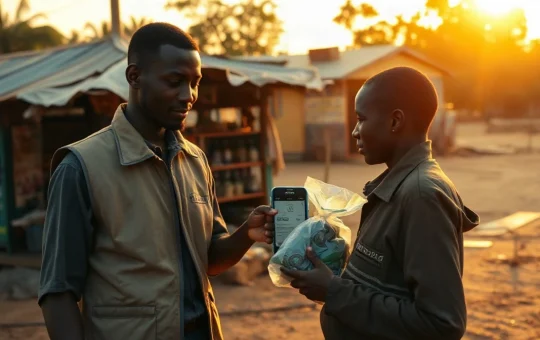
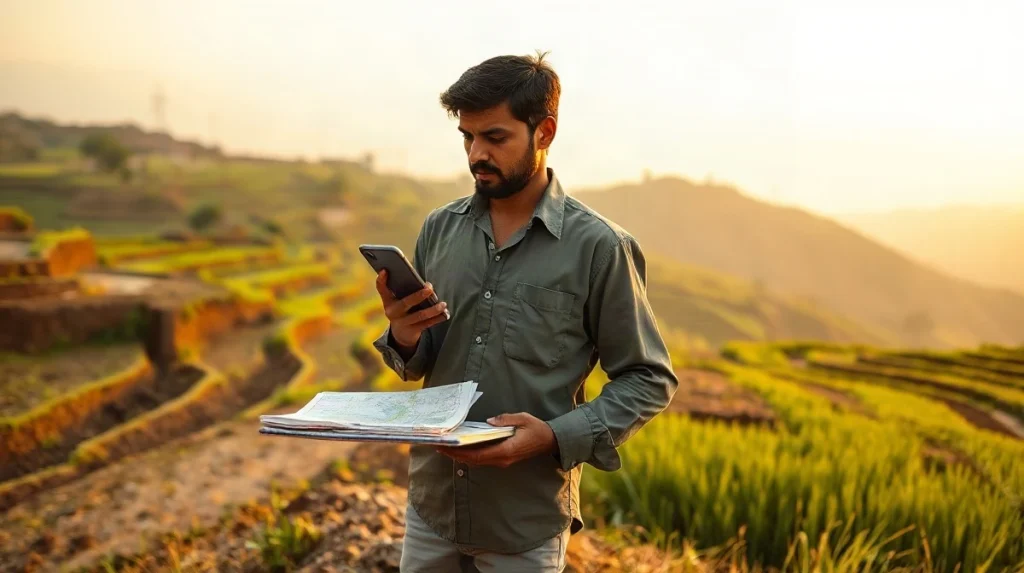
5am.earth describes four stages in the process. An Agri-Entrepreneur first records details about the farmer, the field and the activity where the work takes place. Satellite imagery then checks the field’s boundaries against current observations and its land history. Identity and consent are attached so the source of the evidence can be traced, and the farmer can later authorize the same record for another service or decision.
The project says it anchors identities and information from several sources on Cardano while keeping farmers’ personal data private. Its first stated uses are land-border verification and historical sustainability ratings. Farm parcels receive decentralized identifiers tied to satellite-verified boundaries, and the blockchain stores verified datasets for independent checking, according to the Foundation’s case study.
 Also readCardano Eyes $0.30 as ADA RSI Hits 67; TRON ETF Adds No Shares
The problem the project targets is duplicate verification. 5am.earth says banks, buyers, insurers and governments often check the same farmer separately, leaving isolated records, and that repeated verification is a cost borne by both farmers and service providers. It says U.today reported the Foundation’s view that more than 100 million small farmers in India sit outside formal economies for want of trusted agricultural data. U.today also reported that the Foundation says the infrastructure could handle up to 1 million farms without added operating costs, a capacity claim not present in the Crypto.news account.
Credit pilot and partner roles
In its treasury proposal, 5am.earth divides work among partners: DigiFarm handles satellite-based farm verification, Zengate Global handles supply-chain traceability, Andamio records reputation on-chain, and Seedstars supplies credit scoring and loan origination. Seedstars would use the verified data to produce credit scores, structure loan offers and feed repayment information back into the records system.
The lending figures describe the pilot’s design only. The proposal does not establish that lending has been completed for the 100,000 registered farms.
Why it matters
For the Cardano network, the milestone is a concrete tally of real-world records rather than a price or throughput claim, and it gives the Foundation a public-data point to cite in token-holder governance. For farmers and the institutions that buy from or lend to them, the value depends on whether lenders and buyers accept the reused record instead of running their own checks. That question separates a registration tally from a working credit system, and the gap between the two is visible in the proposal’s own numbers: 100,000 farms registered, with a pilot covering as few as 1,000.
What to watch
Token holders will decide whether 5am.earth’s 10 million ADA request is approved and the milestone installments are released. Further out, the Foundation and Fireblocks have said Cardano Native Tokens will be standard assets on the custody platform by March 2027, and Input Output outlined a staged Leios rollout on October 20 targeting three to five times current capacity before later steps toward 10–15 times, subject to mainnet results and governance approval.
Sources: crypto.news, U.today