In this article6 sections
Circle Foundation has announced separate grants backing digital-payment work at the United Nations Development Programme and the World Food Programme, according to Bitcoinist. The projects are designed to test whether regulated payment stablecoins can move aid money faster, more cheaply and more transparently than current channels.
The WFP grant, made to World Food Program USA, will fund governance, risk rules, reconciliation systems and compliance tools needed before trials begin. WFP intends to test two to three country payment corridors connecting its systems with local financial-service providers and markets across three years. Circle Foundation said the announcement, made on Sep. 25, marks its latest move into UN payment infrastructure.
 Also readMastercard Launches Stablecoin Security to Screen Payments
Key facts
- UNDP will establish and operate a Digital Asset Innovation Pool under its grant, giving country offices guidance on local rules and beneficiary safeguards.
- WFP plans to test two to three country payment corridors over the next three years, funded through World Food Program USA.
- The WFP grant will also pay for independent research into costs, speed and the feasibility of stablecoin payments in humanitarian operations.
- Circle Foundation’s funding comes from an equity commitment by U.S.-listed Circle Internet Group, which has reserved up to 2,682,392 Class A shares for foundation contributions over ten years, per Crypto.news.
- The UN agencies will keep their existing banking channels; the new mechanisms add an option rather than a replacement.
What the UNDP pool is meant to do
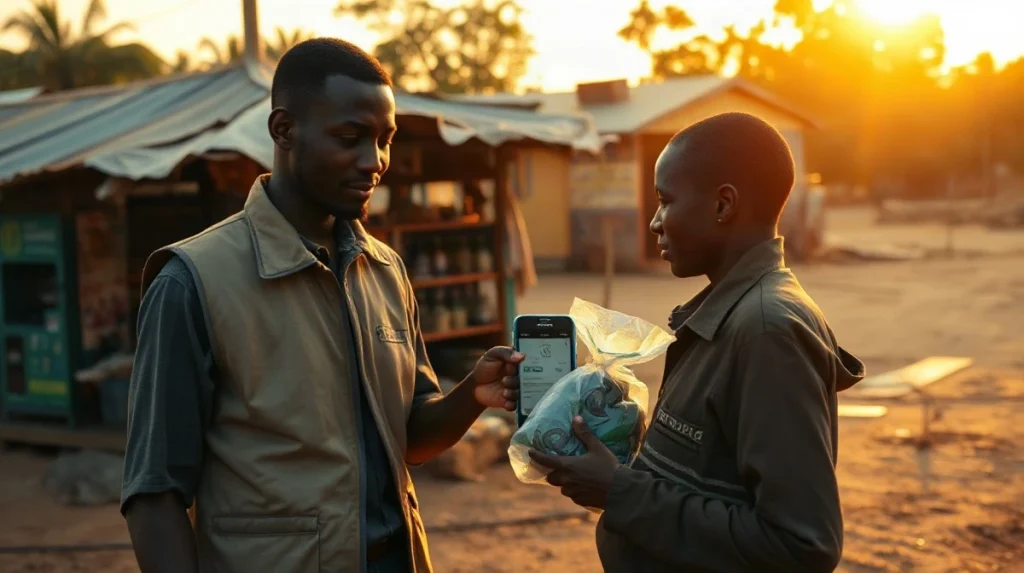
UNDP has already run digital payment pilots in several countries. In Aleppo, Syria, it tested digital payments for a cash-for-work project, reporting that distribution costs fell from 10% to 2%, according to Crypto.news. A Haiti pilot kept processing payments during a cellular network outage, Crypto.news reported. Further pilots in Guatemala linked remittances to community investment, and work in The Gambia connected mobile wallets to existing cash-agent networks.
The new pool is intended to help country offices apply those lessons in regular programs rather than one-off pilots. Robert Pasicko, team lead at UNDP’s Alternative Finance Lab, said the pool will support payments that are faster, more affordable and easier to access, particularly for people underserved by conventional banking. The lab ran the agency’s Sustainable Development Goals Blockchain Accelerator, through which the earlier payment solutions were tested.
 Also readWise to Resubmit U.S. Trust Bank Application Under New Stablecoin Law
Why the WFP trial is harder than it sounds
Moving money into countries where banking is slow or costly is a familiar problem for aid organizations. Stablecoins settle quickly across borders, but speed is only part of the requirement. Reconciliation matters when an organization must match funds sent through a payment system with its own records and the amounts received locally. Sanctions controls, local regulation and beneficiary protection all have to work alongside the transfer.
Bernhard Kowatsch, director of WFP Global Accelerator and Ventures, said the funding will let WFP explore regulated stablecoin payments in real-world contexts. WFP will use the trials to build the evidence, partnerships and systems needed to assess their use.
How the grants fit Circle’s UN work
The two grants follow Circle Foundation’s first international award, announced in January for the Digital Hub of Treasury Solutions, a shared UN platform UNHCR launched in 2021. Fifteen organizations participate, including UNDP and WFP, and the January funding supported cross-border transfers, conversion into local currencies and links between financial systems. Crypto.news also reported that Circle Foundation announced its first U.S. grants on Sep. 22, awarding funds to Accion Opportunity Fund and Pacific Community Ventures for lending and data tools serving small businesses.
Why it matters
The announcement puts regulated stablecoins inside a governance and compliance environment built for large-scale international aid, not crypto trading. If the pilots show lower costs or shorter delays, the model could extend to other UN agencies and country offices. Either way, the results will be documented in a setting where beneficiary protection and local rules constrain what the technology can do, which is a different test from a commercial payments rollout. The two outlets frame the funding the same way; Bitcoinist emphasizes the governance burden of deploying payments at scale, while Crypto.news gives more detail on the earlier pilots and on how Circle finances its foundation.
What to watch
Watch for the first WFP corridor to go live and for the agency’s research findings on payment cost, speed and resilience across the planned trials. UNDP’s pool will also show whether earlier pilot results translate into routine country-office programs.
Sources: Bitcoinist, Crypto.news