Bitcoin Defies Soaring CPI: The Stunning Rally Explained
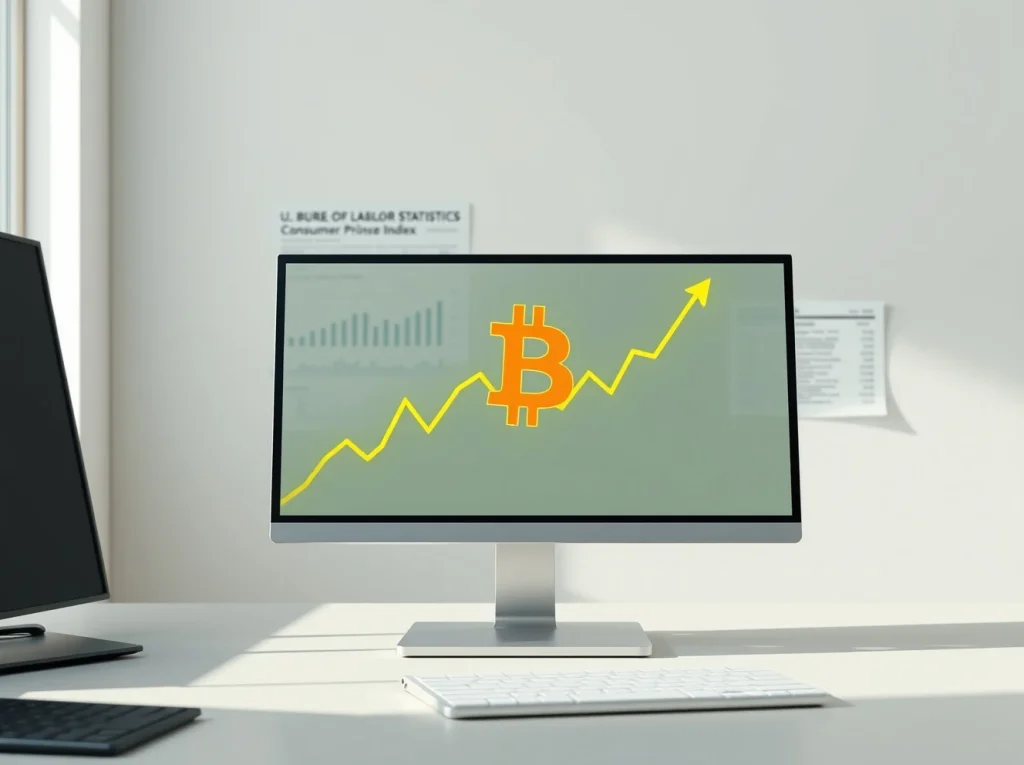
On April 10, 2026, Bitcoin’s price surged past $95,000. This move came just hours after the U.S. Labor Department reported the Consumer Price Index (CPI) had hit its highest level in 22 months. Typically, such hot inflation data spooks risk assets. It often triggers fears of tighter Federal Reserve policy. Yet, the world’s largest cryptocurrency rallied strongly. This apparent contradiction has left many traditional investors puzzled. What are the markets seeing that others might be missing?
Bitcoin’s Defiant Rally Against Inflation Data
Data from CoinMetrics shows Bitcoin gained over 8% in the 24 hours following the CPI release. The report indicated headline inflation rose 3.7% year-over-year. Core CPI, which excludes food and energy, climbed 3.9%. Both figures exceeded economist forecasts. According to trading platform Coinbase, the rally was fueled by significant spot buying. This activity absorbed selling pressure from futures liquidations. The move represents a notable shift in correlation. For much of 2024 and early 2025, Bitcoin often traded in line with tech stocks. It reacted negatively to strong economic data. This recent decoupling is significant. Market analysts point to several concurrent factors.
Also read: Telegram-Linked TAC Token Crashes 90% in 15 Minutes: What Happened?
Key data points from the session:
- Bitcoin Price: Opened at $88,450, peaked at $95,600.
- CPI Headline (YoY): 3.7% vs. 3.5% forecast.
- Trading Volume: Spot volume spiked 150% above 30-day average.
- Net Flows: U.S. spot Bitcoin ETFs saw $1.2 billion in net inflows.
Institutional Flows Tell a Different Story
The narrative around Bitcoin has evolved. Many institutions now view it as a macro asset, not just a tech bet. “We’re seeing a fundamental repricing of Bitcoin’s role,” said James Bianco, President of Bianco Research. He noted on social media that investors are treating Bitcoin more like ‘digital gold’. This is especially true as inflation proves stickier than expected. Data from Farside Investors confirms this shift. U.S. spot Bitcoin ETFs recorded their second-largest daily inflow of 2026 on April 10. This suggests large, institutional buyers were active during the sell-off in bonds and the initial equity dip.
Also read: XRP Scarcity Index on Binance Hits Highest Level Since Mid-2024, So Where Did the Coins Go?
This buying pressure indicates a specific thesis. Some investors believe persistent inflation will eventually weaken the U.S. dollar’s purchasing power. In this environment, hard-capped assets like Bitcoin gain appeal. The cryptocurrency’s 21 million supply limit is a direct contrast to expansive fiscal and monetary policies. Analysts at Glassnode reported a decrease in Bitcoin exchange balances during the rally. This signals investors were moving coins to cold storage, not preparing to sell.
The Hedging Hypothesis Gains Traction
Portfolio managers are allocating differently. A survey by ByteTree Asset Management in March 2026 found that 22% of fund managers now classify Bitcoin as an ‘inflation hedge’. This is up from just 9% in 2023. This change in perception is critical. It means Bitcoin is drawing capital from a new pool. This money isn’t chasing short-term tech momentum. It’s seeking long-term preservation of value. The timing of the CPI release and the rally supports this view. Buying began precisely as traditional inflation hedges like gold initially stumbled. Bitcoin’s digital, global, and accessible nature offers a distinct profile.
Technical and On-Chain Signals Underpin the Move
Beyond macro narratives, the rally had a solid technical foundation. According to analysis from CryptoQuant, Bitcoin’s Net Unrealized Profit/Loss (NUPL) metric was neutral before the CPI print. This indicated the market was not overextended. There was room to run. Furthermore, the short-term holder cost basis—the average price at which recent buyers acquired Bitcoin—acted as strong support near $85,000. When the price briefly dipped post-CPI, it found buyers exactly at that level.
The derivatives market also behaved unusually. Typically, a surprise economic event causes massive volatility and liquidations. Data from Coinglass shows there were large long liquidations initially. However, open interest in futures contracts quickly recovered and climbed higher. This pattern suggests new money entered the market to open fresh long positions. They were betting on further upside despite the inflationary headline.
| Asset | Initial Reaction (1hr) | 24-Hour Performance | Key Driver |
|---|---|---|---|
| Bitcoin (BTC) | -2.1% | +8.3% | Institutional ETF inflows, inflation hedging demand |
| S&P 500 | -1.8% | -0.5% | Rate hike fears, profit-taking |
| Gold (XAU) | -1.5% | +0.8% | Traditional safe-haven, dollar volatility |
| 10-Year Treasury Yield | +12 bps | +9 bps | Inflation premium, selling pressure |
What This Divergence Means for the Future
The stark reaction raises questions about future market correlations. If Bitcoin can rally on bad inflation news, its independence from traditional markets may be strengthening. This is a double-edged sword. It could make Bitcoin a more powerful diversifier in institutional portfolios. Conversely, it may decouple from positive equity momentum as well. The implication for investors is nuanced. Bitcoin’s value proposition is being tested in real-time. It’s no longer just a ‘risk-on’ asset. The market is judging it against a different set of criteria: monetary debasement and sovereign credit risk.
Market watchers note that this single day does not establish a permanent trend. However, it provides compelling evidence of a shifting narrative. The sheer volume of capital that moved into Bitcoin ETFs on a high-inflation day is a data point that cannot be ignored. It suggests a segment of the financial world is preparing for a different economic outcome than what mainstream forecasts predict.
Conclusion
Bitcoin’s rally despite a 22-month high CPI print is not a paradox. It reflects a maturing market with evolving use cases. The move was driven by institutional flows viewing Bitcoin as a macro hedge, strong technical support, and a growing perception of its value in an inflationary environment. This event marks a potential inflection point. Bitcoin’s correlation with traditional finance is changing. While risks remain, including regulatory scrutiny and volatility, the April 10, 2026, price action demonstrates that a significant cohort of investors now sees Bitcoin through a different lens. They are betting on its properties as a scarce, digital asset in a world of persistent fiscal and monetary pressures.
FAQs
Q1: Why would Bitcoin go up when inflation is high?
Historically, high inflation erodes the value of fiat currencies. Some investors are now buying Bitcoin as a potential hedge against this erosion, viewing its fixed supply as a protective feature against currency debasement.
Q2: Does this mean Bitcoin is now an inflation hedge like gold?
The market is testing this thesis. The significant inflows into Bitcoin ETFs on a high-inflation day suggest some large investors are treating it as such, though its volatility means it behaves differently than gold over short periods.
Q3: What happened to stock and bond markets when Bitcoin rallied?
The S&P 500 fell initially and remained negative over 24 hours. Bond yields rose (meaning prices fell). This traditional ‘risk-off’ reaction highlights Bitcoin’s divergent performance on this occasion.
Q4: Could this just be a short-term coincidence?
It’s possible. One day does not make a trend. However, the scale of institutional ETF buying provides a fundamental explanation beyond mere coincidence or short-term speculation.
Q5: What should investors watch next to see if this trend continues?
Key indicators include continued flows into spot Bitcoin ETFs on days with strong economic data, changes in Bitcoin’s correlation coefficient with the Nasdaq, and commentary from major asset managers about Bitcoin’s role in portfolios.