Dogecoin Network Activity Surges 28% as New Contender Pepeto Emerges in Volatile Crypto Market

Network data reveals a significant 28% increase in active Dogecoin wallets this month, signaling renewed interest in the original memecoin. Meanwhile, a new digital asset called Pepeto is generating discussion with ambitious growth projections. This activity unfolds as established tokens like Chainlink maintain steady positions. Market analysts are examining what these movements mean for investor portfolios.
Dogecoin’s Resurgent Network Metrics
According to blockchain analytics firm IntoTheBlock, the number of active DOGE addresses engaged in transactions jumped from approximately 890,000 in early March to over 1.14 million by April 10, 2026. This 28% rise represents the most substantial monthly gain in user activity for Dogecoin since late 2024. Active addresses are a key indicator of a blockchain’s organic use and health.
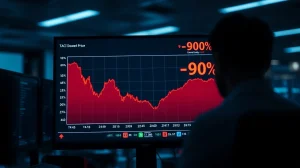
Also read: Telegram-Linked TAC Token Crashes 90% in 15 Minutes: What Happened?
“When we see a double-digit percentage increase in active addresses, it typically points to either new users onboarding or existing holders becoming more active,” said Lucas Chen, a senior data analyst at IntoTheBlock. Data from the firm shows the increase was distributed across both smaller retail-sized wallets and larger holdings.
Context and Market Impact
Dogecoin’s price has shown correlated but volatile movement. After trading around $0.18 in mid-March, DOGE briefly touched $0.23 following the network activity news before settling near $0.21. The token’s market capitalization remains above $30 billion. This suggests the wallet growth has provided support but not triggered a parabolic price move. Historical patterns indicate that sustained network growth often precedes price appreciation, though the timing is unpredictable.
Also read: XRP Scarcity Index on Binance Hits Highest Level Since Mid-2024, So Where Did the Coins Go?
The Pepeto Phenomenon and Market Speculation
Concurrent with Dogecoin’s metrics, a newer token named Pepeto (ticker often cited as PEPE) has entered the spotlight. Pepeto, launched on the Ethereum blockchain, positions itself within the popular memecoin category. Promotional materials from its development team cite a goal of achieving substantial growth from its current valuation.
It is critical to distinguish between technical analysis projections and promotional claims. Some trading forums and social media channels have circulated models suggesting extreme growth multiples. These are hypothetical scenarios, not forecasts. The implied volatility and risk are exceptionally high. New tokens with low market capitalization can experience rapid price swings in both directions.
Key considerations for new tokens like Pepeto include:
- Liquidity Depth: Thin trading volumes can lead to extreme price slippage.
- Contract Security: New smart contracts require rigorous auditing to prevent exploits.
- Concentration Risk: A small number of wallets often hold large portions of the supply in new projects.
Chainlink’s Steady Position in a Volatile Sector
While memecoins capture headlines, infrastructure cryptocurrencies like Chainlink (LINK) have demonstrated relative stability. Chainlink provides critical oracle services, feeding real-world data to blockchain smart contracts. Its price has fluctuated within a 15% band over the past month, significantly less than the swings seen in more speculative assets.
This stability stems from its utility-based value proposition. According to a report from Messari dated April 2026, the number of active Chainlink oracle networks continues to grow, securing over $28 billion in total value. “Projects like Chainlink derive value from consistent, reliable usage, not just trading sentiment,” the report notes. This creates a different investment profile focused on long-term ecosystem growth rather than short-term trading.
Analyzing the $5K Investment Scenario
The notion of a $5,000 investment transforming into $750,000 is a mathematical extreme that depends on specific, highly optimistic conditions. It implies a 150x return. For context, achieving this with Dogecoin from its current price would require its market cap to approach that of Bitcoin, an outcome most traditional analysts view as improbable in the near term.
For a newer token like Pepeto, such a return would require moving from a micro-cap to a large-cap status, surviving intense competition and regulatory scrutiny. While the crypto market has historical examples of such runs, they are statistical outliers. The vast majority of new tokens fail or underperform. What this means for investors is a need to balance high-risk allocations with core, diversified holdings.
Portfolio Construction Principles
Financial advisors specializing in digital assets stress position sizing. Allocating a small percentage of a portfolio to high-risk, high-potential assets is a common strategy. Placing a disproportionately large amount into a single speculative asset contradicts basic risk management. The dramatic scenario serves more as a mathematical illustration of crypto’s volatility than a realistic investment plan.
Regulatory and Macroeconomic Backdrop
This activity occurs within a specific regulatory climate. As of April 2026, the U.S. Securities and Exchange Commission continues its case-by-case approach to cryptocurrency classification. Memecoins, due to their often purely speculative nature, face particular scrutiny regarding securities laws. This regulatory uncertainty adds a layer of risk beyond market volatility.
Furthermore, broader macroeconomic conditions influence all risk assets, including crypto. Interest rate decisions by the Federal Reserve and other central banks impact liquidity. A shift toward tighter monetary policy historically pressures speculative investments. Investors must consider these external factors alongside blockchain-specific metrics.
Conclusion
The 28% jump in Dogecoin active wallets highlights enduring interest in established memecoins, while the emergence of Pepeto shows the sector’s continuous evolution. Chainlink’s steady performance offers a contrast, underscoring the diversity within the crypto market. The extreme growth scenario of a $5,000 investment reaching $750,000, while arithmetically possible, represents the far end of the risk spectrum. Informed participation requires analyzing on-chain data, understanding project fundamentals, and adhering to disciplined risk management, not just chasing hyperbolic projections.
FAQs
Q1: What does a 28% increase in active Dogecoin wallets actually mean?
It means the number of unique addresses sending or receiving DOGE in a given period has grown substantially. This can indicate new users, increased trading, or more utility. It’s generally seen as a positive metric for network health.
Q2: Is Pepeto a safe investment?
All cryptocurrencies carry risk. Newer tokens like Pepeto, with smaller market capitalizations and shorter track records, are typically considered high-risk, high-volatility investments. Investors should conduct thorough research and never invest more than they can afford to lose.
Q3: How does Chainlink differ from Dogecoin and Pepeto?
Chainlink is a decentralized oracle network providing real-world data to blockchains. It’s considered an infrastructure or utility token. Dogecoin and Pepeto are primarily memecoins, whose value is driven more by community and sentiment than by specific, revenue-generating utility.
Q4: Can historical memecoin gains be repeated?
Past performance never guarantees future results. The market conditions, regulatory environment, and competitive sector in 2026 are different from those during previous memecoin rallies. While large gains are possible, they are not certain and come with significant risk of loss.
Q5: What should I research before investing in a token like Pepeto?
Key areas include the project’s whitepaper, the team’s background, smart contract audit reports, token distribution (to check for excessive concentration), liquidity on exchanges, and the clarity of its use case. Rely on multiple independent sources, not just promotional material.