U.S. Stock Market Surges $1 Trillion as Ceasefire Hopes Ignite Rally
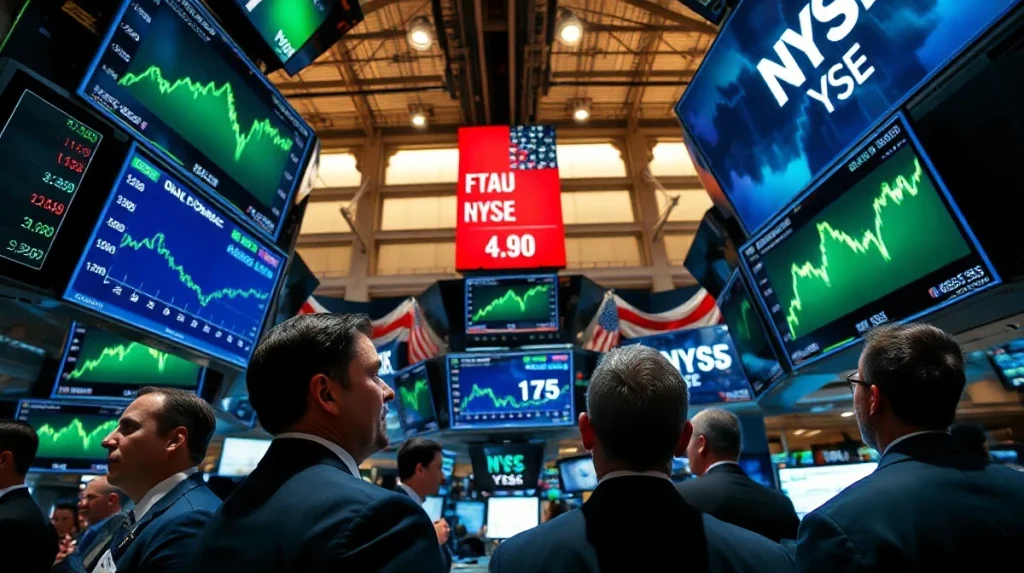
The U.S. stock market added more than $1 trillion in market capitalization on Tuesday, March 18, 2025, as renewed ceasefire negotiations between Russia and Ukraine triggered a broad-based rally across equities. The S&P 500 rose 2.3%, the Dow Jones Industrial Average climbed 1.9%, and the Nasdaq Composite gained 2.8%, marking the strongest single-day advance for major indices in over three months.
Investors piled into risk assets after reports emerged that both sides had agreed to a preliminary 30-day halt in hostilities, pending a formal signing expected later this week. The rally erased roughly half of the losses accumulated since late February, when geopolitical tensions had pushed the S&P 500 into correction territory.
Also read: Crypto India: Maharashtra Brings Digital Assets Under Depositor Protection Law
What Drove the $1 Trillion Gain
The surge in market value was broad-based, with every S&P 500 sector finishing in positive territory. Energy and materials stocks led the advance, as a potential de-escalation in Eastern Europe reduced fears of supply disruptions in commodities. Chevron and ExxonMobil each rose more than 4%, while industrial conglomerates like Caterpillar added 3.5%.
Technology shares also rebounded sharply. Nvidia gained 5.1%, Apple rose 3.2%, and Microsoft climbed 2.9%, reversing some of the steep losses seen earlier in March. The CBOE Volatility Index (VIX), often referred to as Wall Street’s fear gauge, fell below 20 for the first time in two weeks, signaling a marked decline in investor anxiety.
Also read: Paribu Integrates Polymarket, Bringing Prediction Markets to Türkiye for the First Time
Treasury yields edged higher as safe-haven demand eased. The 10-year note yield rose 6 basis points to 4.12%, while the 2-year yield climbed to 4.05%, reflecting a shift in expectations toward a slightly more accommodative Federal Reserve stance if geopolitical risks continue to recede.
Ceasefire Negotiations and Market Reaction
The market move followed a joint statement from Turkish and Saudi mediators confirming that representatives from Russia and Ukraine had agreed to a framework for a temporary ceasefire, including a mutual halt to strikes on energy infrastructure and a humanitarian corridor for civilian evacuations. The agreement is not yet signed, and both sides cautioned that final terms remain under discussion.
Still, traders interpreted the development as the most concrete sign of progress since the conflict began. Reuters reported that a formal signing ceremony could take place in Istanbul as early as Thursday, though Western officials expressed cautious optimism.
“Markets are pricing in a genuine de-escalation scenario,” said Lisa Shalett, chief investment officer at Morgan Stanley Wealth Management, in a note to clients. “If the ceasefire holds, we could see a sustained rotation into cyclicals and a recovery in risk appetite that has been suppressed for weeks.”
Not all analysts were convinced the rally would last. Some pointed out that previous rounds of talks had collapsed, and that even a temporary truce would not resolve the underlying structural tensions driving the conflict. “A ceasefire is not a peace deal,” wrote Peter Tchir, head of macro strategy at Academy Securities. “We’ve seen this movie before. Markets are jumping on headlines, but the fundamentals haven’t changed.”
Broader Market Implications
The $1 trillion increase in U.S. equity market capitalization brings the total value of U.S. stocks to approximately $46.5 trillion, according to data from the Wilshire 5000 Total Market Index. The gain also lifted investor sentiment ahead of the Federal Reserve’s policy meeting next week, where the central bank is expected to hold interest rates steady while signaling its outlook for inflation and growth.
European and Asian markets also rallied on the news. The STOXX 600 gained 1.8%, and Japan’s Nikkei 225 rose 2.1%. Oil prices, which had surged on supply fears, fell 3.5%, with Brent crude settling below $72 per barrel.
The rally underscores how deeply geopolitical risk has shaped market behavior in 2025. For now, investors are betting that diplomacy can prevail. But with negotiations still fragile, the path forward remains uncertain.