In this article5 sections
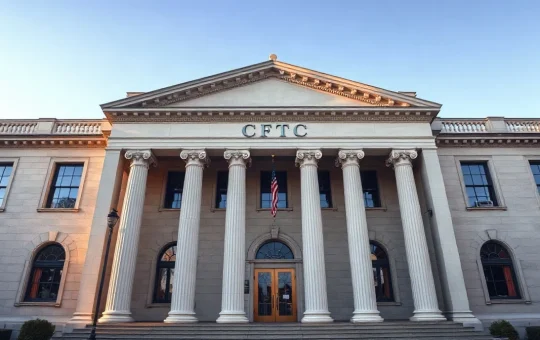
Hyperliquid Policy Center asked the Commodity Futures Trading Commission to permit US-traded futures and perpetual contracts tied to GPU rental prices and the cost of running AI models, in a comment letter dated Oct. 20, Crypto.news reported. The submission was signed by CEO Jake Chervinsky and senior counsel Brad Bourque in response to the regulator’s request for comment on compute derivatives.
The group framed the filing as a policy recommendation rather than an announcement. Crypto.news stated explicitly that the letter is neither a Hyperliquid compute-contract launch nor a regulatory approval, and that the group wants the agency to review contracts under existing rules.
 Also readTrump's White House Crypto Summit: Will CLARITY Act Get a Push or Will SEC and CFTC Go It Alone?
Key facts
- Hyperliquid Policy Center’s Oct. 20 letter asks the CFTC to allow competing price benchmarks and to support both dated futures and perpetuals for computing capacity.
- The group argues rented computing capacity qualifies as a commodity under the Commodity Exchange Act and proposes leverage limits, open-interest caps, position limits, funding-rate caps and disclosures of funding costs in dollar terms.
- Citing Silicon Data’s historical price series, the letter puts Nvidia H100 marketplace rental rates at roughly $2.50–$3.19 per GPU-hour in the second half of 2024, against $1.92–$2.00 in the second half of 2025.
- The CFTC announced its compute-derivatives consultation on Aug. 19, 2026, and Chairman Michael Selig said America cannot win the AI race without a robust derivatives market for compute.
- A separate Oct. 19 letter backed the SEC’s proposed Regulation Crypto Assets with five refinements, Blockonomi reported, including a startup exemption of up to $5 million over four years and a fundraising exemption of up to $75 million per 12-month period.
Why computing capacity needs a hedge, in the group’s account
The letter describes price exposure that never closes. Data centers collect rental revenue by the hour, while inference platforms pay each time a customer uses a model, and the group told the agency that a GPU-hour exists only in the hour it is used.
Perpetuals, which carry no expiry, could track those costs and revenues more closely than dated contracts, the group argued. Recurring funding payments between buyers and sellers keep such a contract near its reference benchmark. A data-center operator could hedge falling rental revenue, an AI platform could hedge rising bills, and lenders financing hardware face related exposure because weaker rental income can erode borrowers’ cash flows and collateral values.
 Also readCFTC chair urges 'mass tokenization' as SEC backs tokenized stocks
Dated futures still have a role for expenses with a known endpoint, such as a training run planned for a specific quarter or a scheduled capacity purchase. The group said successive monthly contracts can form a forward curve that lenders and investors need when valuing financing agreements.
Two benchmarks, and a market that trades in private
GPU-hour contracts would track rental prices for specified hardware. Inference contracts would reference a stated volume of AI-model tokens, the units used to measure text a model processes and produces, serving developers and platforms whose bills depend on token prices. The letter concedes a hardware-rental contract is an imperfect hedge, since inference costs depend on computing prices and model efficiency alike.
The group cites Epoch AI research estimating private investment in AI data centers, computing hardware and networking equipment at roughly 0.8% of US GDP in the first quarter of 2026. Most economic value, it says, still changes hands through privately negotiated agreements, separating publicly visible hourly rentals from reserved capacity and multiyear commitments whose prices stay private. Benchmark selection would therefore decide which exposures a contract can cover. Proposed specifications include chip type, location, rental period, cluster size, service terms and whether a provider can interrupt access.
Concentrated supply, thin transaction visibility and hardware turnover remain unresolved. A benchmark built from few trades could be manipulated, so the group proposes independent price contributors and methods that filter unusual observations. On perpetuals, it recommends funding-rate caps or calculations spread over longer periods to blunt sudden costs around model releases and chip shortages, plus advance notice and gradual index transitions when new chip generations arrive. It points to disclosed schedules used by Hyperliquid oil perpetual markets when their reference futures roll between contract months.
Why it matters
If accepted, the proposal would give exchanges a route to list contracts on an input whose price volatility is now a core cost for AI firms, not a niche curiosity. NYMEX and ICE Futures U.S. have proposed cash-settled compute futures, the letter notes, though neither exchange’s contracts had begun trading when the submission was written. Crypto.news also reports existing compute-price event contracts and perpetual offerings through a Bermuda-licensed venue — an offshore arrangement the group’s US-market push is meant to address.
The filing fits a pattern. Crypto.news reported that the group sought regulated energy perpetuals alongside trade[XYZ] on Aug. 26 and asked the SEC and CFTC on Aug. 24 to treat stock-linked perpetuals as security futures. On the securities side, Cryptobriefing reported that the comment period on Regulation Crypto Assets was scheduled to close Oct. 20, and that the group’s five requests cover airdrops, secondary trading, the safe harbor, automated buybacks and federal preemption. Blockonomi reported that the group wants the safe harbor usable without a tacit admission of a prior investment contract and wants preemption to survive once a project qualifies. The reports agree on the $5 million and $75 million exemptions and on the August release of the proposal; the letter itself does not set prices for any future contract, and nothing here is financial advice — derivatives markets are volatile and values can fall as well as rise.
What to watch
The CFTC’s handling of the compute-derivatives consultation is the next concrete marker; the agency’s Aug. 19 request specifically sought comment on perpetual compute futures, and the letters filed will shape whether such contracts reach US venues. Separately, the SEC’s final rule text will show whether the five refinements are adopted.
Sources: crypto.news, Blockonomi, Cryptobriefing