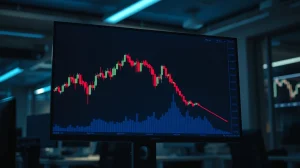
Bitcoin Sentiment Crashes to 5-Week Low as Bearish Bets Mount

Market sentiment toward Bitcoin has turned sharply negative, hitting its lowest point in five weeks. Data from April 2026 shows a clear build-up in bearish positioning across derivatives markets. This shift comes as social commentary turns against the leading cryptocurrency, with traders expressing growing caution.
Bitcoin Sentiment Hits a Clear Negative Tilt
According to social analytics platform Santiment, the ratio of bearish to bullish commentary on Bitcoin has flipped. For the week ending April 5, 2026, there were roughly five negative social mentions for every four positive ones. This marks a decisive change from earlier in March when bullish chatter dominated. The last time sentiment was this poor was in late February 2026.
Also read: BNB Chain Reveals New Layer 1 Blockchain for Agentic Trading, Mainnet Set for 2027
This data suggests a change in crowd psychology. But it does not signal panic. “We’re seeing a rise in pessimism, not outright fear,” noted a market analyst from crypto data firm Glassnode. “The lack of capitulation is key. It leaves the market in a tense state.”
Derivatives Data Shows Rising Short Interest
The souring mood is reflected in real money flows. Data from major exchanges like Binance and CME Group shows a notable increase in short positions on Bitcoin futures. The put/call ratio for Bitcoin options has also climbed, indicating more traders are betting on or hedging against a price decline.
Also read: Naver Financial and Dunamu Push Share Swap Deadline to December Amid Regulatory Hurdles
Funding rates for perpetual swaps—fees paid between long and short traders—have turned negative on several platforms. This means shorts are paying longs to maintain their positions, a classic sign of bearish tap into building in the market.
Key metrics showing pressure:
- Social Sentiment Ratio: 1.25 bearish comments per bullish comment.
- CME Open Interest: Shift toward put options (bets on price drops).
- Funding Rates: Negative on key exchanges, favoring short sellers.
The Volatility Equation
This setup creates a potential powder keg. High bearish positioning without a major price crash can lead to a short squeeze. If Bitcoin’s price were to rise unexpectedly, those short sellers would be forced to buy back their positions to limit losses. This buying can fuel a rapid upward move.
Conversely, if the price breaks below key support levels, the absence of strong bullish conviction could accelerate a drop. The implication is that volatility is likely to increase in either direction. Market technicians are watching the $60,000 level as a critical zone. A sustained break below it could trigger the next wave of selling.
Context: What Drove the Shift?
The sentiment shift did not occur in a vacuum. Several factors contributed to the gloomier outlook in early April 2026.
First, macroeconomic concerns resurfaced. Strong U.S. jobs data released on April 4, 2026, led traders to reassess expectations for Federal Reserve interest rate cuts. Higher-for-longer rates typically pressure risk assets like Bitcoin. Second, net outflows from U.S.-listed spot Bitcoin ETFs persisted for several sessions, reducing a key source of institutional demand.
Finally, the broader crypto market saw weakness in major altcoins, which often bleeds into Bitcoin sentiment. The total cryptocurrency market capitalization fell by about 8% in the first week of April.
Historical Precedents and Market Cycles
Sentiment extremes often mark turning points. The Crypto Fear & Greed Index, another popular gauge, recently moved into “Fear” territory after a prolonged period of “Greed.” Historically, sustained periods of fear have sometimes preceded strong rallies, as overly pessimistic positioning gets unwound.
However, industry watchers note that sentiment alone is not a timing tool. It must be paired with on-chain and price action data. Current on-chain data shows long-term holders are not distributing their coins aggressively. This suggests the sell-side pressure is coming from shorter-term traders and leveraged positions, not from core investors.
What This Means for Investors and Traders
For investors, the current environment demands caution. The build-up of bearish bets increases market fragility. A sudden news event or large buy order could spark a sharp reversal. This suggests risk management is essential.
Traders are facing a classic conflict. The trend in sentiment and price is down, making shorts attractive. But the crowded nature of that trade makes it dangerous. Many are opting for range-bound strategies or waiting for a clearer breakout.
What this means for the average holder is heightened uncertainty. The market is searching for a new equilibrium after the massive rally in the first quarter of 2026. This period of consolidation and negative sentiment is a typical feature of Bitcoin’s volatile history.
Conclusion
Bitcoin sentiment has undeniably worsened, reaching a five-week low as measured by social data and derivatives positioning. This bearish tilt introduces significant potential for volatility. The market’s next major move will likely be determined by whether these pessimistic bets are proven right or are forcefully unwound in a reversal. For now, the lack of capitulation among long-term holders provides a floor, but the ceiling is being pressed down by a wave of short-term doubt.
FAQs
Q1: What does ‘bearish sentiment’ mean for Bitcoin?
Bearish sentiment means a majority of traders and commentators expect the price to fall. This is shown through negative social media posts, an increase in short-selling bets, and a preference for options that profit from a decline.
Q2: How is Bitcoin sentiment measured?
Analysts use several tools. Social listening platforms scan millions of posts for positive or negative keywords. Derivatives data shows positioning in futures and options markets. Surveys and indices like the Crypto Fear & Greed Index aggregate these signals.
Q3: Does negative sentiment always lead to a price drop?
Not always. In fact, extremely negative sentiment can sometimes be a contrarian indicator. If everyone is already positioned for a drop, even slightly positive news can force those bears to buy back, causing a sharp price rise known as a short squeeze.
Q4: What is a ‘short position’?
A short position is a bet that an asset’s price will fall. A trader borrows an asset (like Bitcoin), sells it immediately, and hopes to buy it back later at a lower price to return it, pocketing the difference.
Q5: What should I watch to see if sentiment is changing?
Key indicators include a reversal in ETF flows from outflows to inflows, a return to positive funding rates in perpetual swaps, and a shift in the social sentiment ratio back toward bullish commentary. A decisive break above a key resistance price level would also signal a shift in market dynamics.