Binance and OKX Still Lead Perpetual Futures, but DEXs Are Closing the Gap
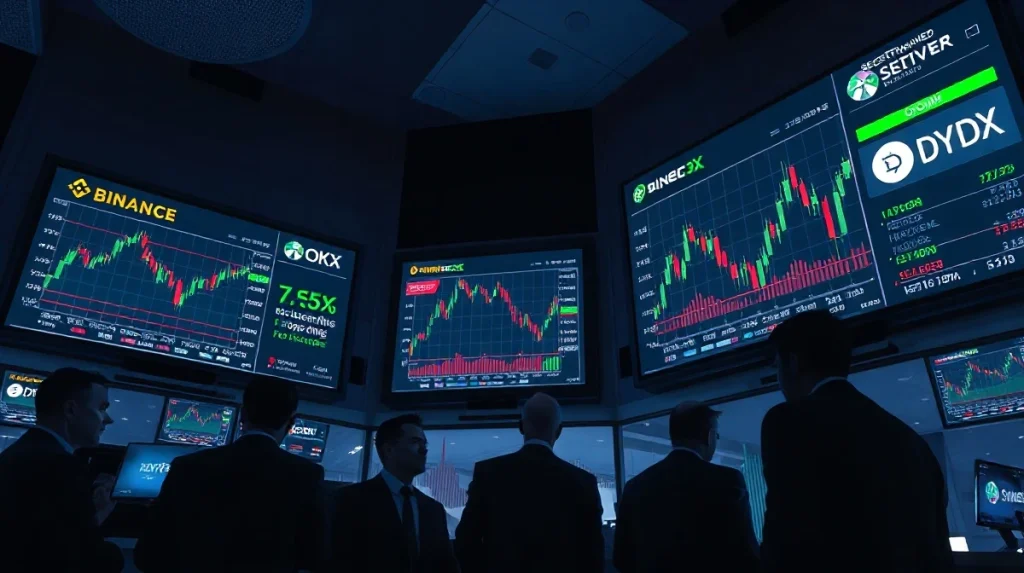
Binance and OKX remain the dominant forces in the crypto perpetual futures market in early 2026, according to a new report from CoinGecko. However, the same data reveals that decentralized exchanges (DEXs) are accelerating their growth, chipping away at the market share of centralized platforms.
Centralized Exchanges Still Hold the Lead
CoinGecko’s 2026 Crypto Perpetuals Report highlights that Binance and OKX together command a significant majority of trading volume in perpetual futures—a type of derivative contract that allows traders to speculate on asset prices without an expiry date. These centralized platforms benefit from deep liquidity, established user bases, and advanced trading tools that have kept them leading of the market for years.
Also read: Bridge Secures MiCA and EMI Licenses in Luxembourg for EU-Wide Crypto Expansion
Industry analysts note that the two exchanges have invested heavily in infrastructure, risk management systems, and regulatory compliance to maintain their positions. For many institutional and high-volume retail traders, these factors remain decisive.
Decentralized Exchanges Gain Real Traction
Despite the entrenched dominance of Binance and OKX, the report underscores a notable shift: DEXs specializing in perpetuals—often called perp DEXs—are experiencing strong growth in both user adoption and trading volume. Platforms like dYdX, GMX, and newer entrants have introduced innovative mechanisms such as multi-collateral pools and reduced slippage, making them increasingly competitive.
Also read: Crypto India: Maharashtra Brings Digital Assets Under Depositor Protection Law
This growth is driven by a segment of traders prioritizing self-custody, transparency, and resistance to censorship. The broader DeFi ecosystem’s maturation has also lowered barriers to entry, with improved user interfaces and faster transaction processing on layer-2 networks.
Why This Matters for Traders
The rising competition between centralized and decentralized perpetual platforms has direct implications for traders. It could lead to tighter spreads, lower fees, and more innovative product offerings across the board. For now, the choice often comes down to a trade-off: the liquidity and speed of centralized exchanges versus the autonomy and transparency of decentralized alternatives.
Regulatory developments also play a role. As governments worldwide refine their approach to crypto derivatives, centralized exchanges face increasing compliance costs, while DEXs operate in a more ambiguous legal gray area—a factor that could either accelerate or hinder their growth depending on future policy decisions.
Conclusion
The perpetual futures market in 2026 is not a zero-sum game. Binance and OKX remain the clear leaders, but the sustained rise of decentralized exchanges signals a structural shift in trader preferences. The coming months will reveal whether DEXs can convert their momentum into meaningful market share, or if centralized platforms will reinforce their grip through further innovation and regulatory alignment.
FAQs
Q1: What are crypto perpetual futures?
Perpetual futures are derivative contracts that allow traders to speculate on the price of an asset without an expiry date. They use a funding rate mechanism to keep the contract price close to the spot price.
Q2: Why are decentralized exchanges growing in perpetuals trading?
DEXs offer benefits like self-custody, transparency, and resistance to censorship. Improved technology and user experience have made them more accessible and competitive with centralized platforms.
Q3: Does the CoinGecko report predict a market shift?
The report does not make predictions but presents data showing that while Binance and OKX still lead, DEX growth is accelerating, suggesting a more competitive environment ahead.