Bitcoin Bottom Analysis: The Critical Tests BTC Must Pass for a True Recovery

Bitcoin’s price action in early 2026 has sparked intense debate among analysts. After a prolonged period of consolidation, key technical indicators are flashing signals that a significant low may be in place. But declaring a definitive Bitcoin bottom requires more than hopeful charts. This analysis identifies the concrete hurdles BTC must clear to confirm a sustainable recovery and shift from a bearish to a bullish market structure.
Bitcoin Bottom: Separating Signal from Noise
Data from CoinGlass shows Bitcoin’s price found consistent support around the $58,000 level throughout March 2026. This zone acted as a floor during multiple sell-offs, absorbing significant selling pressure. The repeated defense of this level is a primary reason analysts are discussing a potential bottom. However, a single support level does not make a market cycle low.
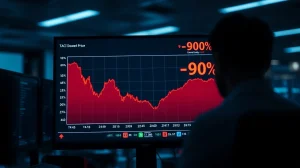
Also read: Telegram-Linked TAC Token Crashes 90% in 15 Minutes: What Happened?
Historical patterns provide context. According to analysis from Glassnode, Bitcoin has typically found cycle bottoms when the MVRV-Z Score, a metric comparing market value to realized value, falls into a deep negative territory. As of early April 2026, this metric hovered near its historical baseline, not the extreme lows seen at past major bottoms like late 2022. This suggests caution is warranted.
On-chain data tells a nuanced story. The Spent Output Profit Ratio (SOPR), which tracks whether coins are being moved at a profit or loss, has reset. For several weeks, the metric has oscillated around 1.0, indicating a balance between profit and loss-taking. This equilibrium often occurs after a capitulation phase, where weak hands have sold. The current SOPR data supports the idea that the most aggressive selling pressure has subsided.
Also read: XRP Scarcity Index on Binance Hits Highest Level Since Mid-2024, So Where Did the Coins Go?
The Final Technical Hurdles for BTC
For the Bitcoin bottom thesis to hold, the asset must overcome several clear technical barriers. The first is reclaiming and holding the 200-day simple moving average (SMA). This long-term trend line, currently situated near $64,500, has acted as dynamic resistance since January 2026. A sustained break above this level on weekly closing basis would be a powerful technical signal.
The second hurdle involves volume. Any upward move must be accompanied by increasing trading volume to confirm genuine buyer interest. Data from CryptoQuant indicates that while spot buying has increased, it remains below the levels seen during the 2024 rally. For a true recovery, volume must expand decisively.
- Weekly Close Above $68,000: This level represents the previous cycle’s all-time high from 2021. A weekly close above it would break a multi-year resistance ceiling.
- On-Chain Support Validation: The $58,000-$60,000 zone must continue to hold as support on any retest. A breakdown below this area would invalidate the bottoming narrative.
- Reduced Volatility: Sustained lower volatility, as measured by the Bollinger Band Width, often precedes a new directional trend.
Market structure on higher timeframes also matters. Bitcoin needs to form a clear series of higher highs and higher lows on the weekly chart. The last confirmed higher high was recorded in March 2025. Until a new one is established, the market remains in a corrective or range-bound phase.
What Institutional Flows Reveal
Spot Bitcoin ETF flows provide a critical fundamental check. According to Farside Investors, U.S. spot Bitcoin ETFs saw net inflows for most of March 2026, reversing the outflows from late 2025. This suggests institutional accumulation is occurring at current price levels. However, the flow data remains inconsistent. A sustained period of net inflows, particularly during price dips, would strongly support the bottoming thesis.
Conversely, analysts note that Grayscale’s GBTC continues to see outflows, though at a much slower pace than in early 2024. The stabilization of GBTC outflows is another prerequisite for a durable bottom. When this fund stops acting as an overhang on the market, a major source of selling pressure will be removed.
Macroeconomic Pressures and Regulatory Clarity
Bitcoin does not trade in a vacuum. The broader financial environment presents its own set of hurdles. The Federal Reserve’s interest rate policy remains a dominant factor. As of April 2026, the market expects rates to stay elevated. High rates increase the opportunity cost of holding non-yielding assets like Bitcoin. A shift toward a more dovish Fed stance would be a significant tailwind.
Regulatory developments also play a role. Clearer regulatory frameworks in major economies like the U.S. and EU could reduce uncertainty and attract more capital. The ongoing implementation of the Markets in Crypto-Assets (MiCA) regulation in Europe is being watched closely. Positive regulatory momentum can act as a catalyst for the next leg up.
Global liquidity conditions are another variable. The U.S. Treasury General Account and reverse repo facility levels indicate the amount of liquidity in the financial system. Historically, expanding liquidity has correlated with stronger risk asset performance, including Bitcoin. Monitoring these macro indicators is essential for assessing Bitcoin’s potential runway.
Sentiment and Derivatives Market Health
Market sentiment, often a contrarian indicator, has been persistently negative. The Crypto Fear & Greed Index spent much of Q1 2026 in “Fear” or “Extreme Fear” territory. From a sentiment perspective, this is a constructive sign. Bottoms often form amid pessimism, not euphoria. The key will be watching for a sustained improvement in sentiment that aligns with price strength.
The derivatives market offers another layer of insight. Funding rates for perpetual swaps have been neutral to slightly negative. This is healthy. It indicates a lack of excessive apply from long positions, which often precede sharp corrections. However, open interest has begun to creep higher. If this is accompanied by positive funding rates, it could signal the return of speculative froth too early in a recovery.
Liquidations data from Coinglass shows a balanced picture. Both long and short liquidations have occurred recently, suggesting a two-sided market without extreme positioning on either side. This equilibrium reduces the risk of a violent, liquidation-driven cascade in either direction.
Conclusion
The evidence for a Bitcoin bottom is mounting but not yet conclusive. Technical support is firming, on-chain metrics are resetting, and institutional flows are improving. However, several critical tests remain. BTC must decisively overcome key technical resistance levels, witness a stabilization in macro headwinds, and see a healthier structure in derivatives markets. The path to a confirmed Bitcoin bottom is now defined. The coming weeks will reveal if the market has the strength to follow it.
FAQs
Q1: What is the most important technical level to watch for confirming a Bitcoin bottom?
The $64,500 level, representing the 200-day moving average, is key. A sustained break above it, confirmed by a weekly close, would be a strong technical signal that the bearish trend is reversing.
Q2: How do Bitcoin ETF flows impact the bottoming process?
Consistent net inflows into U.S. spot Bitcoin ETFs demonstrate institutional buying support. For a durable bottom, these inflows need to persist, especially during periods of price weakness, showing conviction from large investors.
Q3: Has Bitcoin’s price reached a level considered undervalued by on-chain metrics?
Metrics like the MVRV-Z Score suggest Bitcoin is near its historical average valuation, not deeply undervalued as seen at past major cycle lows. This implies the bottoming process may involve more time, not just price.
Q4: What role does macroeconomic policy play?
A significant hurdle is the current high-interest-rate environment, which increases the attractiveness of yield-bearing assets over Bitcoin. A shift in central bank policy toward cutting rates would remove a major headwind for BTC.
Q5: Can sentiment indicators predict a market bottom?
While not predictive on their own, extreme fear or capitulation, as measured by indices like the Crypto Fear & Greed Index, often coincides with market lows. The sustained negative sentiment in early 2026 is a typical characteristic of a bottoming phase.