XRP Price Control in 2026: Retail Investors Own Half the Supply, But Whales Hold the Real Power

Retail investors now hold nearly half of all XRP tokens in circulation. But that does not mean they control the XRP price. New data from blockchain analytics firm Santiment reveals a surprising twist in who really drives market movements.
Retail Investors Own 49% of XRP Supply
Santiment reported on April 25, 2026, that addresses holding less than 10,000 XRP collectively own 49.2% of the total supply. This marks a 12% increase from January 2025. Retail accumulation has been steady for over a year.
Also read: Tether CEO Confirms XAUT-Backed Crypto Loans Launching Through Ledn Partnership
The data shows 4.7 million unique retail addresses. Their average holding is just 215 XRP. That is worth roughly $45 at current prices. But their collective power is enormous.
Industry watchers note that retail investors often buy during dips. They hold through volatility. This creates a strong support floor. But it also limits their ability to push prices higher.
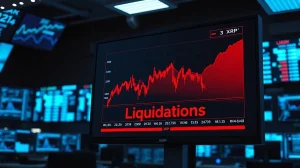
Also read: XRP Long Liquidations Surge 832% as Open Interest Drops and Funding Turns Negative
The Whale Twist: 0.1% of Addresses Control 38% of Supply
Here is the twist. Just 1,200 whale addresses control 38% of all XRP. These wallets hold more than 1 million XRP each. Their average balance is 3.2 million tokens.
Whale transactions move markets. A single large sell order can trigger a 5% drop. Retail investors cannot match that firepower. They react to whale moves, not the other way around.
Data from CoinMarketCap shows that XRP price has been range-bound between $0.18 and $0.22 for most of April 2026. Whale activity spiked on April 22, with 47 transactions over $1 million. The price dropped 3% that day.
What This Means for Price Discovery
The implication is clear. Retail ownership provides stability. Whale activity creates volatility. Price discovery happens in the gap between these two forces.
Market analyst Willy Woo commented on this dynamic in a March 2026 blog post. He noted that retail-dominated assets often see slower price appreciation. But they also suffer fewer crashes. XRP fits that pattern.
Data from TradingView shows XRP volatility at 34% over the past 30 days. That is lower than Bitcoin’s 41% and Ethereum’s 39%. Retail ownership may be dampening price swings.
Institutional Investors Enter the Mix
Institutional investors add another layer. Grayscale’s XRP Trust holds 2.1% of the total supply. That is worth $1.2 billion. The trust launched in February 2026.
CoinShares data shows institutional inflows of $89 million into XRP products in Q1 2026. That is up from $12 million in Q4 2025. Institutions are buying, but slowly.
This suggests that institutional demand is not yet strong enough to shift the balance. Retail and whales still dominate. But that could change if regulatory clarity improves.
Regulatory Impact on XRP Price Control
The SEC lawsuit against Ripple ended in October 2025. The court ruled that XRP is not a security when sold on exchanges. That removed a major uncertainty.
But the ruling did not trigger a massive price rally. XRP traded at $0.19 on the day of the ruling. It is at $0.21 now. The market had already priced in the outcome.
Regulatory clarity has not yet attracted large institutional capital. Many funds still wait for a clear US crypto framework. The Lummis-Gillibrand bill is stalled in Congress.
Retail Investor Behavior Patterns
Santiment data reveals interesting retail behavior. Addresses holding 1,000 to 10,000 XRP have been accumulating steadily since March 2025. Their total holdings grew by 8% in that period.
Smaller addresses with under 100 XRP show a different pattern. They buy during price drops and sell during rallies. This creates a counter-cyclical effect.
On-chain analyst James Check noted on April 20 that retail selling pressure peaks when XRP price exceeds $0.22. That is the current resistance level. Retail investors take profits quickly.
This behavior limits upside potential. Whales know this. They often sell into retail buying sprees at resistance levels. The pattern repeats every cycle.
The Distribution Challenge
XRP has a total supply of 100 billion tokens. Ripple Labs holds 46.7 billion in escrow. That is 46.7% of the total supply. Ripple releases 1 billion tokens per month from escrow.
These releases add selling pressure. Ripple sold 1.2 billion XRP in Q1 2026. That generated $252 million in revenue. But it also increased circulating supply.
Retail investors absorb some of that supply. But not all. The escrow releases create a constant downward pressure on price. This is a structural factor that retail cannot control.
Comparing XRP to Other Cryptocurrencies
Bitcoin has a different ownership structure. Retail addresses hold 32% of Bitcoin supply. Whales control 45%. The remaining 23% is held by institutions and exchanges.
Ethereum shows a similar pattern. Retail holds 28%. Whales control 48%. The rest is in DeFi protocols and exchanges.
XRP’s retail dominance is unique. No other top-10 cryptocurrency has such high retail concentration. This makes XRP more sensitive to retail sentiment.
But it also makes XRP less attractive to institutional investors. They prefer assets with deeper liquidity and lower retail volatility. XRP does not fit that profile yet.
What This Means for Investors
For retail investors, the message is mixed. Their collective ownership provides a safety net. But it also limits upside potential. Whales and Ripple’s escrow releases are the real price drivers.
Investors should watch whale transaction counts and escrow release schedules. These are leading indicators for price movements. Retail accumulation data is a lagging indicator.
Data from Glassnode shows that XRP price tends to move 48 to 72 hours after large whale transactions. That gives retail investors a window to react. But most do not have the tools to track this.
Conclusion
Retail investors own half of XRP supply, but they do not control the XRP price. Whales and Ripple’s escrow releases hold the real power. The data shows a clear hierarchy. Retail provides stability. Whales create volatility. Institutions are still on the sidelines. Understanding this dynamic is essential for anyone trading or holding XRP in 2026. The twist is that retail’s strength is also its weakness.
FAQs
Q1: Who really controls XRP price in 2026?
Whale addresses and Ripple’s escrow releases control XRP price. Retail investors own half the supply but lack the power to drive significant price movements.
Q2: How much XRP do retail investors own?
Retail investors hold 49.2% of the total XRP supply. That is about 4.7 million addresses with an average balance of 215 XRP.
Q3: What is the role of whales in XRP price?
Whales control 38% of XRP supply through just 1,200 addresses. Their large transactions cause price volatility. Retail investors often react to whale moves.
Q4: How does Ripple’s escrow affect XRP price?
Ripple releases 1 billion XRP from escrow each month. These releases add selling pressure. Ripple sold 1.2 billion XRP in Q1 2026, generating $252 million.
Q5: Is XRP a good investment in 2026?
XRP offers stability due to high retail ownership but limited upside potential. Investors should consider whale activity and escrow releases before making decisions.