Exclusive: Only 0.03% Own XRP as Analysts Target Triple-Digit Prices
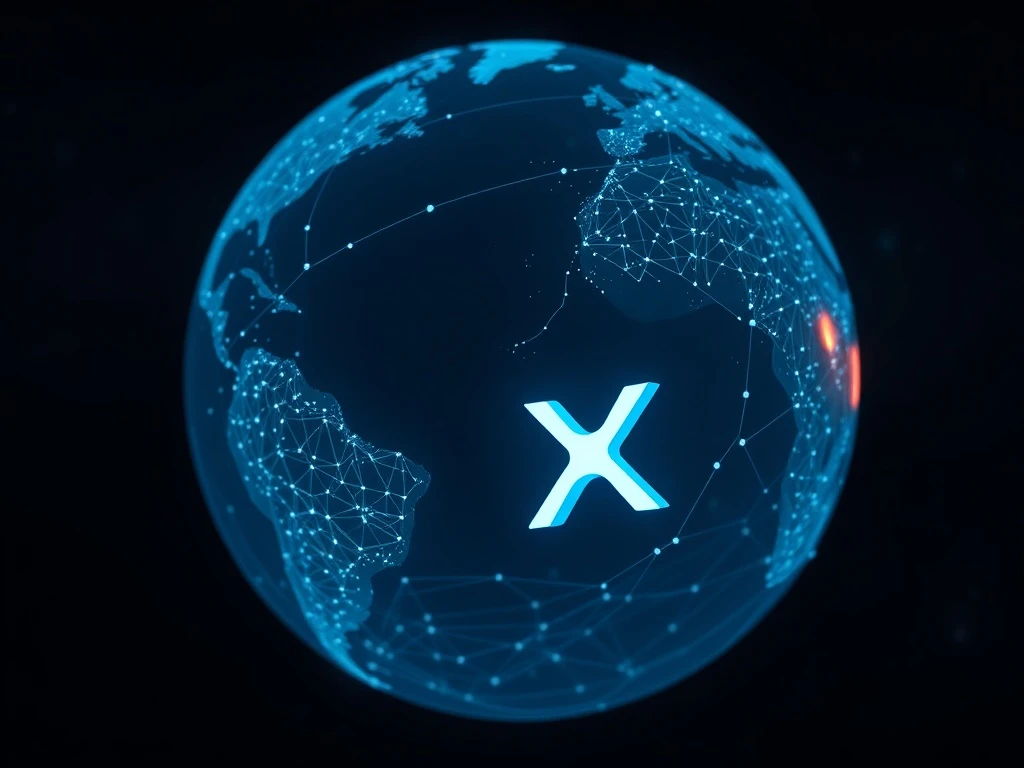
LONDON, March 15, 2026 — A startling new analysis reveals that just 0.03% of the world’s population currently holds XRP, Ripple’s native digital asset. This exclusive data, compiled from multiple blockchain analytics firms, arrives as several prominent cryptocurrency analysts begin publishing ambitious forecasts. Consequently, they suggest triple-digit price targets could become plausible within specific market conditions. The convergence of extreme token concentration and bullish technical analysis is generating intense debate across financial circles today.
Scarcity Meets Speculation: The 0.03% XRP Ownership Reality
Blockchain intelligence platform Chainalysis provided the foundational data for the 0.03% ownership figure. Their Q4 2025 Global Crypto Adoption Report, released last month, shows approximately 2.4 million unique, active XRP wallets holding a non-zero balance. When measured against a global population of 8.1 billion, this translates to ownership by just 0.03% of individuals. However, analysts caution this metric has limitations. For instance, it counts wallets, not people, and excludes tokens held on centralized exchanges in omnibus accounts.
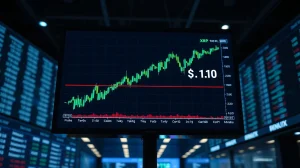
Also read: XRP Price Reclaims $1.10 Support as Upbit Volume Surpasses Bitcoin
David Hoffman, Head of Research at CryptoQuant, contextualized the number during a panel discussion at the Digital Asset Summit in Zurich. “While the wallet count seems low,” Hoffman stated, “it’s critical to understand distribution. A significant portion of XRP’s circulating supply is held by a relatively small cohort of large addresses, often called ‘whales.’ This concentration creates a unique supply-side dynamic.” The ownership analysis follows Ripple’s own quarterly markets reports, which consistently show the majority of XRP trading volume occurs outside the United States, particularly in Asia and the Middle East.
Analysts Weigh Triple-Digit XRP Price Potential
The stark ownership statistic is colliding with renewed analytical interest in XRP’s long-term valuation. Markus Thielen, founder of 10x Research, published a report this week outlining a scenario-based model. His model suggests XRP could reach between $100 and $250 in a “super-cycle” event, though he emphasizes this is a low-probability, high-outcome prediction. Thielen’s model hinges on several concurrent factors: massive adoption of Ripple’s On-Demand Liquidity product by global banks, a definitive resolution to all ongoing regulatory litigation, and a broader cryptocurrency market capitalization expanding by an order of magnitude.
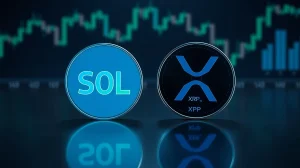
Also read: Can Solana Flip XRP? A Data-Driven Analysis of Market Cap and Network Momentum
- Adoption Catalyst: Widespread use of XRP for cross-border settlements could fundamentally alter its utility demand, moving it beyond speculative trading.
- Supply Mechanics: The locked escrow of billions of XRP by Ripple creates a programmed, decelerating release of new tokens into circulation, a factor some models incorporate.
- Market Sentiment Shift: A clear regulatory framework, particularly from the U.S. Securities and Exchange Commission, could unlock institutional investment currently on the sidelines.
Expert Perspectives on the Price Debate
Reaction from the broader analyst community remains divided. Eleanor Creighton, a veteran fintech analyst at Bernstein, offered a tempered view. “Projecting triple-digit prices for any asset requires extraordinary assumptions about future cash flows or utility,” Creighton noted in a client memo. “For XRP, that utility is tied to institutional payment flows, not retail sentiment. The growth trajectory there is measurable, and current volumes, while growing, don’t support those price levels without a standard shift.” Conversely, pseudonymous analyst “Dark Bull” cited on-chain metrics showing a multi-year consolidation pattern. He argued that the low ownership percentage could be a contrarian indicator if adoption accelerates, creating a rapid demand shock against a concentrated supply.
Comparative Environment of Major Digital Assets
To understand XRP’s position, its ownership and market metrics must be viewed relative to other major cryptocurrencies. While direct comparisons are imperfect due to different utilities, the contrasts are revealing. Bitcoin, often seen as digital gold, has an estimated ownership base of 3-4% of the global population when including indirect exposure via funds and ETFs. Ethereum, with its sprawling ecosystem of applications, likely reaches a similar breadth. XRP’s primary use-case focus on bank and enterprise payments may inherently limit its widespread retail ownership in the near term.
| Asset | Estimated Global Ownership % | Primary Use Case | Current Circulating Supply |
|---|---|---|---|
| Bitcoin (BTC) | ~3-4% | Store of Value / Settlement | ~19.7M |
| Ethereum (ETH) | ~2-3% | Smart Contract Platform | ~120M |
| XRP (XRP) | ~0.03% | Cross-Border Payments | ~55B |
| Cardano (ADA) | ~0.5-1% | Smart Contract Platform | ~35B |
The Road Ahead: Regulatory Clarity and Institutional Adoption
The immediate future for XRP valuation remains tightly coupled to two unresolved narratives. First, the conclusion of Ripple’s long-running legal dispute with the U.S. SEC is anticipated by late 2026. A final judgment that clearly defines XRP’s status could remove a significant overhang. Second, the rollout of Ripple’s central bank digital currency (CBDC) platform, currently in pilot phases with several governments, could provide a tangible, non-speculative utility benchmark. Analysts at JP Morgan, in a recent blockchain report, identified “regulatory resolution” and “CBDC infrastructure adoption” as the two key milestones for reassessing payment-focused digital assets like XRP.
Market Reaction and Community Sentiment
Following the publication of the ownership data and analyst reports, social media sentiment within the XRP community, often called the “XRP Army,” has been polarized. Some view the low ownership percentage as a bullish signal of vast untapped growth potential. Others express frustration, arguing it reflects poor retail marketing compared to other blockchain projects. On trading floors, the news caused a brief spike in volatility, but volumes quickly normalized, suggesting large institutional players are waiting for more concrete developments rather than analytical speculation.
Conclusion
The revelation that merely 0.03% of the global population owns XRP presents a fascinating paradox. It highlights the asset’s current niche status while simultaneously fueling arguments about its future upside potential. Analyst calls for triple-digit prices, though speculative, focus attention on the critical variables of institutional adoption and regulatory certainty. The coming eighteen months will be decisive. Key events include the resolution of major lawsuits and the measurable growth of Ripple’s enterprise network. For investors and observers, the story is no longer just about price charts. It is now fundamentally about whether a technology designed for banks can achieve the widespread adoption necessary to justify the most ambitious valuations. The market will provide the ultimate answer.
Frequently Asked Questions
Q1: What does the 0.03% XRP ownership figure actually mean?
It means that of the roughly 8.1 billion people on Earth, only about 2.4 million are estimated to hold XRP in a self-custodied wallet. This figure, from Chainalysis, counts unique active wallets and excludes tokens held collectively on behalf of many users on large exchanges.
Q2: Why are analysts discussing $100+ prices for XRP?
Some analysts create long-term models based on hypothetical scenarios of massive adoption. If XRP became the primary settlement asset for a large portion of global cross-border payments, demand could theoretically outstrip the programmed supply release, pushing prices higher. These are low-probability, high-outcome forecasts.
Q3: What needs to happen for XRP to see major price appreciation?
Two main factors are cited: 1) A final, favorable resolution to all regulatory uncertainty, particularly in the United States. 2) Tangible, large-scale adoption of Ripple’s payment products (like ODL) by major financial institutions, driving consistent utility demand for the token.
Q4: How does XRP ownership compare to owning Bitcoin or Ethereum?
Bitcoin and Ethereum have significantly broader estimated ownership, potentially reaching 3-4% and 2-3% of the global population respectively. This is due to their longer history, stronger brand recognition among retail investors, and (for Ethereum) a vast ecosystem of accessible applications.
Q5: Does Ripple’s escrow lock-up of XRP affect its price potential?
Yes. Ripple holds over 40 billion XRP in a cryptographically-secured escrow. These funds release on a programmed schedule (typically 1 billion per month, with most returned to escrow). This mechanism is designed to provide predictable supply inflation and prevent market flooding, a factor analysts include in long-term models.
Q6: Should the average investor consider XRP based on this news?
Investment decisions should never be based on a single statistic or analyst prediction. The 0.03% data point indicates current concentration, not future value. Any investment in a volatile asset like cryptocurrency requires independent research, understanding of the technology’s utility, and consideration of personal risk tolerance.