XRP Ledger as Consumer Finance Layer: Anodos CEO’s Bold Pitch at Paris Blockchain Week
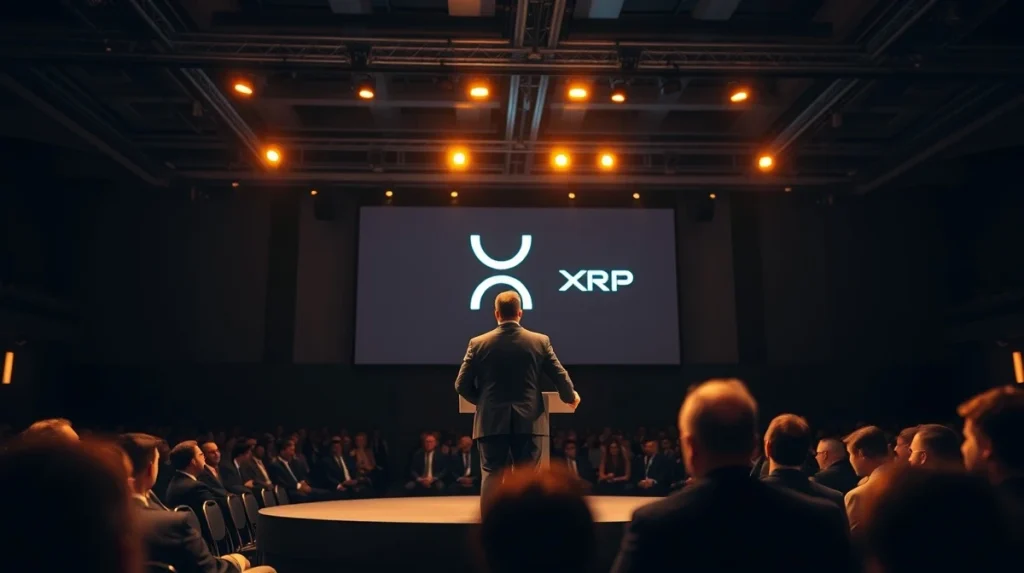
Paris, France — April 28, 2026. The CEO of Anodos made a strong case for the XRP Ledger as a consumer finance layer during a keynote at Paris Blockchain Week. The speech shifted the conversation from enterprise use cases to everyday financial applications.
The executive argued that the XRP Ledger’s speed and low costs make it ideal for consumer transactions. This includes payments, remittances, and microtransactions. The proposal challenges the current dominance of traditional payment rails.
Also read: XRP ETF Gains Institutional Backing From Virginia and Florida Investment Advisors
XRP Ledger’s Consumer Finance Potential
Anodos CEO highlighted the XRP Ledger’s native features. These include fast settlement times of 3-5 seconds. Transaction costs average less than $0.001. This makes it cheaper than credit card networks and bank transfers.
“The XRP Ledger was built for speed,” the CEO said during the presentation. “It can handle thousands of transactions per second. This is not just for banks. It is for everyday people buying coffee or sending money home.”
Also read: BlackRock’s BUIDL Fund Doubles on Avalanche, Surpasses $900M in AUM
Industry watchers note that the XRP Ledger already processes millions of transactions daily. Data from XRP Scan shows over 2 million active accounts. This suggests a growing user base beyond institutional clients.
Paris Blockchain Week Context
Paris Blockchain Week is a major European crypto event. It draws developers, investors, and regulators. The 2026 edition focused on real-world adoption. The Anodos CEO’s speech fit this theme perfectly.
The event featured panels on DeFi, NFTs, and tokenization. But the consumer finance angle stood out. Many speakers discussed how blockchain can replace traditional banking for retail users.
This is not a new idea. But the timing is right. Stablecoins are growing rapidly. Circle’s USDC has a market cap over $50 billion. Tether’s USDT exceeds $100 billion. Consumers want fast, cheap digital payments.
Why the XRP Ledger Fits
The XRP Ledger has several advantages for consumer finance. First, it is decentralized and open. Anyone can build applications on it. Second, it uses a unique consensus mechanism. This avoids the energy waste of proof-of-work systems.
Third, the ledger supports native tokens. Developers can create stablecoins or other assets directly on the XRP Ledger. This reduces complexity. Fourth, the network has a built-in decentralized exchange (DEX). Users can swap assets without a third party.
The implication is clear. The XRP Ledger could become a backbone for consumer payment apps. Companies like Anodos are already building on it.
Anodos and Its Role
Anodos is a blockchain infrastructure firm. It provides tools for developers to build on the XRP Ledger. The company focuses on scalability and user experience. Its CEO has been a vocal advocate for the ledger’s consumer potential.
According to Anodos, the company has processed over $1 billion in transactions on the XRP Ledger. This includes payments for e-commerce, remittances, and gaming. The data suggests real-world usage is accelerating.
What this means for investors is that the XRP Ledger is not just a speculative asset. It has functional utility. The Anodos CEO’s pitch at Paris Blockchain Week reinforces this narrative.
Comparisons to Other Blockchains
The XRP Ledger competes with other networks for consumer finance. Solana offers high speed but has faced reliability issues. Ethereum is slower and more expensive. Bitcoin is not designed for frequent small payments.
Here is a quick comparison:
- XRP Ledger: 3-5 second finality, $0.001 fee, 1,500 TPS
- Solana: 2-5 second finality, $0.01 fee, 2,000+ TPS (but outages)
- Ethereum: 15-20 second finality, $1-10 fee, 15 TPS (Layer 1)
- Bitcoin: 10-60 minute finality, $1-5 fee, 7 TPS
Data from CoinMetrics and Blockchain.com shows these figures. The XRP Ledger offers the best balance of speed, cost, and reliability for consumer payments.
Regulatory Considerations
Consumer finance requires regulatory clarity. The XRP Ledger has faced legal challenges in the past. The SEC lawsuit against Ripple ended in 2024. The court ruled that XRP is not a security when sold on exchanges. This removed a major cloud.
Regulators in Europe are also moving forward. The Markets in Crypto-Assets (MiCA) framework provides rules for stablecoins and crypto services. This creates a legal foundation for consumer finance applications.
The Anodos CEO noted that compliance is key. “We work with regulators, not against them,” he said. “Consumer trust depends on clear rules.” This approach could accelerate adoption.
Potential Impact on the Market
If the XRP Ledger becomes a consumer finance layer, the implications are large. Payment processors could integrate it. Remittance companies could use it to lower fees. Merchants could accept XRP-based payments with near-zero cost.
Industry watchers estimate that the global remittance market is over $700 billion annually. Fees average 6-7%. The XRP Ledger could reduce this to under 1%. This would save consumers billions of dollars each year.
The same logic applies to e-commerce. Online payment fees are 2-3% per transaction. The XRP Ledger could cut this to near zero. This would benefit both merchants and buyers.
Challenges Ahead
Adoption is not guaranteed. Consumer finance requires user-friendly apps. Most people do not want to manage private keys. They want a simple experience like Venmo or PayPal.
Anodos is working on solutions. The company builds wallets and APIs that abstract away complexity. But competition is fierce. Other blockchains are also targeting this space.
Another challenge is volatility. XRP’s price fluctuates. This makes it less suitable for everyday payments. Stablecoins on the XRP Ledger could solve this. But they need liquidity and trust.
Despite these hurdles, the vision is compelling. The Anodos CEO’s speech at Paris Blockchain Week adds momentum to the idea.
Conclusion
The XRP Ledger has strong potential as a consumer finance layer. The Anodos CEO’s pitch at Paris Blockchain Week highlights this. With fast settlement, low fees, and a growing ecosystem, the ledger could transform how people pay. But success depends on regulatory clarity, user-friendly apps, and stablecoin integration. The next few years will determine if this vision becomes reality.
FAQs
Q1: What is the XRP Ledger?
The XRP Ledger is a decentralized blockchain network. It processes payments quickly and cheaply. It uses a unique consensus mechanism instead of proof-of-work.
Q2: How does the XRP Ledger compare to other blockchains for payments?
It is faster and cheaper than Ethereum and Bitcoin. It is more reliable than Solana. It is designed specifically for payments, unlike general-purpose blockchains.
Q3: What did the Anodos CEO say at Paris Blockchain Week?
The CEO argued that the XRP Ledger can serve as a consumer finance layer. He highlighted its speed, low fees, and native features. He called for more apps targeting everyday users.
Q4: Is XRP legal after the SEC lawsuit?
Yes. The court ruled in 2024 that XRP is not a security when sold on exchanges. This removed major regulatory uncertainty for the token.
Q5: Can I use XRP for everyday purchases?
Yes, but adoption is still limited. Some merchants accept XRP directly. Others use payment processors that convert XRP to fiat. Stablecoins on the XRP Ledger may make it easier.