Breaking: XRP Funding Rates Crash to Extreme Lows as Analyst Predicts $2.20 Surge
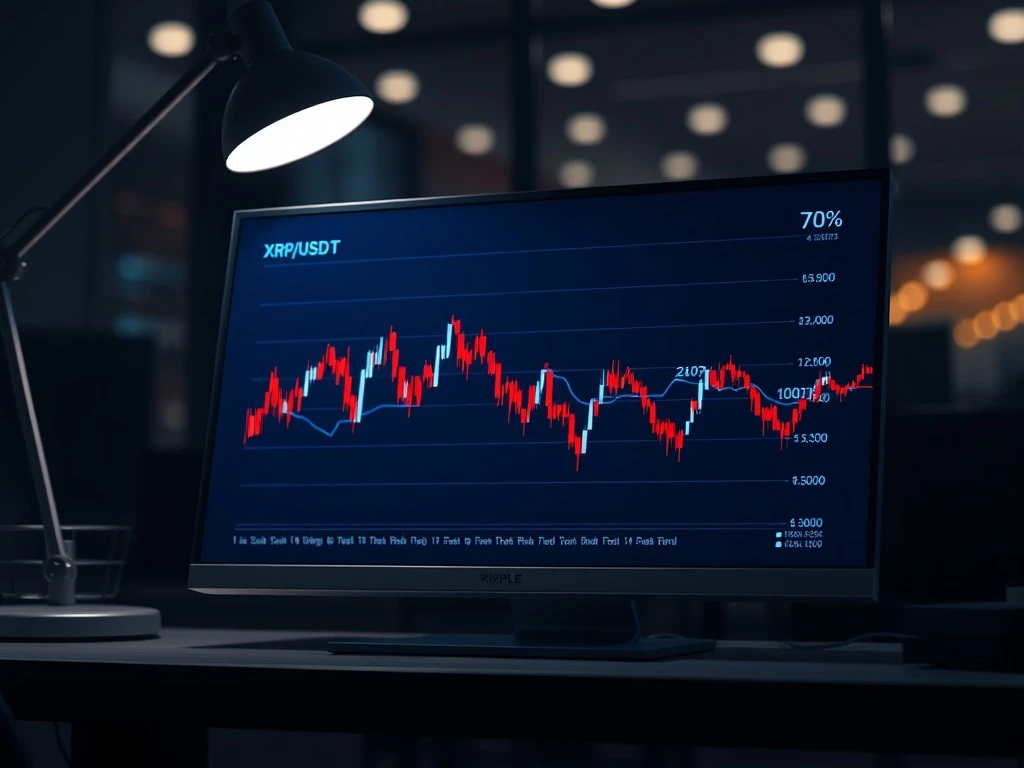
LONDON, March 15, 2026 — The XRP funding rates on the global cryptocurrency exchange Binance have plunged to extreme negative levels, a rare derivatives market signal that has captured the attention of analysts worldwide. This development occurs as the digital asset, associated with Ripple Labs, trades between $1.35 and $1.50, having retreated approximately 60% from its 2025 highs. Market expert Michaël van de Poppe of MN Trading has now identified a critical technical pattern, suggesting the potential for a dramatic weekly close near $2.20 if key resistance levels break. The extreme negative funding rate, recorded in the early hours of March 15, indicates a overwhelming bearish sentiment among leveraged traders, often viewed as a potential contrarian indicator for a price reversal.
XRP Funding Rates Flash a Critical Contrarian Signal
Funding rates are periodic payments exchanged between traders in perpetual swap markets to anchor the contract price to the underlying spot asset. A deeply negative rate, as observed for XRP on Binance, signifies that short-sellers are paying longs to maintain their positions, reflecting excessive bearish employ. Data from Coinglass confirms the rate dipped below -0.05% on an annualized basis, a level not seen since the market downturn of late 2024. “When funding turns this negative, it often signals a crowded trade,” explains David Lawant, Head of Research at FalconX. “The market becomes primed for a short squeeze, where rapid buying can force those short positions to cover, accelerating upward momentum.” This derivatives activity contrasts with XRP’s relative price stability over the past week, creating a notable divergence between spot and futures market sentiment.
Also read: BNB Chain Reveals New Layer 1 Blockchain for Agentic Trading, Mainnet Set for 2027
Historically, such extreme readings have preceded significant trend reversals. For instance, similar negative funding extremes in July 2024 preceded a 40% rally in XRP’s price over the following month. The current scenario unfolds against a backdrop of ongoing legal clarity for Ripple following its important court victories against the U.S. Securities and Exchange Commission (SEC). Consequently, analysts are scrutinizing whether this derivatives signal marks a local bottom or merely a pause in a broader corrective phase.
Analyst Eyes a $2.20 Weekly Close Amid Volatile Conditions
While the derivatives market flashes red, technical analysts are mapping a path for a potential explosive move upward. Notably, Michaël van de Poppe highlighted a specific chart formation in a March 14 market update. He pointed to a multi-month consolidation pattern and identified the $1.65–$1.75 zone as the critical resistance gateway. A decisive break and close above this level, he argues, could trigger a wave of buying targeting the next major resistance cluster around $2.20. This would represent a gain of over 60% from current prices. “The market is compressing,” van de Poppe stated. “We’ve seen this before with XRP. These periods of low volatility and extreme sentiment often resolve with a powerful directional move.”
Also read: Naver Financial and Dunamu Push Share Swap Deadline to December Amid Regulatory Hurdles
- Critical Resistance Break: A weekly close above $1.75 is identified as the primary trigger for the bullish scenario.
- Liquidity Pools: Exchange data shows significant sell-side liquidity resting just above $1.50, which must be absorbed for the rally to initiate.
- Macro Correlation: The move remains contingent on broader cryptocurrency market strength, particularly Bitcoin’s ability to hold above key support levels.
Institutional and Expert Perspectives on the Divergence
The stark divergence between pessimistic derivatives positioning and a bullish technical forecast creates a complex arena. James Check, Lead Analyst at Glassnode, contextualizes the data by referencing on-chain metrics. “While funding is negative, we’re not seeing massive exchange inflows from long-term holders,” Check notes, referencing Glassnode’s proprietary data. “This suggests the selling pressure is largely driven by leveraged speculators, not fundamental investors exiting.” This perspective is supported by a relatively stable supply of XRP on exchanges, which has not spiked dramatically during the recent price decline. Furthermore, Ripple’s quarterly XRP Markets Report, released in February 2026, highlighted continued growth in On-Demand Liquidity (ODL) usage, providing a fundamental use-case anchor often cited by long-term bulls.
Broader Context: XRP’s Journey in the Post-SEC Space
To understand the significance of current price action, one must consider XRP’s unique trajectory following its legal battles. The asset’s performance has often decoupled from the broader altcoin market, driven by its specific regulatory developments. The resolution of the SEC case removed a major overhang, but the market has since grappled with questions about adoption pace and macroeconomic headwinds. The table below compares key XRP metrics from its 2025 peak to the present situation, illustrating the scale of the drawdown and current market positioning.
| Metric | 2025 High (Approx.) | Current Level (March 2026) | Change |
|---|---|---|---|
| Price (USD) | $3.40 | $1.45 | -57% |
| Binance Funding Rate | Mildly Positive | Extremely Negative | Sentiment Reversal |
| 30-Day Volatility | High | Compressed/Low | Volatility Squeeze |
| Exchange Net Flow (7d) | Moderate Inflows | Neutral/Slight Outflows | Reduced Selling Pressure |
What Happens Next: Scenarios for Traders and Investors
The immediate future hinges on the market’s reaction to the current technical and derivatives setup. The primary bullish scenario, as outlined by van de Poppe, requires a catalyst—potentially a positive broader market move or Ripple-specific news—to break the $1.75 resistance. Failure to do so could see XRP retest lower support levels near $1.20, invalidating the short-term bullish thesis. Traders will closely monitor the weekly candle close on Sunday, March 20, for confirmation of either direction. Meanwhile, risk managers emphasize the danger of a “bull trap” if price briefly spikes to liquidate shorts before resuming a downtrend, a common occurrence in highly leveraged markets.
Community and Market Participant Reactions
The crypto community on platforms like X (formerly Twitter) and Discord is sharply divided. Derivatives traders sharing screenshots of their short positions express confidence in further downside, citing macroeconomic uncertainty. Conversely, long-term XRP holders, often referred to as the “XRP Army,” are interpreting the negative funding as a classic “blood in the streets” buying opportunity, pointing to the asset’s long-term utility thesis. This split in retail sentiment mirrors the professional analysis, creating a tense equilibrium that typically precedes significant volatility.
Conclusion
The XRP funding rates hitting extreme negative territory on Binance presents a compelling market anomaly. It signals maximum bearishness among leveraged traders just as a respected technical analyst charts a path to a $2.20 weekly close. This divergence between derivatives sentiment and spot price potential sets the stage for a high-volatility resolution. The coming days will be critical, with the $1.75 resistance level acting as the line in the sand. Investors should watch for a confirmed breakout supported by rising volume, while remaining cautious of false moves in a market still finding its footing after a significant correction. The interplay between technical patterns, on-chain data, and derivatives metrics will ultimately dictate whether XRP stages a powerful reversal or continues its consolidation.
Frequently Asked Questions
Q1: What do negative XRP funding rates on Binance actually mean?
Negative funding rates mean traders holding short (bearish) positions are paying a fee to traders holding long (bullish) positions. This occurs when the perpetual swap price trades below the spot price and indicates overwhelming bearish sentiment in the leveraged derivatives market.
Q2: Why is a $2.20 weekly close for XRP significant?
A weekly close at $2.20, as highlighted by analyst Michaël van de Poppe, would represent a break above a key multi-month resistance zone. It would confirm a major bullish trend reversal on a higher timeframe, potentially triggering algorithmic and institutional buying.
Q3: How often do extreme funding rates like this occur?
Extreme negative funding rates are relatively rare and typically occur during periods of intense fear or capitulation in the market. For major assets like XRP, such events might happen only a few times a year, often marking local price bottoms.
Q4: What is the main risk for traders following this signal?
The primary risk is that extreme sentiment can become even more extreme. Prices can continue to fall despite negative funding, leading to further losses for those who buy prematurely. This is known as “catching a falling knife.”
Q5: How does Ripple’s legal status affect this price analysis?
While the major SEC lawsuit is resolved, providing regulatory clarity, the analysis is primarily technical and market-structure based. However, the legal clarity removes a systemic risk that previously overshadowed all other factors for XRP.
Q6: Should a long-term investor care about derivatives funding rates?
For long-term investors focused on fundamentals, funding rates are a short-term noise indicator. However, understanding these extremes can help identify periods of potential market irrationality, which may present strategic entry or accumulation points.