U.S. Lawmakers Target $93 Trillion ACH Network for Revolutionary Overhaul, Eye Ripple’s Tech
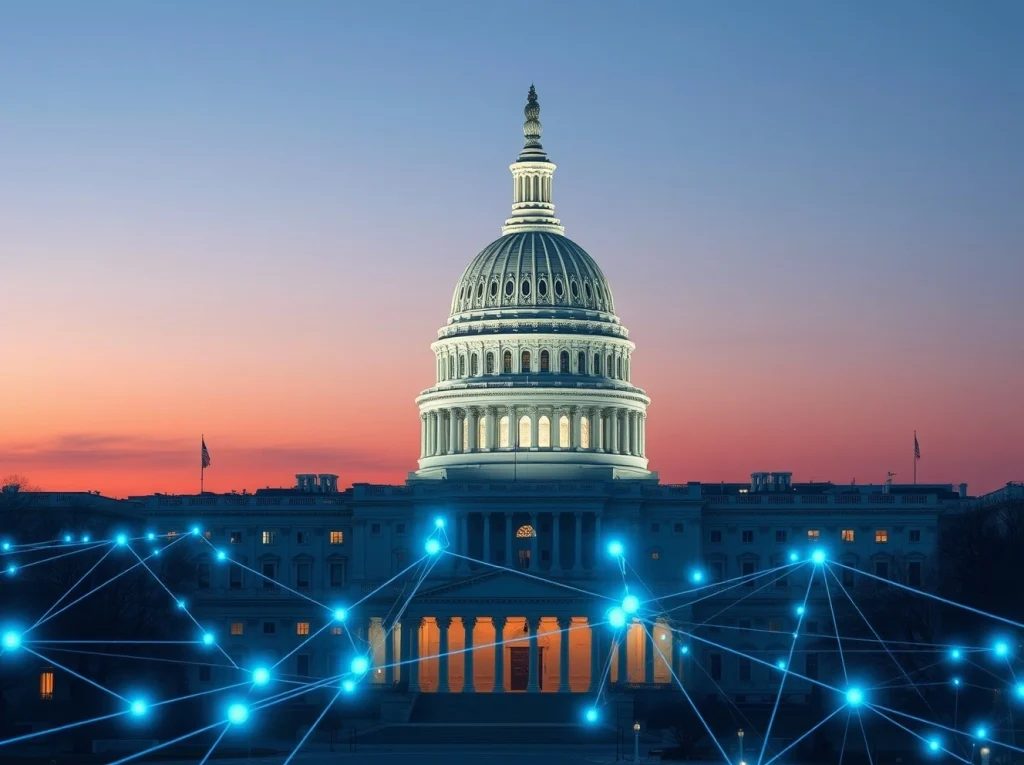
WASHINGTON, D.C. — In a significant move to modernize the nation’s financial plumbing, a bipartisan group of U.S. lawmakers has formally cited blockchain firm Ripple in legislative proposals aiming to overhaul the aging $93 trillion Automated Clearing House (ACH) network. This push, detailed in recent committee discussions and draft legislation, seeks to address long-standing criticisms of the ACH system’s speed and efficiency by exploring distributed ledger technology (DLT) models.
Lawmakers Propose ACH Network Overhaul with Technology Focus
The Automated Clearing House network, operated by Nacha, forms the backbone of U.S. electronic funds transfers. It processes direct deposits, bill payments, and business-to-business transactions. However, the system typically requires 1-2 business days for settlement, a lag lawmakers now deem unacceptable in a digital economy. Consequently, draft legislation from the House Financial Services Committee explicitly references “innovative settlement layers, including those utilizing distributed ledger technology as demonstrated by providers like Ripple,” as potential frameworks for a next-generation system.
Also read: NIGHT Price Stays Under Pressure Despite Midnight’s Token Terminal Partnership
This legislative attention follows years of advocacy from financial technology experts. They argue that the current batch-processing model, designed in the 1970s, creates unnecessary friction and risk. For instance, the system’s operating hours exclude weekends and holidays, delaying urgent transactions. Moreover, the multi-day settlement window exposes businesses to liquidity challenges and fraud risk. Lawmakers are now acting on these concerns, framing modernization as critical for economic competitiveness and consumer protection.
The Core Technology Debate and Ripple’s Role
The mention of Ripple points to a specific technological approach. RippleNet, the company’s global payments network, uses a consensus ledger to support real-time settlement and currency exchange. Unlike the ACH’s centralized, batch-based system, this model validates transactions across a distributed network in seconds. Proponents in Congress suggest such a structure could underpin a new, 24/7/365 U.S. payment rail.
Also read: Telegram-Linked TAC Token Crashes 90% in 15 Minutes: What Happened?
However, the legislative text remains technology-agnostic, emphasizing desired outcomes over prescribed solutions. Key requirements include:
- Real-time settlement: Final, irrevocable settlement within seconds.
- Interoperability: Smooth connection with existing bank systems and new payment apps.
- Enhanced security: Built-in mechanisms to reduce fraud and errors.
- Lower cost: Reducing the per-transaction costs for consumers and businesses.
This focus on outcomes opens the field to various technologies. Meanwhile, it acknowledges Ripple’s established work with over 100 financial institutions worldwide on cross-border payments, a use case with parallels to domestic ACH modernization.
Regulatory and Practical Hurdles for Implementation
Significant obstacles remain before any blockchain-inspired system could replace or augment the ACH. First, the scale is immense. The ACH network processed 31.5 billion transactions valued at $93 trillion in 2025, according to Nacha data. Any new system must handle comparable volume without failure. Second, regulatory clarity for digital assets and DLT in banking is still evolving. The Securities and Exchange Commission’s ongoing case against Ripple, concerning the classification of XRP, exemplifies the complex regulatory market.
Furthermore, legacy banking infrastructure presents a massive integration challenge. Most U.S. banks run on core processing systems that are decades old. Transitioning to a new settlement layer would require enormous investment and coordination. Industry experts caution that a hybrid model, where DLT handles settlement while traditional interfaces manage customer interactions, may be a more feasible intermediate step.
Global Precedents and the U.S. Competitive Stance
Lawmakers are motivated by global shifts. Other countries have already deployed faster payment systems. The UK’s Faster Payments Service, India’s Unified Payments Interface (UPI), and the European Central Bank’s TARGET Instant Payment Settlement (TIPS) offer real-time capabilities. The U.S. Federal Reserve’s own FedNow Service, launched in 2023, provides instant payments but operates alongside, not as a replacement for, the ACH.
The legislative push aims to consolidate and upgrade the entire backend infrastructure. Advocates argue this is necessary to maintain the U.S. dollar’s dominance in global trade and to encourage domestic fintech innovation. A slower, more expensive domestic payment system could push innovation and transaction volume to other jurisdictions with more advanced infrastructure.
Potential Impacts on Consumers and Businesses
The implications of a modernized ACH network are profound. For consumers, paychecks could clear instantly at any time, and bill payments would be immediate, eliminating due-date timing games. For small businesses, improved cash flow from instant receivables could reduce borrowing needs. Large corporations could optimize treasury management with real-time settlement across subsidiaries.
The transition, however, would not be effortless. Financial institutions would likely pass infrastructure costs to customers, potentially through new fees. There are also cybersecurity considerations; a centralized system like ACH presents a single target, but a distributed system has a broader attack surface. Lawmakers have mandated that any new system must exceed current security standards, a tall order given the ACH’s historically low error rates.
Conclusion
The move by U.S. lawmakers to overhaul the $93 trillion ACH network represents a watershed moment for the nation’s financial infrastructure. By formally referencing Ripple and distributed ledger technology, Congress has signaled a serious openness to architectural shifts beyond incremental updates. The goal is a faster, more resilient, and cost-effective payment system that supports a 21st-century economy. While the path from legislative proposal to operational reality is long and fraught with technical and regulatory challenges, this initiative marks the clearest federal intent yet to reimagine the foundational systems that move money across America.
FAQs
Q1: What is the ACH network?
The Automated Clearing House (ACH) is an electronic network that processes large volumes of credit and debit transactions in batches, including direct deposits, tax refunds, and bill payments. It is the primary system for moving money between bank accounts in the United States.
Q2: Why do lawmakers want to overhaul it?
Lawmakers cite its slow settlement times (often 1-2 business days), limited operating hours, and growing inefficiency compared to real-time payment systems in other countries. They believe modernization is necessary for economic competitiveness and consumer benefit.
Q3: How is Ripple involved?
Ripple’s technology for cross-border payments, which uses a distributed ledger for real-time settlement, is cited in draft legislation as an example of the type of innovative model that could inform a new system. Ripple is not named as the sole solution but as a reference point for blockchain-based settlement.
Q4: What are the biggest challenges to this overhaul?
The main challenges include integrating with decades-old banking software, ensuring the system can handle tens of billions of transactions securely, achieving regulatory clarity for the use of blockchain technology in banking, and managing the enormous cost and coordination required.
Q5: Would this make payments instant for everyone?
The stated goal of the legislation is to create a foundation for real-time, 24/7 settlement. However, individual banks and payment providers would still need to connect their customer-facing systems to the new network, so adoption timelines could vary.