US Inflation Accelerates to 3.8% in Latest CPI Report, Exceeding Expectations
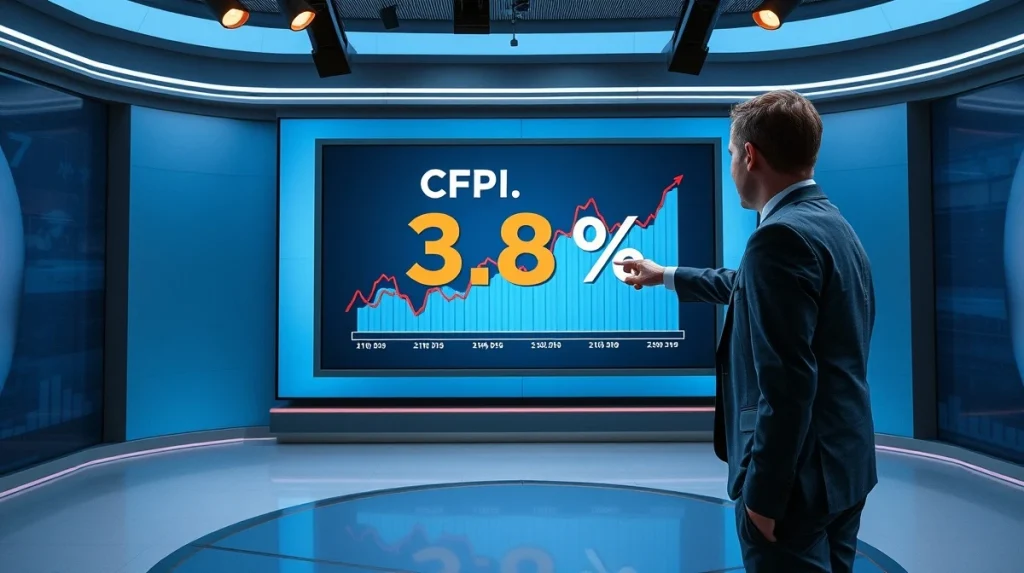
The U.S. Bureau of Labor Statistics released its latest Consumer Price Index (CPI) data on Tuesday, revealing that inflation rose to an annual rate of 3.8% in the most recent reading. This figure exceeded economists’ consensus forecast of 3.6%, marking a notable acceleration from the previous month’s 3.5% increase.
What Drove the Rise in Inflation
Core components of the CPI showed broad-based price increases, with shelter costs and energy prices leading the upward movement. Shelter costs, which account for roughly one-third of the CPI weighting, rose 0.5% month-over-month, while energy prices climbed 1.2%, driven by higher gasoline and electricity costs. Food prices remained relatively stable, increasing 0.2% from the prior month.
Also read: BlackRock’s BUIDL Fund Doubles on Avalanche, Surpasses $900M in AUM
Transportation services also contributed significantly, rising 0.8% month-over-month, as airline fares and motor vehicle insurance premiums continued to climb. These persistent price pressures in the services sector have kept core inflation—excluding food and energy—sticky at 4.1% annually, well above the Federal Reserve’s 2% target.
Market Reaction and Fed Implications
Financial markets reacted swiftly to the hotter-than-expected inflation data. The S&P 500 fell 1.2% in morning trading, while the yield on the 10-year Treasury note rose to 4.58%, reflecting expectations that the Federal Reserve will maintain its restrictive monetary policy stance for longer than previously anticipated.
Also read: PYTH Price Tests 200-Day EMA as Pyth Network Expands Market Coverage
The CPI release comes ahead of the Federal Reserve’s next policy meeting scheduled for early next month. Traders in the fed funds futures market now assign a 72% probability that the central bank will hold interest rates steady at the current 5.25%-5.50% range, up from 65% before the data release. Rate cut expectations for the remainder of 2024 have been pared back, with the first full quarter-point cut now not fully priced in until after the November meeting.
What This Means for Consumers and Businesses
For American households, the persistent inflation means continued pressure on purchasing power, particularly in essential categories like housing and transportation. Renters face ongoing cost increases, while homeowners with adjustable-rate mortgages may see higher payments if the Fed keeps rates elevated. Small businesses, especially those in retail and hospitality, are grappling with higher input costs and cautious consumer spending.
On the positive side, wage growth has remained above 4% annually for the past six months, partially offsetting the inflation impact for many workers. However, real wage gains remain modest, averaging around 0.2% per month after adjusting for inflation.
Conclusion
The latest CPI data underscores the uneven progress in taming inflation and reinforces the Federal Reserve’s cautious approach. While supply chain improvements and moderating goods prices have helped, services inflation—driven by labor costs and housing—remains stubborn. The path to the Fed’s 2% target appears longer than many had hoped, with interest rates likely to stay higher for longer. Investors and consumers should brace for continued economic uncertainty as the central bank navigates this delicate balancing act.
FAQs
Q1: What is the difference between CPI and core CPI?
CPI (Consumer Price Index) measures the average change in prices paid by consumers for a basket of goods and services, including food and energy. Core CPI excludes food and energy prices because they are more volatile, providing a clearer view of underlying inflation trends.
Q2: How does the CPI data affect my personal finances?
Higher CPI readings mean your purchasing power is declining faster. It can influence interest rates on mortgages, credit cards, and savings accounts. If inflation stays high, the Fed may keep rates elevated, making borrowing more expensive and potentially slowing economic growth.
Q3: Will the Federal Reserve raise interest rates again after this CPI report?
While the data increases the likelihood of a hold rather than a cut, a rate hike is not currently expected. The Fed’s next decision will depend on a range of data, including employment figures and upcoming inflation reports. Most analysts believe the next move will be a cut, but timing remains uncertain.