Russia’s MOEX Unleashes Bold Crypto Expansion with SOL, XRP, TRX Indices in 2026
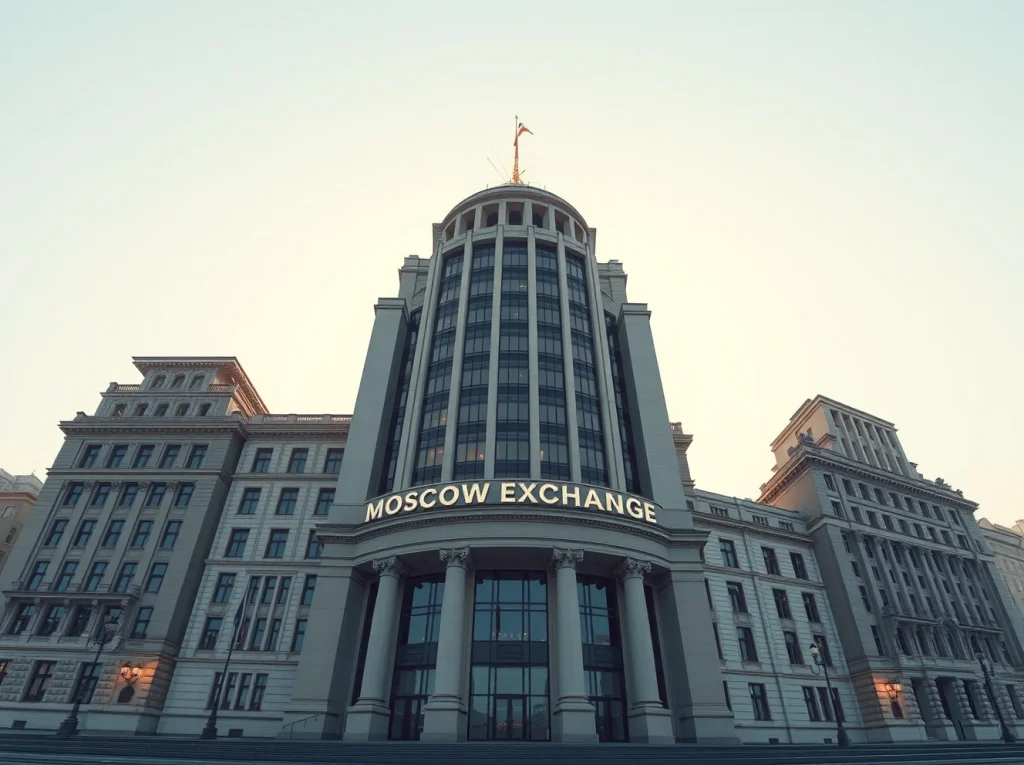
The Moscow Exchange (MOEX) is making a decisive move into digital assets. Starting May 13, 2026, it will calculate real-time indices for Solana (SOL), Ripple (XRP), Tron (TRX), and Binance Coin (BNB). This expansion brings the exchange’s crypto index lineup to six major cryptocurrencies. The new trackers join existing Bitcoin and Ethereum indices, signaling deeper institutional adoption in Russia.
Russia MOEX Crypto Indices: A Strategic Expansion
MOEX’s decision to add SOL, XRP, TRX, and BNB indices is not a sudden shift. It reflects a calculated effort to integrate digital assets into traditional financial infrastructure. The exchange calculates these indices as a weighted average of price data from four leading global exchanges: Binance, Bybit, OKX, and Bitget. This methodology ensures the indices reflect real market conditions, not isolated price anomalies.
Also read: BNB Chain Reveals New Layer 1 Blockchain for Agentic Trading, Mainnet Set for 2027
For context, MOEX first introduced crypto indices in late 2024. At that time, it launched trackers for Bitcoin and Ethereum. The initial response from institutional investors was cautious but positive. Now, with four more assets added, MOEX is positioning itself as a bridge between conventional finance and the crypto economy. This move aligns with Russia’s broader regulatory push to legitimize digital assets within a controlled framework.
Solana Index: High-Performance Blockchain Gets a Benchmark
Solana’s inclusion is particularly noteworthy. The blockchain is known for its high transaction throughput and low fees. A dedicated index allows Russian investors to track SOL’s performance without holding the asset directly. This reduces custody and security risks. It also provides a regulated entry point for institutional capital.
Also read: Naver Financial and Dunamu Push Share Swap Deadline to December Amid Regulatory Hurdles
Solana has faced network outages in the past. However, recent upgrades have improved stability. The MOEX index will give investors a transparent view of SOL’s price action, filtered through the weighted data from four major exchanges. This reduces the impact of any single exchange’s liquidity issues.
XRP Index: Ripple’s Legal Clarity Boosts Appeal
Ripple’s XRP has a unique position in the crypto market. Its legal status in the United States was clarified in 2023, when a court ruled that XRP is not a security when sold on exchanges. This ruling removed a major regulatory cloud. For MOEX, adding an XRP index is a logical step. It offers Russian investors exposure to a token that powers cross-border payment solutions.
The XRP index will track the token’s value against the Russian ruble. This is significant because XRP is widely used in remittance corridors. Russia has been exploring alternative payment systems amid Western sanctions. An XRP index on MOEX could support this effort by providing a transparent price benchmark.
Tron Index: Decentralized Content and Stablecoins
Tron (TRX) is another strategic addition. The Tron blockchain hosts a large ecosystem of decentralized applications (dApps) and stablecoins. USDT, the largest stablecoin by market cap, is heavily issued on Tron. This makes TRX a critical asset for liquidity and trading.
The Tron index will give Russian traders a reliable price reference. It also supports the growing use of stablecoins in the region. Many Russian businesses use USDT on Tron for cross-border transactions. A MOEX index adds legitimacy to this practice and provides a benchmark for pricing.
Binance Coin Index: Exchange Token Goes Mainstream
Binance Coin (BNB) is the native token of the Binance ecosystem. It is used for trading fee discounts, token sales, and payments on Binance Chain. BNB’s inclusion in MOEX’s lineup is notable because it represents the first exchange token on the platform. This signals that MOEX views exchange tokens as legitimate asset classes.
BNB’s price is influenced by Binance’s trading volumes and ecosystem growth. The MOEX index will provide a transparent benchmark for Russian investors. It also reflects the growing interconnection between centralized exchanges and traditional financial markets.
Methodology: How MOEX Calculates Its Crypto Indices
Understanding the calculation methodology is vital for investors. MOEX uses a weighted average of prices from Binance, Bybit, OKX, and Bitget. These four exchanges are among the largest by trading volume. The weighting ensures that no single exchange dominates the index value.
- Data sources: Binance, Bybit, OKX, Bitget
- Calculation: Weighted average of real-time prices
- Currency: Russian ruble (RUB) denomination
- Update frequency: Every 15 seconds during trading hours
- Launch date: May 13, 2026
This methodology is similar to how MOEX calculates its stock indices. It provides a consistent and transparent framework. Investors can use these indices for benchmarking, portfolio analysis, and potential derivative products in the future.
Impact on Russian Crypto Market
The expansion of MOEX’s crypto indices has several implications. First, it increases institutional access to digital assets. Russian banks and investment funds can now track crypto performance through a regulated exchange. This reduces the need to use unregulated offshore platforms.
Second, it supports the Russian government’s push for digital asset regulation. In 2025, Russia passed laws allowing the use of cryptocurrencies for international trade. MOEX’s indices provide a transparent price discovery mechanism for these transactions.
Third, it could lead to the creation of crypto-linked financial products. Exchange-traded funds (ETFs) and structured notes based on these indices are possible. This would give retail investors a regulated way to gain crypto exposure.
Global Context: Institutional Crypto Adoption Accelerates
MOEX’s move is part of a global trend. Exchanges in Hong Kong, Brazil, and Switzerland have launched similar indices. The Chicago Mercantile Exchange (CME) offers Bitcoin and Ethereum futures. Institutional adoption is accelerating as regulatory frameworks mature.
Russia’s approach is distinct because it integrates crypto indices directly into its national exchange. This contrasts with the US, where crypto derivatives trade on separate platforms. MOEX’s model could serve as a template for other emerging markets.
Risks and Considerations
Despite the positive signals, risks remain. Crypto markets are volatile. Indices based on weighted averages can still reflect sharp price swings. Investors should use these indices as reference points, not guarantees of future performance.
Regulatory uncertainty is another factor. Russia’s stance on crypto has shifted over time. While current laws allow indices, future restrictions are possible. Investors should monitor policy developments.
Expert Perspectives on MOEX’s Crypto Expansion
Industry analysts view MOEX’s expansion as a bullish signal. “Adding SOL, XRP, TRX, and BNB indices shows that Russian financial authorities are serious about integrating crypto into the mainstream,” says a Moscow-based fintech consultant. “It provides a transparent and regulated environment for price discovery.”
Another expert notes the timing. “May 2026 is well-positioned. By then, global crypto regulations will be clearer. MOEX is preparing for a future where digital assets are standard investment tools.”
Conclusion
The Moscow Exchange’s expansion of its crypto indices to include Solana, XRP, Tron, and Binance Coin marks a significant milestone. Starting May 13, 2026, these Russia MOEX crypto indices will provide transparent, weighted benchmarks for institutional and retail investors alike. This move strengthens Russia’s position in the global digital asset ecosystem and supports broader adoption. Investors should watch for further developments, including potential derivative products. The integration of crypto indices into a national exchange is a clear sign that digital assets are becoming a permanent part of the financial environment.
FAQs
Q1: What is the Moscow Exchange’s crypto index expansion?
The Moscow Exchange will add real-time indices for Solana (SOL), Ripple (XRP), Tron (TRX), and Binance Coin (BNB) starting May 13, 2026. These indices track the weighted average price from Binance, Bybit, OKX, and Bitget.
Q2: Why did MOEX choose SOL, XRP, TRX, and BNB?
These assets represent high liquidity, strong ecosystems, and growing institutional demand. Solana offers high throughput, XRP supports cross-border payments, Tron hosts stablecoins, and BNB is a leading exchange token.
Q3: How are the indices calculated?
MOEX calculates a weighted average of real-time prices from four major exchanges: Binance, Bybit, OKX, and Bitget. The index updates every 15 seconds during trading hours.
Q4: Can Russian investors trade these indices directly?
Currently, the indices are for tracking and benchmarking. However, they could form the basis for future financial products like ETFs or structured notes.
Q5: What does this mean for global crypto adoption?
MOEX’s move signals that national exchanges are embracing digital assets. It provides a regulated, transparent framework that could be replicated in other emerging markets.