LUNC Price Reclaims $0.0001 After Sell-Off—Short Squeeze Potential Examined
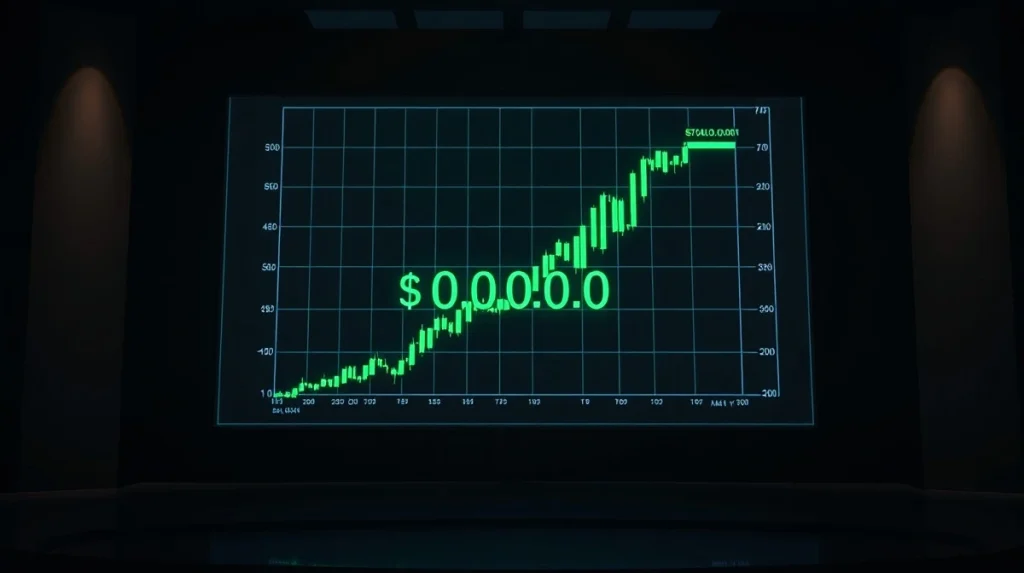
Terra Classic (LUNC) has reclaimed the $0.0001 price level following a recent sell-off that pushed the token to intra-week lows near $0.000092. The recovery has reignited discussions among traders about the potential for a short squeeze that could drive the price toward the $0.00012 resistance zone.
Price Action and Market Context
LUNC’s rebound comes amid a broader stabilization in the cryptocurrency market, with Bitcoin and Ethereum also showing signs of recovery after a volatile week. The token’s price action has been characterized by sharp, low-liquidity moves typical of altcoins with relatively thin order books. Data from CoinGecko shows LUNC trading volume increased by approximately 35% over the past 24 hours, suggesting renewed interest from retail traders.
Also read: NIGHT Price Stays Under Pressure Despite Midnight’s Token Terminal Partnership
The $0.0001 level has historically served as both psychological support and resistance for LUNC. Its breach to the downside earlier this week triggered stop-loss cascades, but the rapid recovery indicates buyers stepped in at lower levels. Analysts point to the token’s high supply—over 5.8 trillion tokens in circulation—as a factor limiting upside potential without sustained buying pressure.
Short Squeeze Dynamics and On-Chain Indicators
A short squeeze occurs when traders who have bet against an asset are forced to buy it back as the price rises, amplifying upward momentum. Data from Coinalyze shows that LUNC’s funding rate on major derivatives exchanges turned slightly negative during the sell-off, indicating a predominance of short positions. If the price continues to climb, these short sellers may be forced to cover, creating additional buying pressure.
Also read: Telegram-Linked TAC Token Crashes 90% in 15 Minutes: What Happened?
However, the conditions for a significant squeeze remain uncertain. Open interest in LUNC futures has declined over the past week, suggesting reduced speculative activity. On-chain metrics from Terra Finder show that the number of active addresses and transaction counts have not yet shown a meaningful uptick, which would typically accompany a sustained rally.
Implications for Traders and Investors
For traders, the $0.00012 level represents the next major resistance, a point where LUNC stalled in late January. A break above this level with strong volume could open the path toward $0.00015, but failure to hold $0.0001 may lead to another test of support near $0.000092. For longer-term holders, the token’s fundamentals remain tied to the Terra Classic ecosystem’s development, including the community’s ongoing efforts to implement a 1.2% tax burn mechanism.
The broader market environment also plays a role. Regulatory developments, macroeconomic data, and Bitcoin’s price trajectory continue to influence altcoin performance. LUNC’s correlation with Bitcoin has remained above 0.7 over the past month, meaning its price movements are closely tied to the leading cryptocurrency.
Conclusion
LUNC’s reclaim of $0.0001 is a notable development, but the path to $0.00012 remains uncertain. While short squeeze potential exists, it depends on sustained buying pressure and a reduction in selling from large holders. Traders should monitor volume, open interest, and broader market conditions before making directional bets. The token’s high supply and reliance on community-driven catalysts mean that price action may remain volatile in the near term.
FAQs
Q1: What is a short squeeze and how does it affect LUNC price?
A short squeeze happens when traders who have sold borrowed LUNC (betting the price will fall) are forced to buy it back as the price rises, which can accelerate upward momentum. If enough short positions are liquidated, it can push the price higher temporarily.
Q2: What are the key resistance levels for LUNC?
The immediate resistance is at $0.00012, followed by $0.00015. On the downside, support is at $0.000092 and $0.000085. These levels are based on recent price action and historical trading ranges.
Q3: Does the 1.2% tax burn mechanism impact LUNC price?
The burn mechanism reduces the circulating supply over time, which could theoretically support price appreciation if demand remains steady. However, the burn rate is relatively small compared to the total supply, and its price impact is gradual rather than immediate.