KB Kookmin Card Advances Hybrid Payments Using Avalanche Blockchain for Fluid Digital Asset Spending
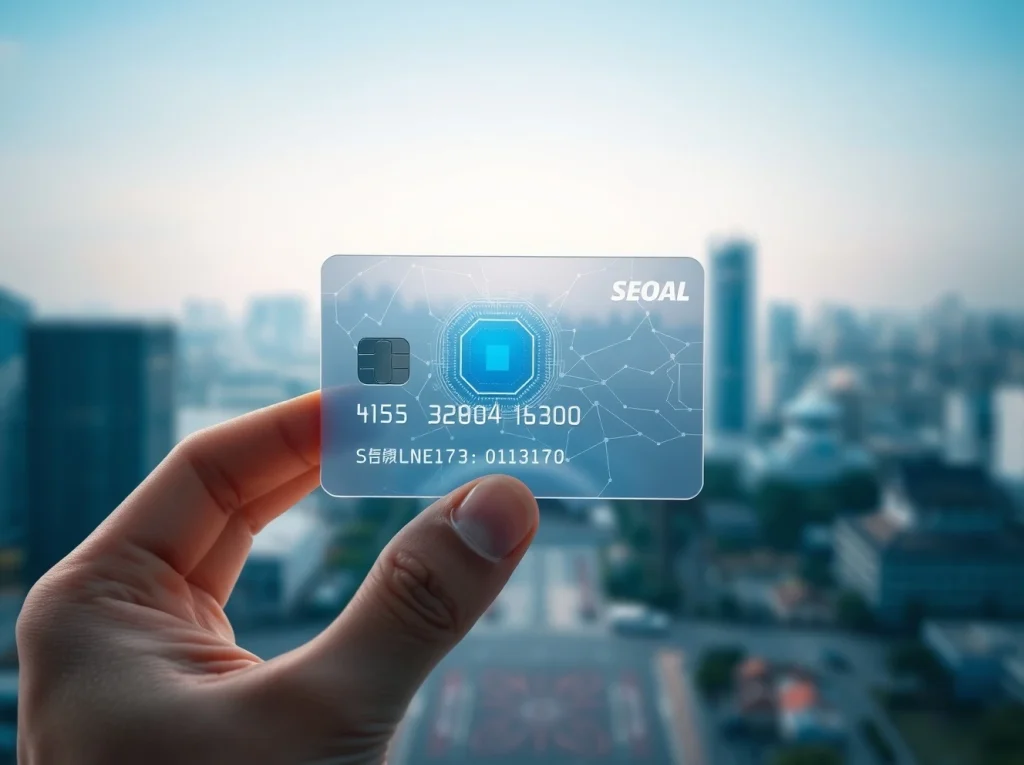
SEOUL, South Korea – KB Kookmin Card, a major subsidiary of South Korea’s KB Financial Group, is pushing digital assets into the mainstream with a new hybrid payment system. The initiative, announced in late 2025, uses the Avalanche blockchain to link traditional credit card infrastructure with card-linked stablecoins. This move signals a significant step toward practical, everyday use of digital assets in a major Asian economy.
KB Kookmin Card’s Hybrid Payment Model Explained
The core of KB Kookmin Card’s system is a card-linked stablecoin with credit backup. According to company disclosures, the model works by allowing customers to use a digital wallet linked to their existing KB Kookmin credit card. When a payment is initiated, the system can settle the transaction using a stablecoin—a cryptocurrency pegged to a flat currency like the Korean won—that is directly backed by the user’s available credit line.
Also read: CZ Says Binance KYC Compliance Led to His Prison Term, While Hyperliquid Operates Without KYC
This structure is designed for minimal disruption. Users interact with a familiar card interface, while the backend leverages blockchain for settlement. The choice of Avalanche is notable. Industry watchers note that Avalanche’s consensus mechanism offers high transaction throughput and low finality times, which are critical for retail payment systems that require instant confirmation.
Key components of the model include:
Also read: Hyundai Card Tests Stablecoin Payments Between US and Mexico Subsidiaries
- Credit-Backed Stablecoins: Digital tokens are minted based on a pre-approved credit limit, not pre-loaded cash.
- Existing Card Rails: Transactions are authorized through the standard Visa or Mastercard networks merchants already use.
- Avalanche Blockchain Settlement: The final transfer of value occurs on a private, permissioned Avalanche subnet for speed and compliance.
- Regulatory Compliance: The model operates within South Korea’s existing financial regulations by tying digital asset issuance directly to licensed credit.
The South Korean Context and Competitive Shift
KB Kookmin Card’s move is not happening in a vacuum. South Korea has one of the world’s most active cryptocurrency retail markets and a highly digitized payment ecosystem. However, integrating these two worlds has been a challenge. The country’s financial regulators have taken a cautious but increasingly structured approach, implementing the Travel Rule and licensing virtual asset service providers (VASPs).
Data from the Financial Services Commission (FSC) shows a steady increase in registered crypto exchanges and wallet providers since 2024. This regulatory clarity has given traditional financial institutions more confidence to explore blockchain applications. KB Kookmin Card’s project follows similar exploratory efforts by Shinhan Bank and Hana Bank, which have tested digital won and asset tokenization.
But KB Kookmin Card’s approach is distinct. It directly targets the payments space—a core function of its business—rather than focusing solely on custody or investment products. This suggests a strategic pivot from viewing digital assets as an investment class to treating them as a functional medium of exchange. The implication is a potential reshaping of domestic card competition, where blockchain efficiency could become a new battleground.
Expert Analysis on the Practical Impact
Financial technology analysts see this as a pragmatic evolution. “This model cleverly sidesteps the volatility and liquidity problems that have plagued pure-crypto payment attempts,” said an analyst from Seoul-based Meritz Securities, who spoke on background. “By tethering the stablecoin to a credit line, it ensures immediate usability without requiring users to pre-convert cash into crypto. It’s less about promoting cryptocurrency speculation and more about upgrading payment infrastructure.”
The system could offer tangible benefits. For consumers, it may enable faster cross-border transactions and programmable payment features. For KB Kookmin Card, blockchain settlement could reduce intermediary costs and chargeback fraud. The bank has not released specific projected savings, but a 2025 report by the Bank for International Settlements (BIS) noted that blockchain-based payment systems could lower transaction costs by 30-50% in certain corridors.
There are hurdles. Consumer adoption depends on ease of use and perceived security. Furthermore, the energy consumption and technical complexity of maintaining a private blockchain subnet require significant investment. KB Kookmin Card has stated its Avalanche implementation uses a proof-of-stake consensus, which is less energy-intensive than older proof-of-work systems.
What This Means for the Global Payments Industry
KB Kookmin Card’s project is a live test case for a hybrid financial future. While other global banks like JPMorgan with its JPM Coin have developed blockchain-based settlement systems, the South Korean model is notable for its direct consumer-facing, card-linked design. It represents a middle path between fully decentralized cryptocurrencies and completely traditional banking.
This development could signal a broader trend. If successful, other card issuers in Asia and beyond may feel pressure to develop similar capabilities. The technology partnership with Avalanche also highlights the growing role of specialized layer-1 blockchains in enterprise finance, moving beyond the general-purpose use cases of earlier years.
For investors, the key metric will be transaction volume. A successful pilot that moves to general availability could demonstrate real demand for blockchain-augmented payments. It could also validate the utility of stablecoins beyond trading and into daily commerce. However, regulatory developments remain the primary variable. Any shift in South Korea’s digital asset policy could accelerate or hinder this model’s expansion.
Conclusion
KB Kookmin Card’s advance into hybrid payments using the Avalanche blockchain marks a concrete attempt to bridge two financial worlds. By linking stablecoins to existing credit systems, the company is betting on a gradual, user-friendly adoption of digital assets. The project’s success will depend on technical execution, consumer uptake, and the stable regulatory environment in South Korea. Its progress will be closely watched as a potential blueprint for the future of everyday payments.
FAQs
Q1: What is KB Kookmin Card’s new payment system?
KB Kookmin Card has developed a hybrid payment system that links a traditional credit card to a stablecoin on the Avalanche blockchain. The stablecoin is backed by the user’s available credit line, allowing for digital asset transactions without pre-loading cash.
Q2: How does using the Avalanche blockchain benefit this system?
The Avalanche blockchain is chosen for its high transaction speed and quick finality. This is essential for retail payments, where both merchants and customers need instant confirmation that a transaction is complete and cannot be reversed.
Q3: Is this system available to all KB Kookmin Card customers?
As of early 2026, the system is in a pilot or limited testing phase. The company has not announced a full public launch date. Initial access is likely limited to selected customer groups.
Q4: How does this differ from using a regular credit card or a crypto exchange?
Unlike a regular card, the settlement layer uses blockchain. Unlike a crypto exchange, you are not spending standalone cryptocurrency assets; you are spending a token directly linked to your credit limit, integrating the process into your existing banking relationship.
Q5: What are the main challenges for this hybrid payment model?
Key challenges include ensuring a fluid user experience that hides blockchain complexity, maintaining resilient security for both the card and digital wallet components, and addressing an evolving regulatory field for digital assets in South Korea and internationally.
Q6: Could this model work outside of South Korea?
Potentially, yes. The technical model is not geographically limited. However, its expansion would depend on partnerships with local card networks, compliance with each country’s specific financial and cryptocurrency regulations, and market demand for such a product.