JPMorgan, Mastercard, and Ondo Finance Complete Historic Tokenized Asset Trial on XRP Ledger
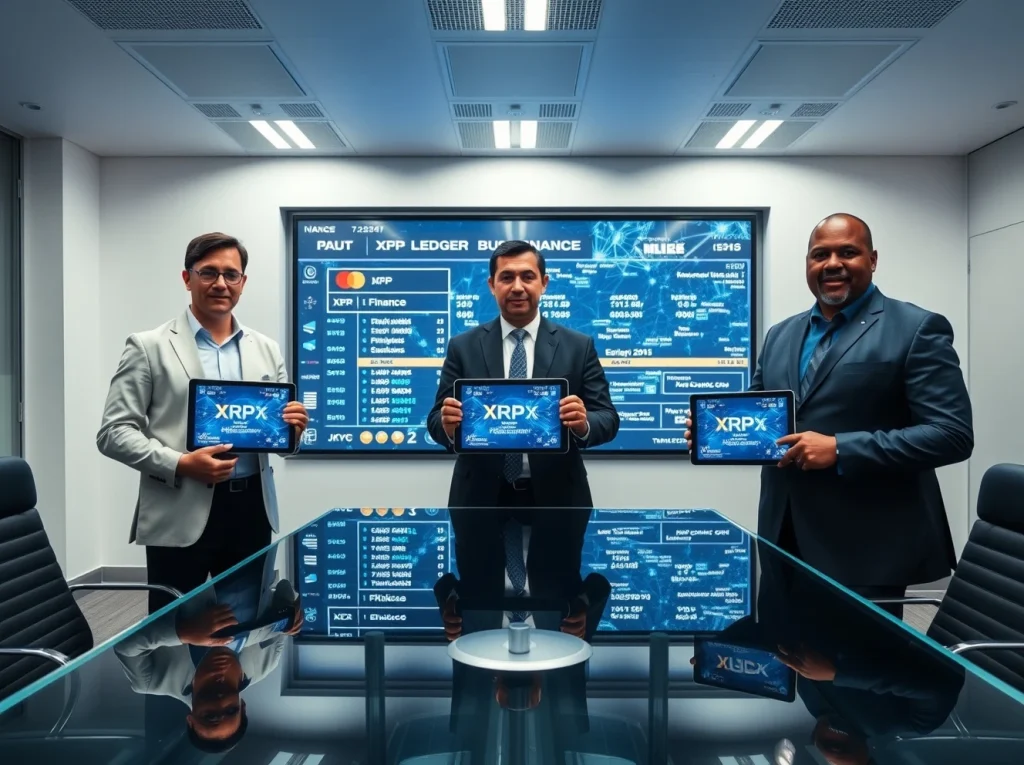
In a landmark development for institutional blockchain adoption, JPMorgan, Mastercard, and Ondo Finance have successfully completed a historic first — a live trial of tokenized real-world assets (RWAs) on the XRP Ledger. The collaboration, announced earlier this week, marks the first time two of the world’s largest financial infrastructure providers have jointly tested asset tokenization on a public distributed ledger alongside a leading tokenization platform.
What the Trial Involved
The proof-of-concept trial focused on tokenizing short-term U.S. Treasury securities and repurchase agreements, converting them into digital tokens on the XRP Ledger. JPMorgan provided its Onyx blockchain-based tokenization capabilities, Mastercard contributed its multi-token network for secure settlement, and Ondo Finance supplied the tokenized fund infrastructure. The test simulated a full lifecycle: issuance, trading, redemption, and settlement, all executed in near real-time without traditional intermediaries.
Also read: Telegram-Linked TAC Token Crashes 90% in 15 Minutes: What Happened?
Why This Matters for the XRP Ecosystem
This trial represents a significant validation of the XRP Ledger’s capabilities for enterprise-grade finance. Unlike many blockchain experiments that remain in sandbox environments, this collaboration involved live transaction processing with compliance checks embedded at the protocol level. For XRP holders and the broader Ripple ecosystem, the development signals growing institutional confidence in the ledger’s speed, low cost, and regulatory compliance features — particularly important given the recent legal clarity around XRP’s status in the U.S.
Implications for Real-World Asset Tokenization
The tokenization of real-world assets is projected to become a multi-trillion-dollar market over the next decade. By involving two global payments giants — JPMorgan and Mastercard — this trial demonstrates that traditional finance is actively moving beyond experimentation toward production-ready blockchain solutions. The XRP Ledger’s native features, including its decentralized exchange (DEX) and trust lines, made it a natural choice for handling the compliance and settlement requirements of regulated financial instruments.
Also read: XRP Scarcity Index on Binance Hits Highest Level Since Mid-2024, So Where Did the Coins Go?
What Industry Experts Are Saying
Market analysts note that this collaboration could accelerate the timeline for mainstream tokenized asset adoption. “Having both JPMorgan and Mastercard on the same blockchain infrastructure is a strong signal that the industry is converging around specific standards,” said a senior analyst at a blockchain research firm. The trial also underscores the growing role of regulated stablecoins and tokenized deposits in bridging traditional finance with decentralized networks.
Conclusion
The successful completion of this trial positions the XRP Ledger as a serious contender in the institutional blockchain space. While full-scale deployment timelines remain unclear, the involvement of JPMorgan, Mastercard, and Ondo Finance provides a blueprint for how traditional financial giants can utilize public blockchains without compromising on security or compliance. For investors and industry observers, this development is a tangible step toward the long-anticipated convergence of TradFi and DeFi.
FAQs
Q1: What exactly did JPMorgan, Mastercard, and Ondo Finance achieve on the XRP Ledger?
A1: They completed a live proof-of-concept trial tokenizing U.S. Treasury securities and repurchase agreements on the XRP Ledger, covering issuance, trading, redemption, and settlement in near real-time.
Q2: Why is the XRP Ledger being used for this tokenization trial?
A2: The XRP Ledger offers fast settlement (3-5 seconds), low transaction costs, a built-in decentralized exchange, and features like trust lines that support compliance requirements for regulated assets.
Q3: Will this lead to mainstream adoption of tokenized assets?
A3: The involvement of JPMorgan and Mastercard adds significant credibility and could accelerate institutional adoption, but full-scale deployment depends on regulatory clarity and infrastructure readiness across jurisdictions.