FBI Signal Privacy Breach: How a Hidden iPhone Database Exposed Deleted Messages
Federal investigators pulled deleted Signal messages from a terrorism suspect’s iPhone, court documents show. The FBI used a forensic method that bypassed the app’s encryption, extracting data from a system-level iOS database. This technique, revealed in a 2025 trial, highlights a significant gap in privacy protections that many users assumed were absolute.
The FBI’s Signal Message Recovery Method
According to court filings from the United States District Court for the District of Columbia, FBI forensic analysts did not break Signal’s end-to-end encryption. Instead, they extracted data from a device’s push notification service database. This system file can store notification content, including message previews, even after a user deletes them from the app interface.
Also read: CZ Says Binance KYC Compliance Led to His Prison Term, While Hyperliquid Operates Without KYC
Data from the filings indicates the method works because iOS manages notifications separately from app data. When a Signal message arrives, the phone’s operating system generates a preview. This preview gets logged. The FBI’s forensic tools can then recover these logged previews. This suggests the vulnerability lies in the interaction between the app and the operating system, not in Signal’s core encryption protocol.
Understanding the Push Notification Vulnerability
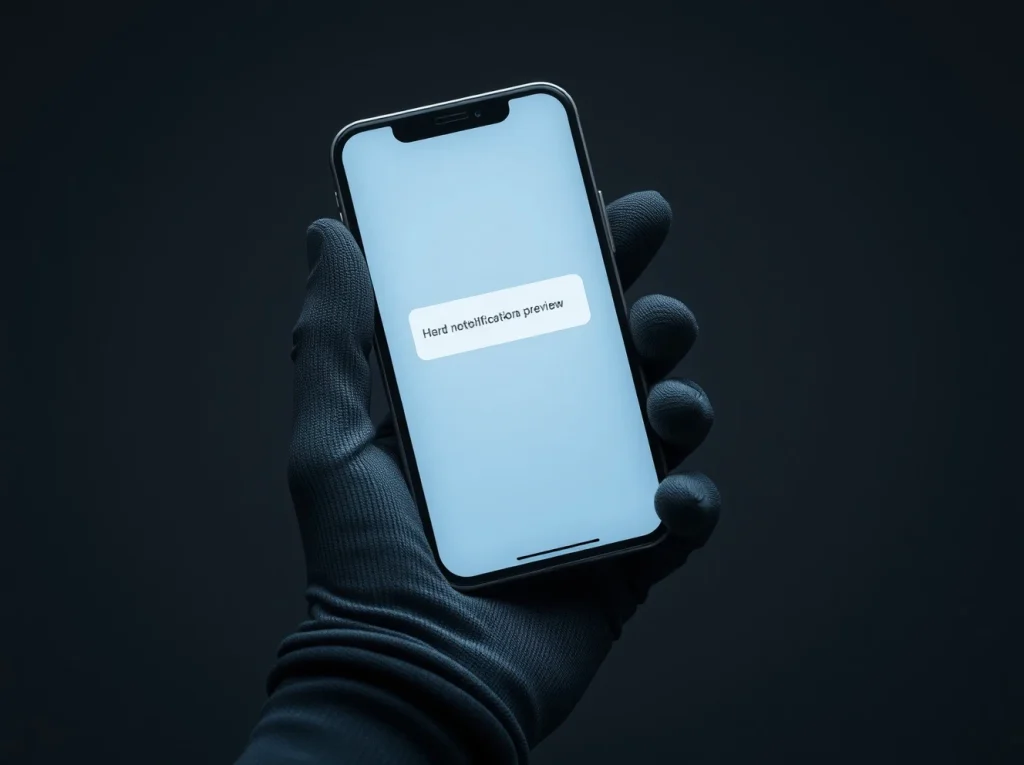
Push notifications are a core function of modern smartphones. They alert users to new messages, emails, and app updates. To generate these alerts, apps often send a preview of the content to Apple’s servers, which then forward it to the device. iOS temporarily stores this preview data.
Also read: Hyundai Card Tests Stablecoin Payments Between US and Mexico Subsidiaries
Security researchers have noted this potential weakness for years. A 2023 report from the German security firm Mobilsicher highlighted how notification data could be a forensic target. The FBI’s successful application of this technique in a major case confirms the theoretical risk was real and exploitable.
- Notification Previews: When enabled, these show message content on the lock screen.
- Database Storage: iOS maintains a database of recent notifications for system functions.
- Forensic Access: Specialized tools can query this database, sometimes recovering data marked as deleted by the user.
What this means for users is that a “deleted” Signal message might not be fully erased from the device if a preview of it existed in the notification center. The implication is profound for those relying on ephemeral messaging for sensitive communications.
Legal and Technical Precedents
The case involved charges related to material support for terrorism. Prosecutors introduced the recovered Signal messages as evidence. This legal precedent demonstrates that data from encrypted apps is not always beyond the reach of law enforcement with physical device access.
Industry watchers note that this method requires the phone itself. It is not a remote surveillance technique. Agents must have possession of the device and the legal authority to perform a forensic extraction. This distinction is important. It shows the limits of the technique while confirming a specific device-level risk.
Signal’s Response and User Mitigations
Following the disclosure, Signal introduced a new privacy setting. The option, called “Notification Content,” allows users to disable message previews for notifications. With this setting enabled, notifications simply alert the user to a new message without revealing its content. This prevents preview data from being written to the vulnerable database.
Signal’s leadership has consistently stated that its encryption remains unbroken. Moxie Marlinspike, Signal’s founder, has previously argued that clients must work within the constraints imposed by mobile operating systems. This incident underscores that challenge. The app’s security can be undermined by platform-level features designed for convenience.
For users, the practical steps are clear. Disabling notification previews for sensitive apps reduces this forensic footprint. Using a strong device passcode and enabling full-disk encryption are also critical. These measures make initial device access more difficult for any unauthorized party.
Broader Implications for Encrypted Communication
This event has sparked debate among privacy advocates, technologists, and legal experts. It reveals a tension between user-friendly features and maximal security. A completely secure device might offer no notification previews at all—a trade-off most consumers are unwilling to make.
According to analysts at the Electronic Frontier Foundation, the case highlights the need for a broad view of privacy. Strong app encryption is just one layer. The operating system, cloud backups, and metadata all present potential avenues for exposure. This could signal a shift in how law enforcement approaches devices, focusing more on these peripheral data trails than on breaking core encryption.
For investors and the tech industry, the fallout reinforces a trend. Privacy and security are becoming dominant features in competitive markets. Companies that can provide transparent and solid protections may gain user trust. However, they remain subject to the underlying architecture of platforms like iOS and Android.
Conclusion
The FBI’s recovery of deleted Signal messages from an iPhone database marks a significant moment in digital privacy. It proves that a perceived strength—end-to-end encryption—can be circumvented through auxiliary system functions. The method exploited the push notification system, a feature used by billions. Users must now actively disable previews to close this loophole. This case serves as a stark reminder that true privacy requires configuring both apps and devices with care. The FBI Signal message recovery technique has exposed a hidden layer of data retention that challenges common assumptions about secure deletion.
FAQs
Q1: Did the FBI break Signal’s encryption?
No. According to court documents, the FBI did not break Signal’s end-to-end encryption. Agents recovered message previews from a separate iOS database that stores notification content.
Q2: How can I protect my Signal messages from this method?
Disable notification previews within the Signal app’s settings. Go to Settings > Notifications > Show. Select “No Name or Content” to prevent message text from being stored in the iOS notification database.
Q3: Does this vulnerability affect Android users?
The specific case involved an iPhone. However, security researchers note that Android’s notification system could present similar forensic opportunities. The risk is platform-agnostic in concept, though the implementation differs.
Q4: Was this a remote hack or did the FBI need the phone?
The FBI required physical possession of the device. This is not a remote surveillance technique. It is a forensic method applied after seizing a phone with legal authority.
Q5: Has Apple commented on this database vulnerability?
Apple has not issued a specific public statement regarding this case. The company generally refers to its published platform security guides, which outline data protection measures. Apple’s focus has been on protecting data in transit and at rest, with user convenience features like notifications operating within that framework.