CLARITY Act Heads to Thursday Markup: What It Means for Crypto Regulation and What Comes Next
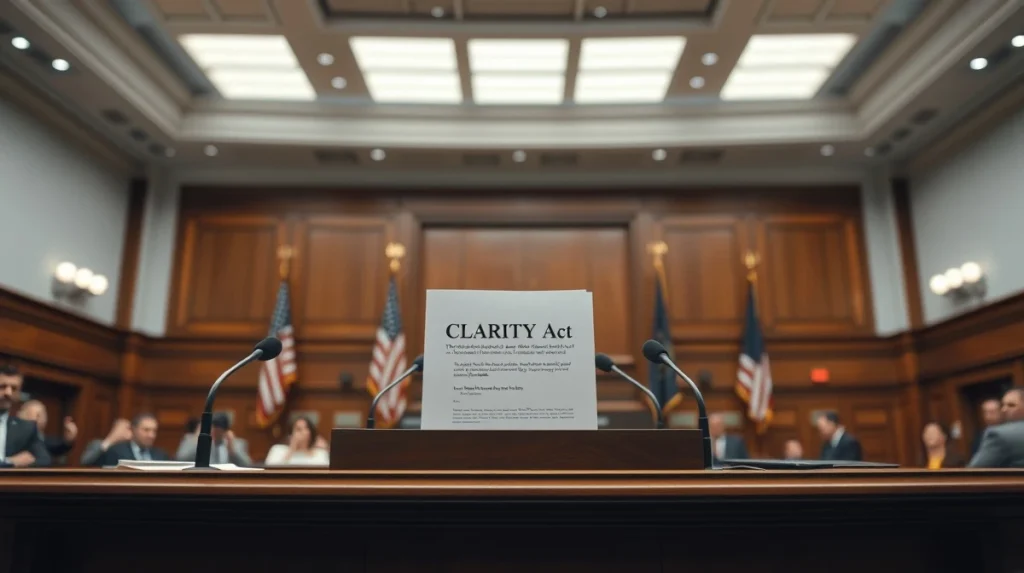
The CLARITY Act, a significant piece of proposed legislation aimed at clarifying the regulatory framework for digital assets in the United States, is scheduled for a markup session on Thursday. This procedural step moves the bill closer to a potential vote on the House floor, marking a decisive moment for the cryptocurrency industry and its stakeholders.
What the CLARITY Act Actually Proposes
At its core, the CLARITY Act seeks to delineate the jurisdictional boundaries between the Securities and Exchange Commission (SEC) and the Commodity Futures Trading Commission (CFTC) regarding digital assets. The bill proposes that a digital asset be considered a commodity—and thus fall under CFTC oversight—if the blockchain or digital ledger on which it operates is functional and decentralized. This would remove many cryptocurrencies from the SEC’s purview, providing a clearer legal status that the industry has long sought.
Also read: XRP ETF Gains Institutional Backing From Virginia and Florida Investment Advisors
The legislation also includes provisions for secondary market transactions, aiming to exempt certain digital asset trades from securities laws if the asset meets the decentralization criteria. This is intended to reduce compliance burdens on exchanges and developers, building innovation while maintaining investor protections.
What Thursday’s Markup Entails
A markup is a committee session where lawmakers debate, amend, and vote on a bill before it can advance. Thursday’s session, expected to take place in the House Financial Services Committee, will allow members to propose changes. These amendments could range from technical clarifications to substantial shifts in the bill’s scope. The outcome will signal the level of bipartisan support the CLARITY Act currently commands and what hurdles it may face in the full House.
Also read: BlackRock’s BUIDL Fund Doubles on Avalanche, Surpasses $900M in AUM
Industry observers are watching closely for amendments related to stablecoin regulation, anti-money laundering compliance, and investor disclosure requirements—areas where lawmakers from both parties have expressed concerns.
Why This Matters to Crypto Markets and Consumers
The CLARITY Act addresses a long-standing uncertainty: whether digital assets like Ethereum, Solana, and others are securities or commodities. This classification directly affects how these assets are traded, taxed, and regulated. For consumers, clearer rules could mean better protections against fraud and market manipulation. For developers and companies, it reduces legal risk and encourages investment in blockchain projects within the United States, rather than driving innovation overseas.
If passed, the bill would represent the most significant federal crypto legislation to date, potentially reshaping the regulatory market. However, it is not without critics. Some consumer advocacy groups argue the decentralization test is too vague and could be exploited, while some SEC officials maintain that existing securities laws are adequate.
What Happens Next
If the CLARITY Act clears the committee markup, it will proceed to the full House of Representatives for a floor vote. From there, it would need Senate approval and the President’s signature to become law. Given the divided Congress, the path forward is uncertain. The markup session on Thursday will provide the clearest indication yet of the bill’s viability and the compromises necessary for its passage.
Regardless of the outcome, the markup represents a formal acknowledgment by Congress that the current regulatory patchwork for digital assets is insufficient. The debate itself sets a precedent for future legislation, even if this specific bill stalls.
Conclusion
The Thursday markup of the CLARITY Act is a consequential step in the ongoing effort to establish a coherent federal framework for cryptocurrency regulation. The proceedings will offer critical insight into the political sector surrounding digital assets and the likelihood of legislative action in the near term. For anyone involved in or affected by the crypto economy, this is a development worth monitoring closely.
FAQs
Q1: What does the CLARITY Act aim to do?
The CLARITY Act aims to clarify whether digital assets are securities or commodities, primarily by establishing a decentralization test. Assets on functional, decentralized blockchains would be treated as commodities regulated by the CFTC, not securities under SEC jurisdiction.
Q2: What happens during a markup session?
A markup is a committee meeting where lawmakers debate the bill, propose amendments, and vote on whether to send it to the full chamber. Thursday’s session will reveal the level of support and the key amendments being considered.
Q3: What are the chances the CLARITY Act becomes law?
The bill faces an uncertain path. While it has bipartisan support in the House, it must pass the full House, the Senate, and be signed by the President. The markup outcome will be a strong indicator of its prospects, but significant hurdles remain in a divided Congress.