In this article3 sections
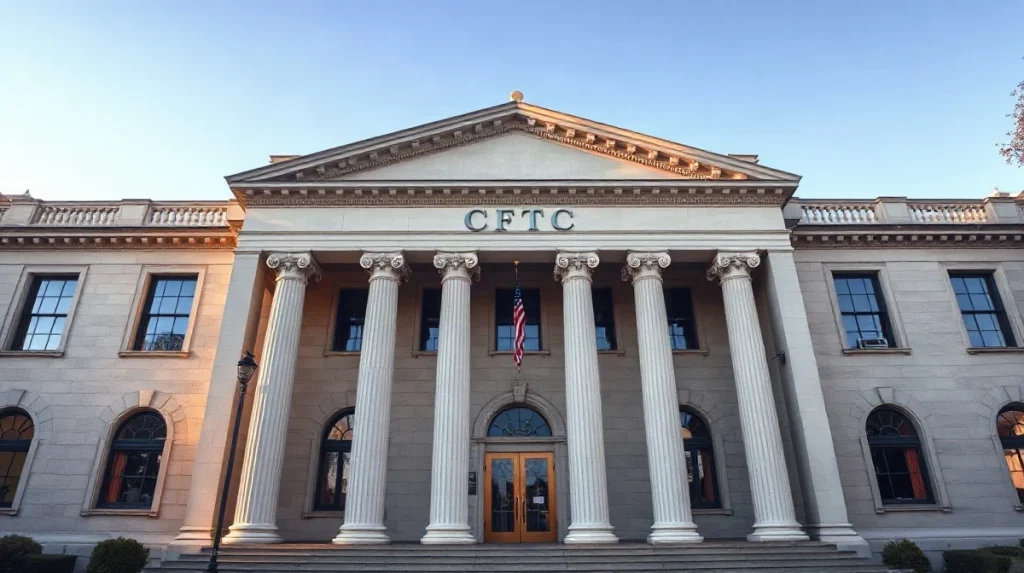
The Commodity Futures Trading Commission (CFTC) convened its first Innovation Advisory Committee meeting on August 20, 2026, in Washington, D.C., bringing together executives from Ripple, Coinbase, Uniswap, and CME Group to discuss how the agency should regulate crypto, artificial intelligence, and prediction markets.
CFTC Chair Michael Selig opened the meeting with a clear directive: the United States must lead in financial innovation or risk ceding ground to other jurisdictions. “We’ve crossed the Rubicon and are standing at a new frontier of finance,” Selig said, according to remarks shared during the session. He added that the question is no longer whether blockchain, AI, and prediction markets will change finance, but “where this innovation will take place and who will write the rules.”
 Also readTrump's White House Crypto Summit: Will CLARITY Act Get a Push or Will SEC and CFTC Go It Alone?
The committee, chaired by Walt Lukken, marks the CFTC’s most structured effort to date to align its regulatory framework with the pace of technological change. Selig noted that the agency currently oversees roughly half of the world’s $1.2 quadrillion derivatives market, and that its rules must evolve to stay relevant.
CFTC Puts Crypto at Center of Innovation Plans
Digital assets were a primary focus of the meeting. Selig said the CFTC is coordinating with the Securities and Exchange Commission (SEC) on clearer rules for crypto, while expressing hope that Congress will pass the CLARITY Act — legislation that would formally define the jurisdictional lines between the two agencies over digital asset markets.
 Also readKalshi Faces Wash-Trading Questions Over Reported Crypto Volume
“If CLARITY continues to stall, the CFTC will use its existing powers to build rules for crypto markets,” Selig said. He has already directed staff to explore rules that would allow crypto exchanges to register as digital asset markets and offer leveraged or margined trading under CFTC oversight.
The agency is also engaging with developers of onchain finance protocols to help them operate legally in the U.S., a move that could bring decentralized finance platforms under a clearer regulatory umbrella.
AI Compute Markets and Prediction Markets Under Review
Beyond crypto, the CFTC is examining markets for computing power used to run AI systems. The agency recently issued a request for public input on compute markets and plans to work with the Commerce Department on a regulatory framework, according to Selig.
Prediction markets are another significant area of focus. Selig said the CFTC intends to update rules for event contracts, with an emphasis on stronger consumer protections and clearer listing standards. The agency has already proposed changes to Rule 40.11, which governs the listing of event contracts, and expects further proposals covering trading platforms.
The meeting follows a White House event on digital assets held a day earlier, which several of the same executives attended, signaling a coordinated push across the executive branch and independent agencies to establish a coherent U.S. policy stance on emerging financial technology.
What This Means for the Industry
For crypto exchanges and onchain protocol developers, the CFTC’s move signals a potential path to compliance without waiting for Congress. If the agency finalizes rules allowing registered digital asset markets, U.S.-based platforms could gain a clearer legal footing for offering leveraged trading — a service currently available mainly through offshore entities.
The focus on prediction markets also carries implications for platforms like Polymarket and Kalshi, which have faced regulatory uncertainty over event contracts. Updated rules could either open the door to broader product offerings or impose stricter limits, depending on how consumer protections are balanced against market innovation.
Industry observers will be watching for the CFTC’s next steps on compute markets, which could affect how AI infrastructure is financed and traded. The agency’s collaboration with the Commerce Department suggests a cross-agency approach to a sector that has grown rapidly but remains lightly regulated.
As the CFTC moves from discussion to rulemaking, the outcomes of these deliberations will shape not only the U.S. derivatives market but also the global competitive market for crypto and AI finance. Selig’s insistence that the U.S. remain at the top of these markets sets a high bar — and a tight timeline for turning committee recommendations into enforceable rules.
Disclaimer: This article is for informational purposes only and does not constitute financial advice. Cryptocurrency and derivatives markets are highly volatile and uncertain. Readers should conduct their own research before making any investment decisions.
Source: Coinpedia