Cardano Open Interest Clusters at $0.27 as ADA Tests Yearly Lows
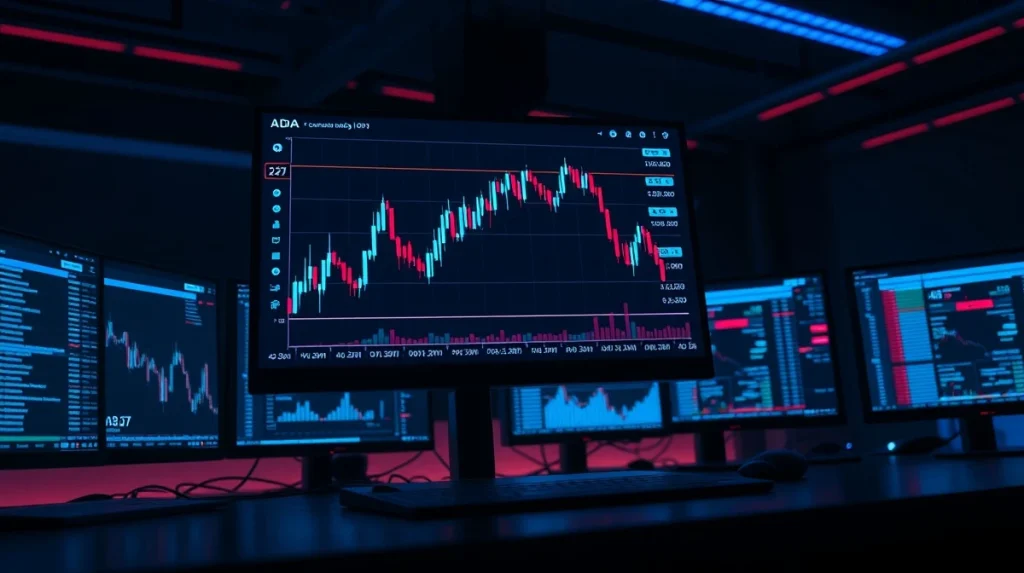
Cardano’s open interest has concentrated near the $0.27 support level as ADA trades close to its lowest point in the past year. Data from multiple exchanges shows a clustering of futures positions at this price, suggesting traders are bracing for a potential breakout or breakdown.
Rising Volume and Steady Network Activity
Trading volume for ADA has increased by 35% over the past 24 hours, reflecting heightened market attention. Despite the price pressure, Cardano’s underlying network metrics remain stable. Staking participation continues at elevated levels, developer activity remains consistent, and ongoing governance proposals are moving through the chain’s formal process.
Also read: Baillie Gifford Launches $BAGEY, a UK-Regulated Tokenized Fund Directly on Solana
This divergence between price weakness and network strength is a pattern analysts often watch closely. When on-chain activity holds steady during price declines, it can indicate that the sell-off is driven by external market factors rather than a loss of confidence in the project itself.
What the Open Interest Cluster Means
Open interest represents the total number of outstanding derivative contracts that have not been settled. When open interest clusters at a specific price level, it often acts as a magnet for price action. A cluster near $0.27 means many traders have opened positions expecting a move at or around this level.
Also read: TRUTH Token Jumps 20% After CZ Follows Analyst on X; 200% Rally Targeted
If ADA holds above $0.27, it could trigger a short squeeze, pushing prices higher. Conversely, a breakdown below this level could accelerate losses as stop-losses and liquidations cascade. The 35% volume surge adds weight to both scenarios, as increased participation typically precedes sharper moves.
Broader Market Context
Cardano’s price weakness comes amid a broader correction in the cryptocurrency market. Bitcoin and Ethereum have also faced selling pressure, dragging altcoins lower. Regulatory uncertainty in several jurisdictions and mixed macroeconomic signals have contributed to cautious sentiment across digital assets.
However, Cardano’s ongoing development — including upgrades to its smart contract capabilities and decentralized governance framework — continues to differentiate it from many projects that lack comparable on-chain activity. For long-term holders, the current price zone may represent an accumulation opportunity, though short-term volatility remains high.
Conclusion
Cardano’s open interest clustering at $0.27, combined with rising volume and steady network fundamentals, sets the stage for a significant price move. Whether that move is up or down depends on whether the support level holds. Traders and investors should monitor this zone closely, as a breakout or breakdown here could define ADA’s trajectory for the weeks ahead.
FAQs
Q1: What is open interest and why does it matter for Cardano?
Open interest is the total number of outstanding futures or options contracts that have not been settled. For Cardano, a cluster of open interest at $0.27 means many traders have positions tied to that price, making it a critical support or resistance level.
Q2: Does rising volume always mean a price move is coming?
Not always, but rising volume combined with open interest clustering increases the probability of a significant price move. It shows that more traders are participating and positioning for a breakout or breakdown.
Q3: Is Cardano’s network activity a good sign despite the price drop?
Yes. Steady staking, active development, and ongoing governance work suggest that the project’s fundamentals remain intact. This can provide a floor under the price if market conditions improve.