Bitcoin Moves Into Strong Hands, but Spot Demand Still Lags
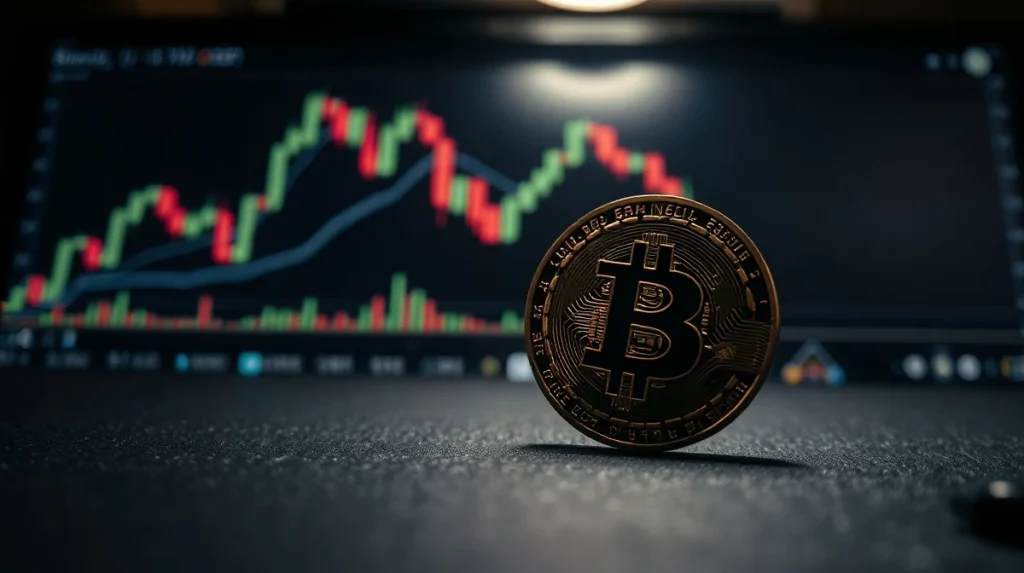
On-chain data reveals that Bitcoin is steadily migrating into wallets associated with long-term holders, a pattern often interpreted as a bullish signal. Glassnode metrics show that the supply of Bitcoin held in addresses that have not moved funds in over a year reached a new all-time high in early April 2025, surpassing 15.2 million BTC. Yet, despite this accumulation trend, spot market demand remains conspicuously absent, with daily trading volumes on major exchanges hovering near six-month lows.
The divergence between accumulation and demand is a central theme in current market analysis. While long-term holders appear confident, short-term traders and institutional investors are showing restraint, waiting for clearer macroeconomic signals before committing new capital. This has left Bitcoin trading in a narrow range, with the price oscillating between $65,000 and $70,000 over the past two weeks.
Also read: Bitcoin Nears $80K After $3B Short Squeeze; Pepeto Presale Hits $10.6M
What the Data Shows
Glassnode’s “HODL Waves” metric indicates that coins held for 1-2 years now represent the largest age band, a shift that historically precedes price appreciation. Additionally, exchange balances have dropped to 2.3 million BTC, the lowest level since 2018, suggesting that investors are moving coins off exchanges for safekeeping rather than preparing to sell.
However, this accumulation is not being matched by a corresponding increase in spot buying. The Coinbase Premium Index, which measures the price difference between Coinbase and other exchanges, has remained negative for most of March, indicating that U.S. institutional investors are not aggressively purchasing. Similarly, spot Bitcoin ETFs have recorded net outflows of $450 million in the past week, according to data from Farside Investors, reversing the inflows seen in February.
Also read: Bitcoin Breaks Above $77K, Triggering $865M in Liquidations — What the Bullish Signals Mean Now
Why Demand Is Missing
The lack of demand can be attributed to several factors. Macroeconomic uncertainty, particularly around the Federal Reserve’s interest rate trajectory, has made risk assets less attractive. The Fed’s stance on inflation, with core CPI still above 3%, has dampened expectations for rate cuts in the near term, reducing the appeal of speculative investments like Bitcoin.
Additionally, regulatory clarity remains a concern. The SEC’s ongoing litigation with major exchanges has created a cautious environment for institutional participation. While the approval of spot ETFs in January 2024 was a milestone, the subsequent lack of new product launches and the closure of several regional banks that served crypto clients have tempered enthusiasm.
Market participants are also watching the upcoming Bitcoin halving, scheduled for April 20, 2025. Historically, halvings have preceded significant price rallies, but the effect has typically been delayed by several months. The current accumulation trend may be positioning for that event, but until then, demand is likely to remain subdued.
What to Watch Next
For investors, the key indicators to monitor are the weekly ETF flow data and the Coinbase Premium Index. A sustained shift to positive territory in both would signal that institutional demand is returning. Additionally, the behavior of short-term holders, who have been selling into strength, will be vital. If the price breaks above the $72,000 resistance level on significant volume, it could trigger a wave of short covering and attract new buyers.
On the other hand, if macroeconomic conditions deteriorate, the current accumulation could be tested. Long-term holders have historically shown resilience, but a sharp decline in the broader stock market could force some to liquidate. For now, the market is in a waiting game, with strong hands accumulating and demand yet to follow.