Bitcoin Sell-Side Risk Ratio Drops to Historic Buy Zone, On-Chain Data Shows
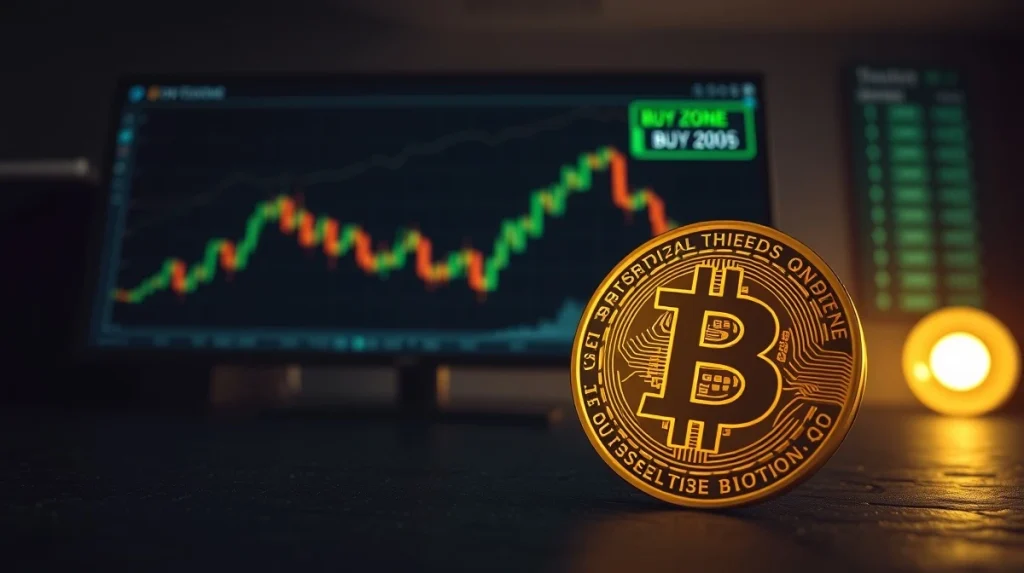
Bitcoin’s sell-side risk ratio, a key on-chain metric tracked by analysts, has fallen to levels that historically preceded major market bottoms. The indicator, which measures the aggregate realized profit and loss of coins moved on-chain relative to the asset’s realized capitalization, is now deep in what analysts call a ‘buy zone.’
Data from Glassnode shows the ratio has declined to approximately 0.2%, a level only seen during previous market capitulation events in 2015, 2018, and 2022. In each of those instances, Bitcoin’s price went on to establish a long-term bottom within weeks or months.
Also read: Is the Crypto Bull Market Back in September? Key Signals to Watch
What the Sell-Side Risk Ratio Reveals
The sell-side risk ratio is calculated by dividing the sum of realized gains and losses from on-chain transactions by the asset’s realized capitalization. A low reading implies that the majority of coins being transacted are moving at prices close to their original cost basis, meaning few holders are taking significant profits or losses.
This typically occurs after prolonged price declines, when weak hands have already sold and remaining holders are unwilling to transact at a loss. The resulting lack of sell pressure creates conditions where even modest buying demand can drive prices higher.
Also read: Oil Prices Jump Above $97 as U.S.-Iran Tensions Threaten Supply
Analysts at Glassnode noted in their weekly report that the current reading is “consistent with the exhaustion phase of a bear market.” They emphasized that while the metric does not predict the exact timing of a bottom, it has historically marked zones of high reward-to-risk for long-term buyers.
Historical Context and Market Implications
In the 2018–2019 cycle, the sell-side risk ratio bottomed near 0.1% in December 2018, just weeks before Bitcoin began a rally from $3,200 to over $13,000. Similarly, during the 2022 bear market, the ratio fell below 0.3% in November 2022, ahead of the recovery that followed the FTX collapse.
Current readings are approaching those historical extremes, suggesting that the market may be in a similar accumulation phase. However, the broader macroeconomic environment — including interest rate decisions and regulatory developments — remains a significant variable.
Bitcoin was trading at approximately $63,000 at the time of writing, down from its all-time high of $73,700 set in March 2024. The sell-side risk ratio data does not indicate an imminent price surge, but rather a structural shift in holder behavior that historically preceded sustained upward moves.
What This Means for Investors
For long-term holders, the metric provides a data-driven framework for assessing market sentiment. Low sell-side risk suggests that the distribution phase — where coins move from strong to weak hands — is complete, and the re-accumulation phase has begun.
Short-term traders should note that bottoms can be prolonged, and additional downside is possible before a reversal. The sell-side risk ratio is a lagging indicator of selling exhaustion, not a timing tool.
Frequently Asked Questions
What is the Bitcoin sell-side risk ratio?
It is an on-chain metric that compares the total realized profit and loss of coins moved on-chain to the asset’s realized capitalization. Low values indicate that most coins being sold are near their acquisition price, signaling reduced seller motivation.
Why is a low sell-side risk ratio considered a buy signal?
Historically, when the ratio drops to very low levels, it has coincided with periods of market exhaustion where selling pressure is depleted, often preceding significant price recoveries or new uptrends.
Does a low sell-side risk ratio guarantee a price increase?
No. While past cycles show a strong correlation, it is not a guarantee. Other factors such as macroeconomic conditions, regulatory news, and market sentiment also influence Bitcoin’s price direction.
Where can I track Bitcoin’s sell-side risk ratio?
Several on-chain analytics platforms provide this metric, including Glassnode, CryptoQuant, and LookIntoBitcoin. These platforms offer charts and historical data for independent analysis.