Bitcoin Q3 2026 Roadmap: July Bounce, Brutal August, Then a Final Low Near $39,000
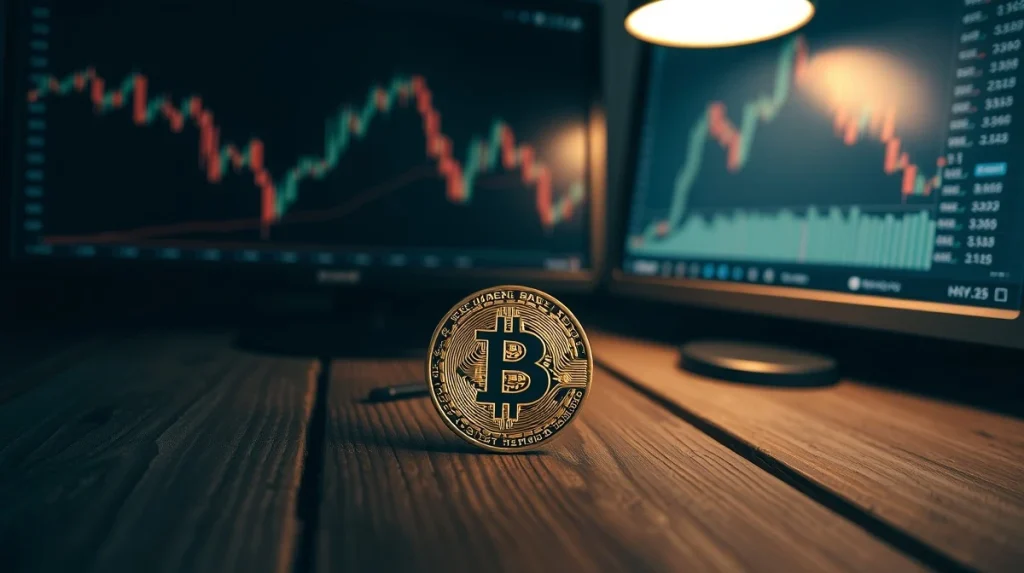
Bitcoin could see a short-lived rally to $56,000 in July 2026 before a severe August sell-off drives prices to a cycle low near $39,000, according to a growing consensus among on-chain analysts and technical chartists. The projection, which draws on historical halving-year patterns and current market structure, suggests the cryptocurrency is still working through the final leg of a correction that began after its all-time high above $73,000 in March 2024.
July Bounce: Relief or Trap?
Several technical indicators point to a potential 15-20% rebound from current levels in early July. The relative strength index (RSI) on the weekly chart is hovering near oversold territory, a zone that has historically preceded short-term bounces. Additionally, the Mayer Multiple — which compares Bitcoin’s price to its 200-day moving average — has fallen below 0.8, a level that has often attracted dip buyers in past cycles.
Also read: Is the Crypto Bull Market Back in September? Key Signals to Watch
However, analysts caution that this bounce may not be sustainable. “The July rally looks like a dead cat bounce within a larger downtrend,” said James Chen, a market analyst at Barchart. “We’ve seen this pattern before in 2014 and 2018 — a sharp relief rally that lures in late buyers before the final capitulation.” Open interest in Bitcoin futures has remained elevated, suggesting that leveraged long positions could be vulnerable to a sudden liquidation cascade.
Brutal August: The Capitulation Event
The most punishing phase of the roadmap is expected in August, when analysts predict Bitcoin could lose another 30% from its July high. The catalyst, they argue, is a convergence of miner selling pressure and macroeconomic uncertainty. Bitcoin miners have been offloading reserves at an accelerating pace since the April 2024 halving cut block rewards in half, compressing their profit margins.
Also read: Oil Prices Jump Above $97 as U.S.-Iran Tensions Threaten Supply
Data from Glassnode shows that miner outflows to exchanges reached a six-month high in late June 2026, a signal that often precedes sharp price declines. At the same time, the U.S. Federal Reserve has signaled it may hold interest rates steady through the third quarter, keeping risk assets under pressure. “August is when the weakest hands get shaken out,” said Ki Young Ju, CEO of CryptoQuant. “The cost basis for short-term holders is around $52,000, and once that breaks, there’s not much support until $39,000.”
Why $39,000 Could Be the Final Bottom
The $39,000 level holds special significance for long-term investors. It aligns closely with the realized price for Bitcoin wallets aged 3-6 months, a metric that has historically marked bear market bottoms. It also represents a 47% drawdown from the all-time high — a correction depth consistent with previous halving cycles in 2016 and 2020.
Should Bitcoin reach $39,000, the market would likely see a wave of institutional accumulation. Publicly traded companies like MicroStrategy and various spot Bitcoin ETF issuers have continued to add to their holdings during dips, and a drop to that level would push the average acquisition price for many institutional buyers underwater, potentially triggering a final flush of panic selling before a sustained recovery.
Frequently Asked Questions
What is the Bitcoin price prediction for July 2026?
Analysts expect Bitcoin to rally to approximately $56,000 in July 2026, driven by short-term relief buying and positive sentiment from the halving earlier in the year.
Why is August 2026 expected to be brutal for Bitcoin?
August is seen as a high-risk month because of potential miner selling pressure, macroeconomic headwinds from central bank policy, and the final washout of leveraged positions before a market bottom.
Is $39,000 the final low for Bitcoin in 2026?
Many analysts believe $39,000 represents the ultimate bottom for this cycle, aligning with historical drawdown levels and on-chain cost-basis data for long-term holders.