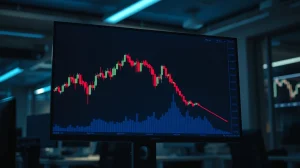
Bitcoin Could Face One Final Panic Sell-Off Before the Real Bottom Arrives

Bitcoin’s price has fallen roughly 12% over the past two weeks, slipping below $58,000 on Wednesday, as analysts warn that a final wave of panic selling may still be needed before the market establishes a durable bottom. The sell-off comes amid broader macroeconomic headwinds and lingering regulatory uncertainty in the United States.
The question of where Bitcoin’s cyclical bottom lies has divided market participants. Some on-chain metrics, such as the MVRV Z-Score and realized price, suggest the asset is approaching historically undervalued territory. Yet, exchange order book data shows clusters of large sell orders just below current price levels, which some traders interpret as a setup for a final capitulation event.
Also read: Alfa-Bank Plans Crypto Custody and Trading as Russia Moves Toward Digital Asset Rules
What Capitulation Looks Like in This Cycle
Capitulation in Bitcoin markets typically involves a sharp, high-volume price drop accompanied by a spike in realized losses and a surge in exchange inflows from long-term holders. The last such event occurred in November 2022, following the collapse of FTX, when Bitcoin briefly touched $15,500.
In the current cycle, the situation is different. Institutional involvement through spot ETFs and futures markets has added layers of complexity. Analysts at several trading firms note that while retail panic has been muted, institutional positioning may be the catalyst for a sharper move lower.
Also read: Zcash Co-Founder Eli Ben-Sasson Questions Bitcoin's 21M Cap, Proposes 4% Annual Growth
“We haven’t seen the kind of forced selling from miners or leveraged funds that typically marks the final washout,” said James Lavish, managing partner at a cryptocurrency hedge fund, in a note to clients this week. “That doesn’t mean it won’t happen. It just means we aren’t there yet.”
Historical Patterns and the Risk of Waiting
Looking at previous Bitcoin cycles, the period between the halving and the next all-time high has often included a deep retracement. In 2016, Bitcoin fell over 30% after the halving before beginning its parabolic run. In 2020, the COVID-19 crash produced a similar shakeout.
If history is a guide, the current drawdown could deepen before a sustainable recovery takes hold. However, each cycle has unique drivers, and the growing presence of institutional capital may compress or extend typical timelines.
For retail investors, the risk of trying to time the exact bottom remains high. Selling during a panic often locks in losses just before a reversal, while buying too early can lead to extended drawdowns. The uncertainty itself is a feature of the bottoming process.
What to Watch for a Potential Turnaround
Market observers are watching several indicators for signs of a genuine bottom: a sustained drop in exchange reserves, a decline in open interest on futures markets, and a shift in stablecoin supply toward exchanges, which often signals buying power waiting to be deployed.
Another key metric is the Bitcoin Hash Ribbon, which tracks miner capitulation. When the 30-day moving average of the hash rate falls below the 60-day average, it often precedes a price bottom by weeks. The Hash Ribbon has not yet flashed that signal in 2025.
Until those conditions align, the possibility of one more panic sell-off remains real. For now, the market waits — and prices may need to fall further before the real bottom arrives.