Bitcoin Holds Near $83,000 as Oil Crashes 12% Below $90; CryptoQuant Eyes $93K Target
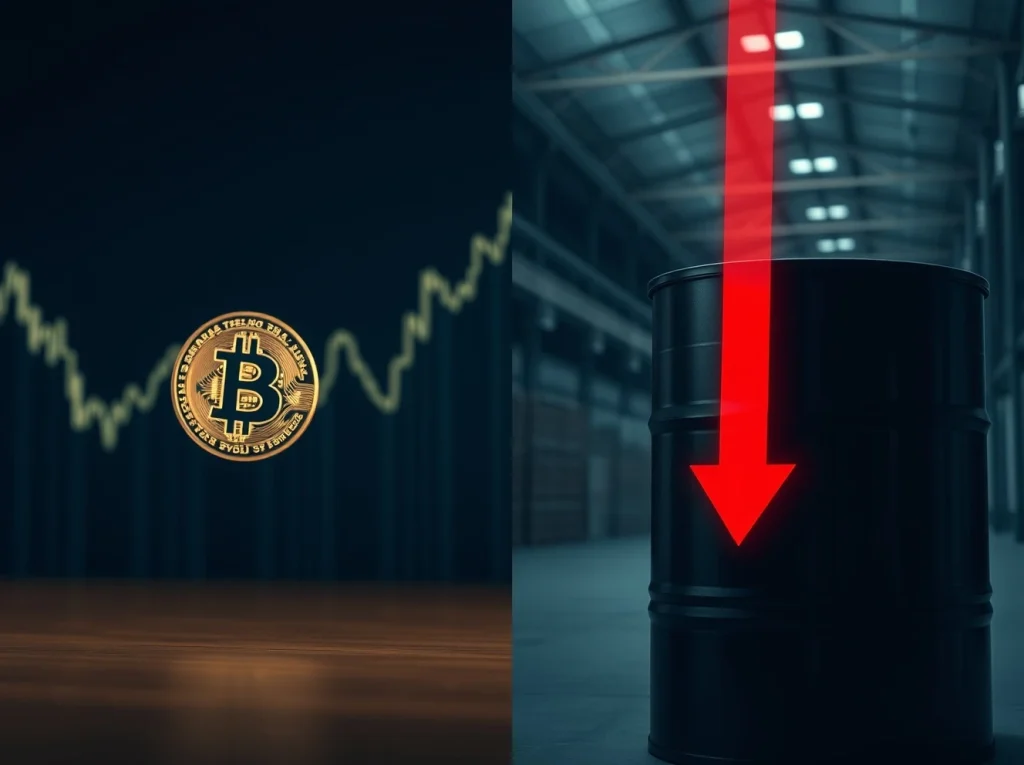
Bitcoin is trading near the $83,000 mark on Wednesday, demonstrating resilience amid a sharp sell-off in the oil market that has seen crude prices crash more than 12% to below $90 per barrel. The divergence between the two asset classes has caught the attention of on-chain analytics firm CryptoQuant, which is now eyeing a potential move toward $93,000 for the leading cryptocurrency.
Oil’s Steep Decline and Market Implications
The dramatic drop in oil prices comes amid reports of weakening global demand and a potential oversupply from major producers. The 12% decline in a single session is among the largest in recent years, raising concerns about the broader economic outlook. Historically, such sharp moves in commodities can signal shifting macroeconomic tides, often prompting investors to reassess risk across all asset classes.
Also read: NIGHT Price Stays Under Pressure Despite Midnight’s Token Terminal Partnership
CryptoQuant’s $93,000 Thesis
According to CryptoQuant analysts, Bitcoin’s current price action near $83,000 shows strong support, with on-chain metrics suggesting that accumulation patterns remain intact. The firm’s models indicate that if Bitcoin can sustain above the $80,000 level, a rally toward $93,000 is plausible in the near term. Key indicators include rising exchange outflows and a decline in short-term holder supply, both of which historically precede upward price movements.
Why This Matters for Investors
The divergence between Bitcoin and oil is notable because it challenges the narrative that cryptocurrencies are purely correlated with traditional risk assets. While oil’s crash reflects fears of a slowdown, Bitcoin’s relative stability suggests that some investors view it as a hedge against monetary policy uncertainty or as a store of value in a low-growth environment. For readers, this development underscores the importance of monitoring cross-asset dynamics when evaluating crypto market trends.
Also read: Telegram-Linked TAC Token Crashes 90% in 15 Minutes: What Happened?
Broader Market Context
The S&P 500 and other equity indices have also experienced volatility, though not to the same degree as oil. The Federal Reserve’s recent comments on interest rates have added to the uncertainty, with markets pricing in a potential pause in rate cuts. Bitcoin’s ability to hold above $80,000 during this period of macroeconomic stress is being interpreted by some analysts as a sign of growing maturity in the crypto asset class.
Conclusion
Bitcoin’s resilience near $83,000, contrasted with oil’s dramatic 12% crash below $90, highlights a significant market divergence. CryptoQuant’s analysis suggests a path toward $93,000 if current support levels hold. However, the broader economic space remains uncertain, and investors should weigh both the on-chain signals and the macroeconomic headwinds when making decisions. The coming days will be critical in determining whether Bitcoin can decouple further from traditional markets or if the oil sell-off signals a broader risk-off shift.
FAQs
Q1: Why did oil prices crash 12%?
A1: The crash is attributed to a combination of weakening global demand forecasts, particularly from China, and reports of increased production from OPEC+ members, creating an oversupply scenario that triggered a sharp sell-off.
Q2: Is $93,000 a guaranteed target for Bitcoin?
A2: No. CryptoQuant’s analysis indicates that $93,000 is a plausible target if Bitcoin maintains support above $80,000 and on-chain accumulation trends continue. However, market conditions can change rapidly, and the target is not guaranteed.
Q3: How does oil’s crash affect cryptocurrency markets?
A3: While not directly correlated, oil’s decline can influence broader investor sentiment and risk appetite. A sharp drop in oil may lead to a flight to cash or safe-haven assets, but it can also prompt central banks to adopt more accommodative policies, which historically benefits assets like Bitcoin.