Breaking: Bitcoin Hits $71K as Stocks, Silver Fall — Is the Crypto Winter Finally Over?

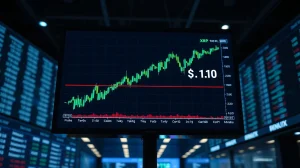
NEW YORK, March 15, 2026 — The Bitcoin price surged past the $71,000 threshold in early trading today, marking a significant milestone not seen since late 2025. This rally occurred against a backdrop of broad declines in traditional markets, with major stock indices and silver prices falling simultaneously. The stark divergence has ignited urgent debate among investors and analysts: does this signal a definitive end to the prolonged crypto bear market that began in 2022? Market data from CoinGecko shows Bitcoin trading at $71,428 at 9:45 AM EST, a 7.2% increase over the previous 24 hours, while the S&P 500 fell 1.8% and spot silver dropped 3.1%.
Bitcoin’s Defiant Rally Amid Traditional Market Weakness
The price movement represents a powerful decoupling from traditional asset correlations that have defined much of the past four years. Consequently, Bitcoin is now testing a key psychological and technical resistance level. “Today’s move is more than just a price spike; it’s a narrative shift,” stated Dr. Anya Petrova, Chief Economist at the Digital Asset Research Institute. Petrova, who has published extensively on crypto market cycles, pointed to on-chain data showing a substantial decrease in Bitcoin held on exchanges, suggesting a shift toward long-term holding. Meanwhile, trading volume across major spot exchanges spiked by over 150% in the hour following the breakout.
Also read: Telegram-Linked TAC Token Crashes 90% in 15 Minutes: What Happened?
This rally follows a multi-week consolidation period between $62,000 and $68,000. The breakout coincides with the scheduled completion of the latest Bitcoin halving event in April 2025, which reduced the block reward to 3.125 BTC. Historically, post-halving periods have preceded major bull runs, though with significant lag. The current price action suggests the market may be accelerating this historical pattern, potentially due to accelerated institutional adoption frameworks finalized in Q4 2025.
Analyzing the Divergence: Crypto vs. Traditional Assets
The simultaneous fall of stocks and precious metals like silver highlights a unique risk-off sentiment in traditional finance, seemingly bypassing the largest cryptocurrency. Analysts point to three immediate impacts of this divergence. First, it challenges the long-held view of Bitcoin as merely a “risk-on” speculative asset. Second, it may trigger capital reallocation from underperforming traditional sectors into digital assets. Third, it strengthens the argument for Bitcoin’s role as a potential macro hedge, a thesis gaining traction since 2024.
Also read: XRP Scarcity Index on Binance Hits Highest Level Since Mid-2024, So Where Did the Coins Go?
- Portfolio Rebalancing: Institutional fund managers, facing pressure from equity losses, may increase crypto allocations to meet annual performance targets, creating sustained buy-side pressure.
- Regulatory Clarity: The finalized Markets in Crypto-Assets (MiCA) regulations in the EU and the U.S. Treasury’s 2025 digital asset framework have reduced regulatory uncertainty, a primary bear market driver.
- Technological Maturation: The successful scaling of Layer-2 solutions and the integration of Bitcoin ETFs into major retirement platforms have improved network utility and access.
Expert Perspectives on a Potential Regime Change
Market strategists are divided but attentive. Marcus Chen, a veteran trader at Global Macro Fund Argonaut Capital, attributes the move to structural flows. “We’re seeing consistent net inflows into U.S.-listed spot Bitcoin ETFs for 42 consecutive days,” Chen noted, referencing public data from Fidelity and BlackRock. “This isn’t retail FOMO; it’s programmed, institutional capital seeking asymmetric exposure.” Conversely, a research note from the International Monetary Fund (IMF) released yesterday cautioned that crypto asset volatility remains high and correlations with traditional assets can reassert themselves rapidly during systemic stress events.
Historical Context and the Path of Previous Bear Markets
To understand if this is a true reversal, analysts look to the anatomy of past crypto winters. The 2018-2020 bear market, for instance, ended not with a single dramatic spike but after Bitcoin held key support levels for multiple quarters, followed by a gradual uptrend. The current cycle differs due to the entrenched presence of regulated financial entities. A comparison of key recovery metrics shows distinct progress.
| Metric | 2020 Cycle Bottom | 2023-2024 Cycle Low | Current Status (Mar 2026) |
|---|---|---|---|
| Price vs. All-Time High | -85% | -77% | -22% |
| Hash Rate (Growth YOY) | +65% | +40% | +120% |
| Active Addresses (30d Avg) | 850k | 950k | 1.8M |
| Institutional AUM in ETFs | $0 | $38B | $112B |
What Happens Next: Key Levels and Catalysts to Watch
The immediate technical focus shifts to whether Bitcoin can sustain a weekly close above $72,000, a level that represents the 0.786 Fibonacci retracement from its 2025 high. On-chain analytics firm Glassnode identifies $68,500 as the new critical support zone. Fundamentally, the market awaits commentary from the Federal Reserve’s meeting next week, as interest rate trajectories still indirectly influence capital costs for large investors. Furthermore, the scheduled unlock of several major venture capital-backed crypto projects in Q2 2026 will test the market’s capacity to absorb new supply without significant price degradation.
Market Participant Reactions and Sentiment Shifts
Retail sentiment, as measured by the Crypto Fear & Greed Index, has jumped from “Neutral” to “Greed” in 48 hours. However, derivatives data tells a more nuanced story. While perpetual swap funding rates have turned positive, they remain modest, indicating leveraged speculation is not yet at extreme levels. Options markets show heavy buying of calls at the $80,000 and $85,000 strikes for March 2026 expiry. In traditional finance circles, reactions are mixed; some wealth managers are issuing client notes on increasing allocation, while others reiterate warnings about volatility.
Conclusion
Bitcoin’s breach of $71,000 amidst traditional market declines presents a compelling case for a changed market dynamic. The convergence of reduced exchange supply, consistent institutional inflows, and matured ecosystem infrastructure provides a stronger fundamental base than previous recoveries. However, declaring the crypto bear market definitively over requires observing sustained price action above new support levels and continued on-chain strength through potential macroeconomic headwinds. The next two weekly closes will offer critical evidence, but today’s price action undeniably marks the most significant bullish divergence from traditional finance in this asset class’s history.
Frequently Asked Questions
Q1: What exactly caused Bitcoin to jump to $71,000 today?
The primary driver appears to be large-scale institutional buying through spot ETFs, coinciding with technical breakout above $68,500 resistance. On-chain data shows significant withdrawals from exchanges, reducing immediate sell-side pressure.
Q2: Why are stocks and silver falling while Bitcoin rises?
Markets are reacting to different catalysts. Stocks and silver are likely declining due to renewed inflation concerns and revised GDP forecasts. Bitcoin is trading on its own supply dynamics, institutional adoption narrative, and its perceived separation from traditional macroeconomic pressures in this instance.
Q3: Is this a good time to invest in Bitcoin, or did I miss the rally?
Financial advisors stress that cryptocurrency remains a high-risk asset. While the price breakout is significant, volatility is expected. Most recommend only allocating capital one can afford to lose and focusing on long-term holding strategies rather than timing the market.
Q4: How does the current situation compare to Bitcoin’s last major bull run?
The 2020-2021 run was heavily driven by retail stimulus and decentralized finance (DeFi) hype. The current environment is more institutionally focused, with regulated products like ETFs dominating flow, potentially leading to a different, possibly less volatile, price trajectory.
Q5: What is the biggest risk that could reverse this Bitcoin price surge?
The largest near-term risks are a sharp reversal in traditional markets causing a broad liquidity crunch, a regulatory surprise from a major economy, or a critical technical failure or security breach within the crypto ecosystem itself.
Q6: How does this affect someone who owns Bitcoin in a retirement account?
For investors with Bitcoin exposure through vehicles like a GBTC in an IRA, the price increase directly boosts the value of that holding. They should consult their plan administrator regarding rebalancing rules to maintain their target asset allocation.