Asian Markets Shed Over $700 Billion as Oil Surge and Tariff Fears Trigger Broad Selloff
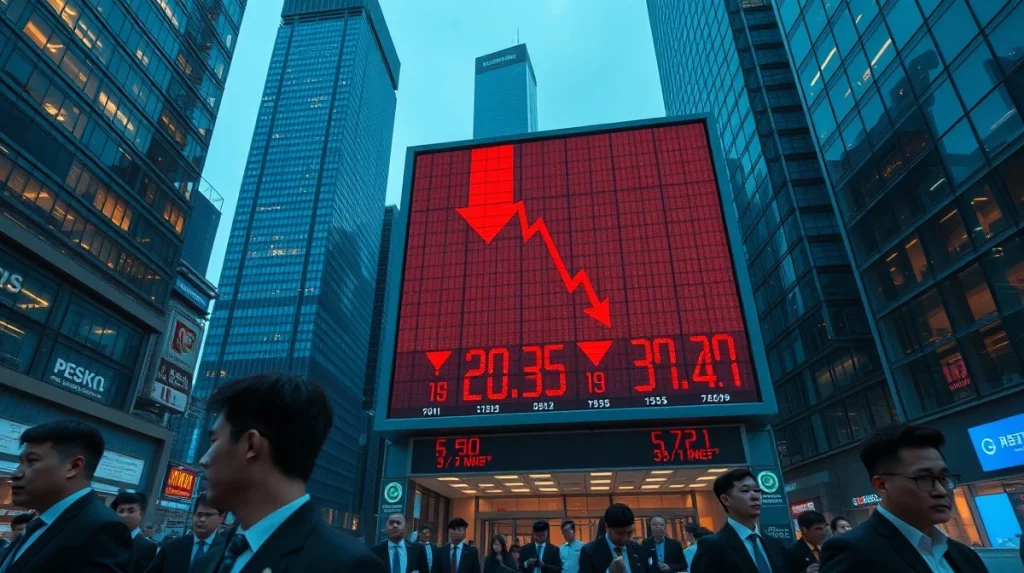
Asian stock markets lost more than $700 billion in combined market capitalization on Tuesday, as a surge in global oil prices and escalating tariff threats from the United States triggered one of the region’s broadest selloffs in months. Major indices from Tokyo to Mumbai fell sharply, with Japan’s Nikkei 225 dropping 3.2% and South Korea’s KOSPI sliding 2.8%.
The selloff came after crude oil prices climbed to their highest level in over a year, driven by supply concerns and geopolitical tensions in the Middle East. Simultaneously, renewed US trade policy uncertainty — including potential new tariffs on Chinese and other Asian imports — rattled investors already wary of slowing global growth.
Also read: Bitcoin ETF Outflows Hit $389.71M, Largest in Six Weeks, as Ethereum ETFs Show Resilience
Oil Shock and Tariff Fears Compound Regional Pressures
For net oil-importing economies across Asia, the rise in crude prices is a direct headwind. Higher energy costs increase production and transportation expenses, squeeze corporate profit margins, and can stoke inflation — all factors that typically weigh on equity valuations. Japan, South Korea, and India, among the region’s largest economies, are particularly exposed.
The tariff dimension adds another layer of risk. The US administration has signaled it may impose additional duties on a range of Asian imports, citing trade imbalances and national security concerns. While the exact scope and timing remain unclear, the prospect of higher barriers has already prompted companies to reassess supply chains and investment plans.
Also read: Citi Rolls Out Bitcoin Custody for Institutional Clients via Custody+ Platform
“This is a double shock for Asian markets,” said a senior analyst at a Hong Kong-based investment firm. “Higher oil acts like a tax on consumers and businesses, while tariffs threaten the export-driven growth model that many of these economies rely on. The combination is particularly toxic for sentiment.”
What the Selloff Means for Investors
The scale of Tuesday’s decline — exceeding $700 billion in paper losses — underscores how quickly market sentiment can shift when external shocks converge. For retail and institutional investors alike, the selloff raises questions about portfolio resilience in a period of rising input costs and trade friction.
Some analysts caution that further downside may be limited if oil prices stabilize or if trade negotiations yield progress. However, with no clear resolution on either front, near-term volatility is expected to remain elevated. Central banks in the region may face renewed pressure to adjust monetary policy, balancing inflation concerns against the need to support growth.
The broader context is also important: Asian equities had rallied earlier in the year on hopes of a soft landing for the global economy. Tuesday’s rout serves as a reminder that those hopes remain fragile, and that external factors beyond the region’s control can quickly alter the outlook.
Investors will be watching upcoming trade talks and oil market developments closely. The coming days may determine whether this is a sharp correction within a longer uptrend or the beginning of a more sustained downturn.