In this article3 sections
Real-world asset (RWA) tokenization has moved from experimental pilot projects to a core institutional strategy, with the market for onchain assets projected to grow significantly through 2026. As of August 2026, tokenized private credit, real estate, and commodities are being issued across multiple blockchain networks, each competing to become the preferred infrastructure for regulated financial institutions.
The choice of network matters as much as the assets themselves. Institutions evaluating tokenization platforms are looking beyond raw transaction throughput to consider finality, predictable costs, security, scalability, developer infrastructure, and suitability for regulated applications. Here’s a look at the networks that are positioning themselves for the next phase of RWA adoption.
 Also readRWA Distributed Asset Value Hits $38.45B, Ethereum Leads
Established Networks Double Down on Tokenization
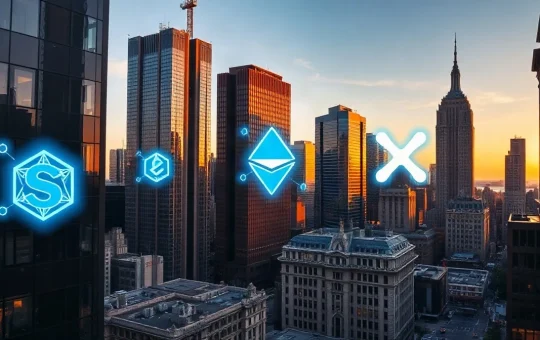
Ethereum remains the default starting point for many tokenization projects, thanks to its mature smart-contract infrastructure, deep liquidity, and extensive developer community. Its dominance in DeFi makes it a natural home for tokenized funds and securities, although transaction costs and fee variability remain considerations for high-volume applications.
Solana has gained traction in the RWA space by offering high throughput and low transaction costs. Its ecosystem has expanded beyond DeFi and payments into tokenized assets, making it an increasingly relevant option for projects that need fast settlement. Avalanche, meanwhile, has built a reputation for institutional blockchain initiatives, with its subnet architecture allowing organizations to create customized environments tailored to specific regulatory or operational needs.
 Also readSeven Altcoins to Watch as the Crypto Clarity Act Vote Nears: ETH, SOL, LINK, ZEC, HYPE, XRP, ONDO
Polygon’s Ethereum-compatible scaling solutions have attracted companies experimenting with tokenization, digital ownership, and payments. Its ability to connect to Ethereum’s liquidity while offering lower costs has made it a practical bridge for enterprises.
Enterprise-Focused Networks Gain Ground
Beyond the well-known smart-contract platforms, several networks are carving out niches specifically for institutional RWA use. Casper, a Layer-1 blockchain, has gained attention for its fast transaction finality and a fee model designed to provide cost predictability. For organizations that need to forecast operating expenses at scale, this predictability can be a decisive factor.
Stellar has long focused on payments and asset issuance, making tokenization a natural extension of its core use cases. Its history in cross-border financial infrastructure keeps it relevant as blockchain-based financial products become more mainstream. Hedera, with its enterprise governance model and predictable network costs, also continues to attract organizations evaluating distributed-ledger technology for commercial applications.
What Separates the Leading RWA Blockchains
The RWA opportunity isn’t likely to be won by a single technical metric. As more assets move onchain, projects and institutions will evaluate networks across a range of factors, including transaction finality, fee levels and predictability, security, scalability, smart-contract functionality, developer infrastructure, compliance readiness, liquidity, and interoperability.
The most interesting networks may be those that combine strong technical performance with the infrastructure needed to support real-world institutional requirements. In 2026, the competition among these networks is expected to intensify as tokenization matures and more financial institutions commit to blockchain-based settlement and asset management.
For readers tracking this space, the key takeaway is that the RWA space is still forming. Networks that can demonstrate reliability, cost efficiency, and institutional trust are likely to emerge as the backbone of the onchain economy. As always, this analysis is for informational purposes only and does not constitute financial advice. The cryptocurrency and tokenization markets remain volatile and uncertain, and readers should conduct their own research before making any investment decisions.
Source: Coinpedia