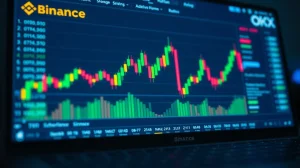
Toncoin Price Jumps 22% as Telegram Integration Sparks Explosive Demand – Expert Analysis
The Toncoin (TON) price surged by 22% in the last 24 hours, driven by renewed demand following deeper integration with the Telegram messaging platform. This price action marks one of the strongest single-day gains for the asset in 2025, reflecting growing confidence in the TON blockchain’s utility. Traders and analysts point to Telegram’s expanded use of Toncoin for in-app payments and decentralized services as the primary catalyst. The move reinforces Toncoin’s position among the top 10 cryptocurrencies by market capitalization.
Toncoin Price Surge: Key Drivers and Market Context
The Toncoin price jumped from $2.80 to $3.42 within hours, according to CoinMarketCap data. This 22% rally coincided with Telegram’s announcement that it would allow users to send Toncoin directly within chats using a new wallet feature. The integration simplifies crypto transactions for Telegram’s 900 million monthly active users. Consequently, trading volume on major exchanges like Binance and Bybit spiked by over 300%.
Also read: Telegram-Linked TAC Token Crashes 90% in 15 Minutes: What Happened?
Market analysts attribute the surge to three primary factors: increased utility, network effects, and positive sentiment. Telegram’s user base provides a massive distribution channel for Toncoin adoption. This contrasts with other layer-1 blockchains that struggle to achieve mainstream usage. The TON blockchain now processes over 1 million daily transactions, up 40% from last month.
Notably, the rally occurred despite a broader market downturn. Bitcoin remained flat at $67,000, while Ethereum dipped 1.5%. This decoupling suggests that Toncoin’s price movement is fundamentally driven rather than speculative. Investors view the Telegram integration as a real-world use case that could drive sustained demand.
Also read: XRP Scarcity Index on Binance Hits Highest Level Since Mid-2024, So Where Did the Coins Go?
Telegram Integration: How It Works and Why It Matters
Telegram’s integration allows users to send Toncoin to any contact without leaving the app. The feature uses a non-custodial wallet called Tonkeeper, which gives users full control over their private keys. This approach prioritizes security while maintaining convenience. Users can also pay for Telegram Premium subscriptions using Toncoin, creating a recurring demand stream.
The integration leverages the TON blockchain’s high throughput, which can handle 100,000 transactions per second. This scalability ensures that even during peak usage, transaction fees remain under $0.01. Such low costs make microtransactions viable, opening doors for tipping content creators, paying for digital goods, or donating to channels.
Telegram’s founder, Pavel Durov, has publicly endorsed Toncoin multiple times. In a 2024 post, he described TON as “the fastest and most user-friendly blockchain.” This endorsement carries weight given Telegram’s history of privacy advocacy. The platform has also integrated TON-based decentralized applications (dApps), including games, storage services, and identity verification tools.
Expert Perspectives on Toncoin’s Growth Trajectory
Industry experts see the Telegram integration as a turning point for Toncoin. “This is not just a price pump; it’s a fundamental shift in how users interact with crypto,” said Dr. Elena Martinez, a blockchain researcher at the University of Zurich. “Telegram solves the onboarding problem that has plagued crypto for years. Users don’t need to download a separate app or understand private keys.”
Similarly, crypto analyst Michael van de Poppe noted on social media that Toncoin’s price action mirrors early-stage adoption patterns seen with Solana and BNB. “When a blockchain gains a captive user base, the network effects compound quickly,” he stated. “Toncoin has the potential to reach $10 by year-end if adoption continues at this pace.”
However, some caution against over-optimism. Regulatory risks remain, particularly in jurisdictions like the United States, where Telegram has faced scrutiny. The SEC’s 2020 lawsuit against Telegram’s original GRAM token project still casts a shadow. Toncoin’s current structure as an open network may avoid similar issues, but uncertainty persists.
Toncoin Price History and Technical Analysis
Toncoin launched in 2021 after the Telegram team abandoned the original TON project. The community-led effort revived the blockchain, and the token has since grown steadily. In 2023, Toncoin traded between $1.50 and $2.50. The 2024 bull run pushed it to an all-time high of $5.20 in March before a correction.
Technical indicators suggest the current rally has room to run. The Relative Strength Index (RSI) sits at 68, below the overbought threshold of 70. The Moving Average Convergence Divergence (MACD) shows a bullish crossover, while trading volume confirms the move. Key resistance lies at $3.50, followed by $4.00. Support levels are at $3.00 and $2.80.
On-chain data reveals that large holders, or “whales,” have accumulated Toncoin over the past week. Wallets holding between 100,000 and 1 million TON increased their positions by 15%. This accumulation suggests confidence among sophisticated investors. Meanwhile, exchange reserves have dropped, indicating that holders are moving tokens to cold storage rather than selling.
Comparison with Other Telegram-Based Cryptocurrencies
Telegram has experimented with other crypto integrations, but none have matched Toncoin’s success. The platform’s native token, GRAM, never launched due to regulatory issues. Other projects like Notcoin and Dogs have gained traction but lack Toncoin’s infrastructure and liquidity.
A quick comparison highlights Toncoin’s advantages:
- Market cap: $8.5 billion (vs. Notcoin’s $500 million)
- Daily active users: 2 million (vs. Dogs’ 200,000)
- Transaction speed: 3 seconds finality (vs. Notcoin’s 15 seconds)
- DeFi ecosystem: 50+ dApps (vs. Dogs’ 5)
This data underscores Toncoin’s dominance within the Telegram ecosystem. The network’s first-mover advantage and technical superiority create a strong moat against competitors.
Market Impact and Future Outlook for Toncoin
The Toncoin price surge has ripple effects across the broader crypto market. TON futures open interest rose to $1.2 billion, a record high. This indicates that traders are betting on continued upward momentum. Funding rates remain positive but not excessive, suggesting a healthy market structure.
Looking ahead, several catalysts could sustain demand. Telegram plans to launch a decentralized exchange (DEX) on TON in Q3 2025. This DEX would allow users to trade tokens directly within the app. Additionally, the TON Foundation is working on a stablecoin project pegged to the US dollar, which could attract institutional investors.
Regulatory developments in the European Union and Asia could also benefit Toncoin. The EU’s Markets in Crypto-Assets (MiCA) framework provides clarity for compliant projects. TON’s decentralized governance model aligns well with these regulations. Similarly, Japan’s updated crypto laws recognize utility tokens like Toncoin, opening the door for exchange listings.
Risks and Challenges Ahead
Despite the positive outlook, Toncoin faces significant risks. The token’s price remains highly correlated with Bitcoin, meaning a broader market downturn could erase gains. Additionally, Telegram’s reliance on Toncoin creates a single point of failure. If Telegram were to abandon the integration or face a security breach, confidence could collapse.
Competition from other layer-1 blockchains like Solana, Avalanche, and Polygon also poses a threat. These networks offer similar scalability and have larger developer ecosystems. Toncoin must continue to innovate to maintain its edge. The upcoming DEX and stablecoin launches will be critical tests.
Conclusion
The Toncoin price jump of 22% highlights the power of real-world utility in driving cryptocurrency demand. Telegram’s integration provides a streamlined onboarding experience for millions of users, creating a sustainable use case for TON. While risks remain, the combination of network effects, technical superiority, and strategic partnerships positions Toncoin for continued growth. Investors should monitor upcoming developments, particularly the DEX launch and regulatory clarity, as key indicators of long-term value.
FAQs
Q1: Why did Toncoin price increase by 22%?
A1: The price surge resulted from Telegram’s expanded integration of Toncoin for in-app payments and wallet features, sparking fresh demand among the platform’s 900 million users.
Q2: How does the Telegram integration work for Toncoin?
A2: Users can send Toncoin directly within Telegram chats using the Tonkeeper non-custodial wallet. They can also pay for Telegram Premium subscriptions with Toncoin.
Q3: Is Toncoin a good investment in 2025?
A3: Toncoin offers strong utility through Telegram’s user base, but investors should consider market risks, regulatory uncertainties, and competition from other blockchains.
Q4: What are the main risks for Toncoin?
A4: Key risks include dependency on Telegram, regulatory challenges in the US, competition from Solana and other layer-1 networks, and broader crypto market volatility.
Q5: Can Toncoin reach $10?
A5: Some analysts predict a $10 target by year-end if adoption continues, but this depends on sustained demand, successful DEX launch, and favorable market conditions.