South Korea’s Strict 5-Minute Crypto Rule Aims to Prevent Another Bithumb Disaster
SEOUL, South Korea – Financial authorities here have imposed one of the world’s strictest real-time monitoring rules for cryptocurrency exchanges. A new mandate requires platforms to reconcile their internal records with actual blockchain wallet holdings every five minutes. This move directly responds to a major security failure at Bithumb, one of the country’s largest exchanges. The rule aims to close a dangerous gap between reported and real assets.
South Korea’s 5-Minute Crypto Rule Explained
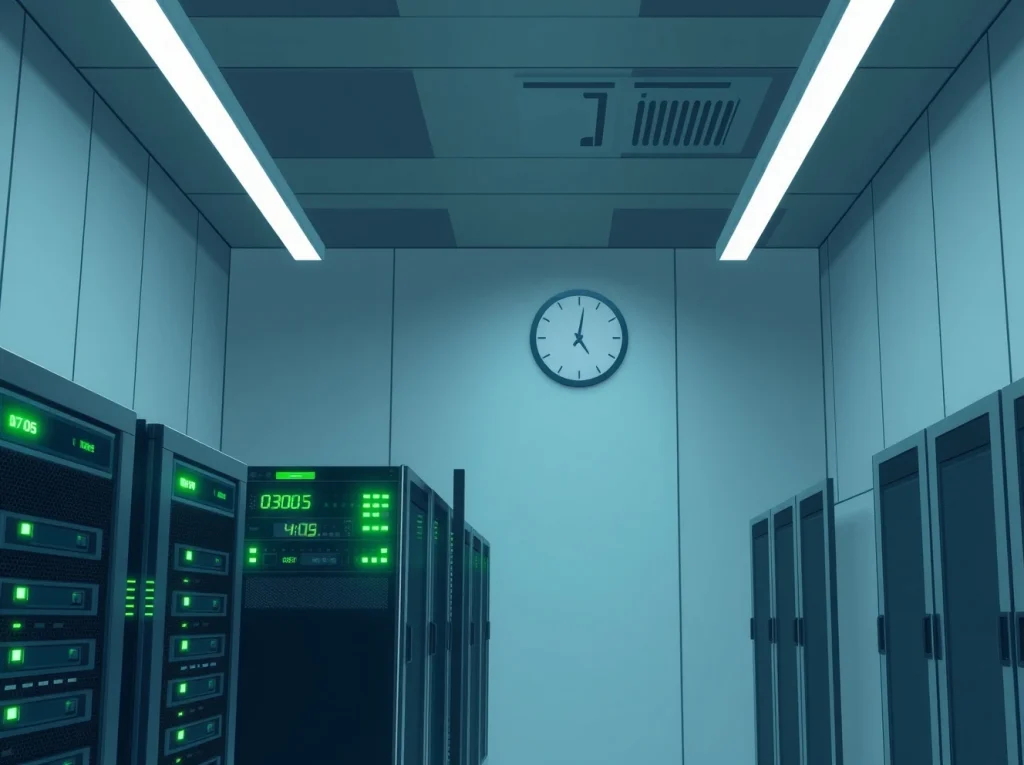
According to the Financial Services Commission (FSC), the regulation took effect in the first quarter of 2026. It requires all registered Virtual Asset Service Providers (VASPs) operating in South Korea to perform a full asset reconciliation at intervals not exceeding five minutes. Previously, exchanges could reconcile holdings hourly or even daily. The FSC stated the rule is designed to “immediately detect and prevent discrepancies between exchange-ledger balances and actual wallet reserves.”
Also read: BNB Chain Reveals New Layer 1 Blockchain for Agentic Trading, Mainnet Set for 2027
This is a technical but vital process. In simple terms, an exchange’s internal database says it holds 100 Bitcoin for its customers. The 5-minute rule forces the exchange to check, via the blockchain, that its cold and hot wallets actually contain those 100 Bitcoin. Any mismatch must be flagged instantly. The FSC can then receive automated alerts. Industry watchers note that this shrinks the window for operational errors or fraudulent activity to go unnoticed from hours to mere minutes.
The Bithumb Incident That Forced Change
The catalyst for this aggressive regulation was a significant incident at Bithumb in late 2025. Data from the Korea Financial Intelligence Unit (KoFIU) shows that a reconciliation failure led to a substantial, undisclosed discrepancy in customer assets. While no customer funds were reportedly lost, the event exposed a critical weakness in internal controls. It revealed that the exchange’s internal accounting systems were not synchronized with its actual crypto holdings in real time.
Also read: Naver Financial and Dunamu Push Share Swap Deadline to December Amid Regulatory Hurdles
“The Bithumb case was a wake-up call,” said a financial compliance officer familiar with the matter, who spoke on condition of anonymity. “It proved that even large, established exchanges could have a fundamental breakdown in their most basic duty: safeguarding client assets.” The FSC’s subsequent investigation concluded that more frequent, automated reconciliation was a necessary deterrent. The implication is that slower checks allow problems to accumulate, potentially leading to insolvency.
How the Rule Strengthens Investor Protection
This regulation goes beyond simple error detection. Analysts point to several protective layers it creates. First, it makes it nearly impossible for an exchange to operate while technically insolvent for more than a few minutes. Second, it provides regulators with a continuous audit trail. Third, it forces exchanges to invest in sturdy, automated systems, raising the overall security standard.
What this means for investors is a higher baseline of safety. The risk of a sudden collapse due to hidden insolvency—a scenario seen in failures like FTX—is reduced. However, compliance comes at a cost. Exchanges must deploy sophisticated software and infrastructure to handle the constant data verification. Smaller platforms may struggle with the financial and technical burden. This could signal further consolidation in South Korea’s crypto market.
Comparing Global Crypto Oversight
South Korea’s approach is notably more stringent than in other major markets. For instance, Japan’s Financial Services Agency (FSA) requires daily reconciliations for crypto exchanges. The United States has no federally mandated reconciliation frequency, leaving it to state-level guidance or exchange policy. The European Union’s Markets in Crypto-Assets (MiCA) framework, set for full implementation, emphasizes strong custody rules but does not specify a five-minute threshold.
Key differences in reconciliation rules:
- South Korea: Mandatory 5-minute intervals.
- Japan: Mandatory daily intervals.
- United States: No federal frequency mandate; varies by state.
- European Union (MiCA): Strong custody requirements, no specific time mandate.
This suggests South Korea is positioning itself as a global leader in preemptive crypto market oversight. The country has a massive retail crypto trading population, making consumer protection a political and regulatory priority.
Technical and Operational Challenges for Exchanges
Implementing the rule is not trivial. According to engineers at several Korean exchanges, the main challenge is system load. Querying blockchain networks for hundreds of thousands of wallet balances every five minutes requires significant computing power and optimized code. There’s also the issue of “blockchain finality”—some networks take minutes for transactions to be irreversible, which could complicate the snapshot of a “real” balance.
Exchanges must solve these problems without causing service delays for users. Many are likely using a combination of dedicated node infrastructure, advanced caching, and parallel processing. The FSC has indicated it will allow a short grace period for technical fine-tuning but expects full compliance. Failure to meet the standard could result in fines, operational restrictions, or loss of licensing.
Market Reaction and Future Implications
Initial market reaction has been mixed. Shares of publicly traded crypto-related firms in South Korea saw minor volatility after the announcement. Some traders expressed concern about potential increases in trading fees as exchanges pass on compliance costs. However, long-term investors have generally welcomed the move as a step toward market maturity and stability.
The broader implication is a shift toward treating crypto exchanges more like traditional financial institutions. Continuous, automated reconciliation is a standard practice in banking and securities trading. Applying it to digital assets marks another step in the formalization of the crypto industry. Other regulators in Asia and beyond are closely watching the South Korean experiment. If successful, the 5-minute rule could become a model for other jurisdictions seeking to tighten exchange oversight without stifling innovation.
Conclusion
South Korea’s new 5-minute crypto reconciliation rule sets a new global benchmark for exchange safety. Born from the lessons of the Bithumb incident, it aims to eliminate the lag between an exchange’s books and reality. This protects investors by making hidden insolvency almost impossible. While it poses technical challenges, the rule strengthens South Korea’s framework for digital asset oversight. The move reflects a clear trend: as cryptocurrency matures, so too must the regulations that guard its users.
FAQs
Q1: What is the 5-minute crypto rule in South Korea?
The rule requires all licensed cryptocurrency exchanges in South Korea to verify that their internal customer account balances match the actual cryptocurrency held in their wallets. They must perform this check at least every five minutes.
Q2: Why did South Korea implement this rule?
The primary trigger was a reconciliation failure at the Bithumb exchange in 2025, which exposed a dangerous gap in real-time asset verification. Regulators acted to prevent similar incidents and protect investors from exchange insolvency.
Q3: Does this rule apply to all cryptocurrencies?
Yes, the Financial Services Commission mandate applies to all virtual assets traded on registered South Korean exchanges. Exchanges must reconcile holdings for every supported cryptocurrency and token.
Q4: How does this compare to regulations in the United States?
The U.S. has no federal rule specifying how often crypto exchanges must reconcile holdings. South Korea’s 5-minute rule is therefore significantly more strict and specific than current U.S. federal requirements.
Q5: Could this rule make trading more expensive for users?
It is possible. The cost of building and running the systems for 5-minute reconciliation is high. Some analysts suggest exchanges might raise trading fees slightly to cover these operational costs, though competition may limit this.