What Drove the 4100% SKYAI Price Surge? And Can It Last?
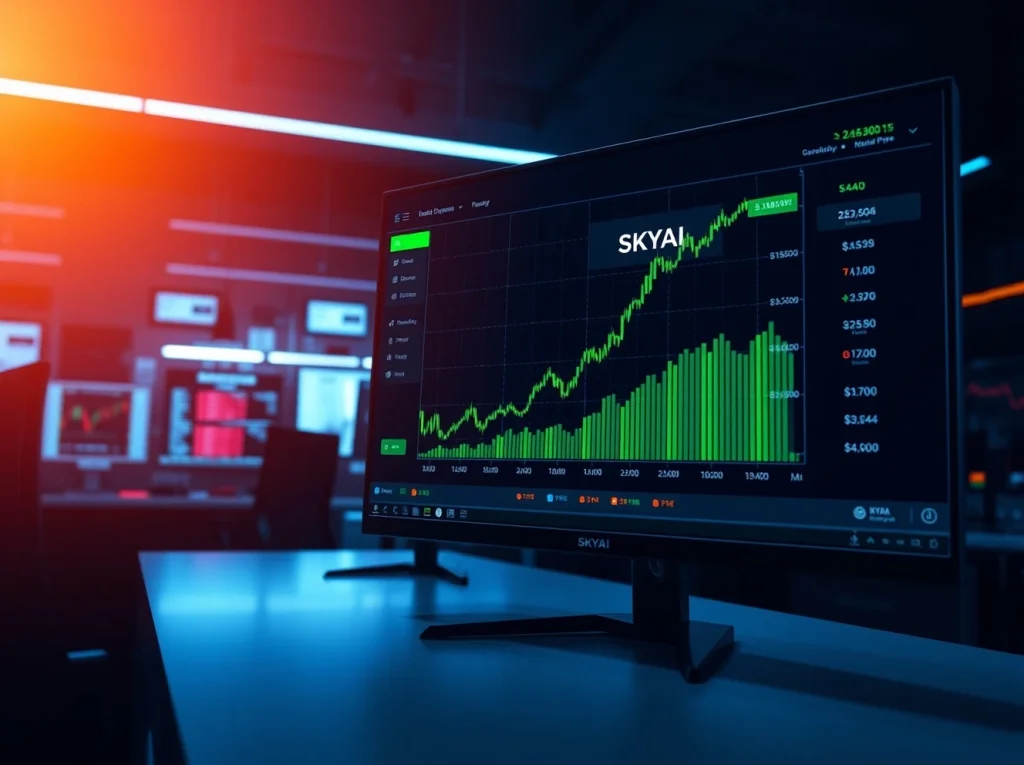
The cryptocurrency market witnessed an extraordinary event this week as SKYAI, a relatively obscure AI-themed token, surged by over 4100% in a matter of days. The move has captured the attention of traders and analysts alike, raising urgent questions about what triggered such a violent price action and whether the rally has any foundation for sustainability.
Understanding the Catalyst Behind the Surge
Initial reports suggest the price explosion was triggered by a combination of factors, including a coordinated social media campaign, a sudden influx of retail buying pressure on decentralized exchanges, and speculative trading bots amplifying momentum. Unlike traditional asset rallies, the SKYAI surge appears to have been driven largely by hype and fear of missing out (FOMO) rather than any fundamental development or partnership announcement.
Also read: XRP ETF Gains Institutional Backing From Virginia and Florida Investment Advisors
On-chain data indicates that a small number of large holders, often referred to as whales, accumulated significant positions just before the rally began. This pattern is consistent with pump-and-dump schemes, where early buyers profit at the expense of later entrants. The token’s liquidity remains thin, making it highly susceptible to sharp reversals.
Market Dynamics and Risk Factors
The SKYAI token is listed primarily on smaller decentralized exchanges, with limited availability on major platforms. This lack of deep liquidity means that even modest sell orders can trigger disproportionate price drops. Additionally, the token’s smart contract has not been audited by a reputable third party, adding a layer of technical risk for investors.
Also read: BlackRock’s BUIDL Fund Doubles on Avalanche, Surpasses $900M in AUM
Regulatory scrutiny is another concern. Authorities in multiple jurisdictions have recently increased warnings about highly volatile tokens with concentrated ownership. The SEC and other global regulators have signaled that tokens exhibiting pump-and-dump characteristics may face enforcement actions.
What This Means for Investors
For retail investors, the SKYAI rally serves as a cautionary tale. While the prospect of 4100% gains is alluring, the probability of capturing such returns without being the first mover is extremely low. Most participants in these events end up holding losses as the price corrects. The current price level is already showing signs of volatility, with sharp intraday swings of 50% or more becoming common.
Conclusion
The 4100% SKYAI price jump is a textbook example of speculative mania in the crypto space, driven by hype, social media virality, and low liquidity. Without fundamental backing or clear utility, the rally is unlikely to be sustainable. Investors should approach such tokens with extreme caution and prioritize assets with verifiable fundamentals, audited contracts, and transparent teams.
FAQs
Q1: What caused the SKYAI price to jump 4100%?
A1: The surge was primarily driven by coordinated social media hype, retail FOMO, and whale accumulation on decentralized exchanges, rather than any fundamental development or partnership.
Q2: Is the SKYAI rally sustainable?
A2: Most analysts consider the rally unsustainable due to low liquidity, lack of fundamental value, and the high risk of a sharp correction typical of pump-and-dump patterns.
Q3: What should investors do now?
A3: Investors should exercise extreme caution, avoid chasing the rally, and focus on tokens with audited contracts, transparent teams, and real-world utility. Consider taking profits if already invested, but be prepared for high volatility.