RWA Market Surges 256% to $19.3B as Tokenized Treasuries Fuel Historic Boom
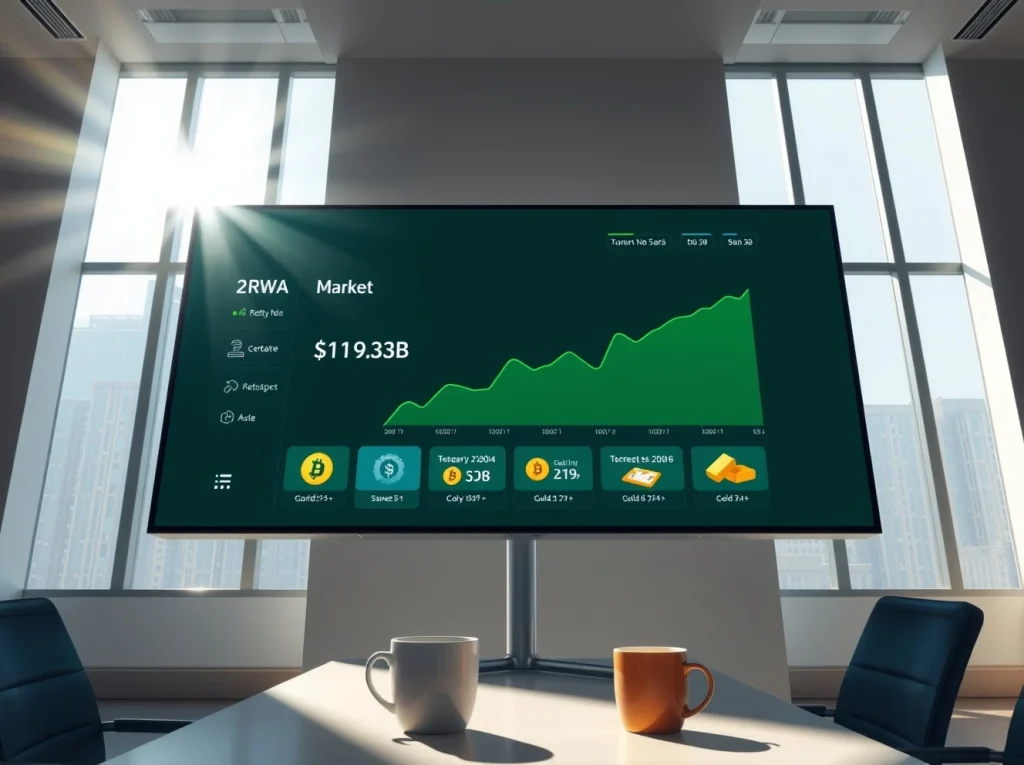
The tokenized real-world asset market just crossed a major milestone. CoinGecko’s RWA Report 2026 shows the sector grew 256.7% in fifteen months. Total market capitalization reached $19.32 billion by the end of Q1 2026. That is a staggering leap from $5.4 billion in late 2024.
RWA Market Growth: A 256% Surge in 15 Months
CoinGecko’s data reveals a rapid acceleration. The RWA market expanded from $5.4 billion in December 2024 to $19.32 billion in March 2026. This represents a 256.7% increase. The report attributes this growth to several key factors.
Also read: CZ Says Binance KYC Compliance Led to His Prison Term, While Hyperliquid Operates Without KYC
Tokenized treasuries led the charge. These digital representations of government bonds now account for a significant portion of the market. Their appeal lies in offering stable yields with blockchain efficiency. Gold tokenization also saw strong demand. Investors seek digital gold as a hedge against inflation.
Another driver is booming perpetual futures trading. Perps allow traders to speculate on RWA prices without expiry dates. This has attracted substantial liquidity. The report notes that trading volumes for RWA perps have surged alongside market cap.
Also read: Hyundai Card Tests Stablecoin Payments Between US and Mexico Subsidiaries
Tokenized Treasuries: The Engine of RWA Growth
Tokenized treasuries have become the backbone of the RWA market. They represent U.S. Treasury bonds on blockchain networks. This allows for faster settlement and fractional ownership. Major players include BlackRock, Franklin Templeton, and Ondo Finance.
BlackRock’s BUIDL fund, launched in 2024, has grown to over $500 million in assets. Franklin Templeton’s FOBXX fund also saw significant inflows. These products offer yields around 5% annually. They attract both retail and institutional investors.
The implication is clear. Tokenized treasuries bridge traditional finance and crypto. They provide a regulated, yield-bearing asset on-chain. This has made them a preferred choice for DeFi protocols seeking stable collateral.
Gold Tokenization Gains Traction
Gold-backed tokens also contributed to the RWA surge. PAX Gold and Tether Gold are the largest. Their combined market cap exceeds $1 billion. These tokens offer exposure to gold prices without storage costs. Investors use them for portfolio diversification.
Data from CoinGecko shows gold tokenization grew 40% in Q1 2026 alone. This suggests growing demand for tangible assets in digital form. Industry watchers note that gold’s historical stability makes it attractive.
Perpetual Futures Trading Boosts Liquidity
Perpetual futures trading has added a new dimension to the RWA market. Platforms like dYdX and Hyperliquid now offer perps on tokenized assets. This allows traders to go long or short on RWA prices. Trading volumes for RWA perps exceeded $10 billion in March 2026.
This activity has increased market liquidity. It also attracts speculative capital. The report highlights that perps trading is a key driver of price discovery. It provides continuous pricing for otherwise illiquid assets.
What this means for investors is clear. The RWA market is becoming more sophisticated. It now offers multiple ways to gain exposure. From spot tokens to derivatives, the ecosystem is maturing.
Key Players and Market Dynamics
Several entities dominate the RWA market. BlackRock, Franklin Templeton, and Ondo Finance lead in tokenized treasuries. PAX Gold and Tether Gold lead in gold. MakerDAO and Aave integrate RWAs as collateral. This creates a symbiotic relationship between DeFi and traditional finance.
The report also notes regional differences. North America accounts for 60% of the market. Europe follows with 25%. Asia-Pacific is growing rapidly. Regulatory clarity in these regions influences adoption rates.
But challenges remain. Regulatory uncertainty persists in many jurisdictions. Custody of underlying assets is a concern. Smart contract risks also exist. These factors could slow future growth.
Timeline of RWA Market Milestones
- December 2024: RWA market cap at $5.4 billion.
- March 2025: Market cap reaches $8.2 billion.
- June 2025: Tokenized treasuries surpass $3 billion.
- September 2025: Market cap hits $12.5 billion.
- December 2025: Market cap at $16.1 billion.
- March 2026: Market cap reaches $19.32 billion.
Impact on Traditional Finance and DeFi
The RWA market’s growth has implications for both traditional finance and DeFi. For traditional finance, tokenization offers efficiency gains. Settlement times drop from days to minutes. Fractional ownership opens access to previously inaccessible assets.
For DeFi, RWAs provide real-world yield. This helps stabilize protocols during volatile periods. MakerDAO, for example, uses tokenized treasuries as collateral for DAI. This reduces reliance on volatile crypto assets.
The report suggests this trend will continue. More institutions are exploring tokenization. JPMorgan, Goldman Sachs, and HSBC have launched pilot programs. This could signal a broader shift toward on-chain finance.
Conclusion
The RWA market has surged 256% to $19.3 billion, driven by tokenized treasuries, gold, and perps trading. CoinGecko’s report highlights a maturing sector with strong fundamentals. But risks remain. Regulatory clarity and custody solutions will determine future growth. For now, the RWA boom shows no signs of slowing.
FAQs
Q1: What is the RWA market?
The RWA market refers to tokenized real-world assets on blockchain networks. These include treasuries, gold, real estate, and commodities.
Q2: Why did the RWA market grow 256%?
Growth was driven by tokenized treasuries offering stable yields, gold tokenization, and booming perpetual futures trading.
Q3: Who are the key players in tokenized treasuries?
BlackRock, Franklin Templeton, and Ondo Finance are major players. Their funds offer yields around 5% annually.
Q4: How does perps trading affect the RWA market?
Perpetual futures trading adds liquidity and enables price discovery. It attracts speculative capital and supports market growth.
Q5: What are the risks in the RWA market?
Risks include regulatory uncertainty, custody challenges, and smart contract vulnerabilities. These could impact future adoption.