Ondo Finance and XRP Ledger Complete Real-Time Treasury Settlement
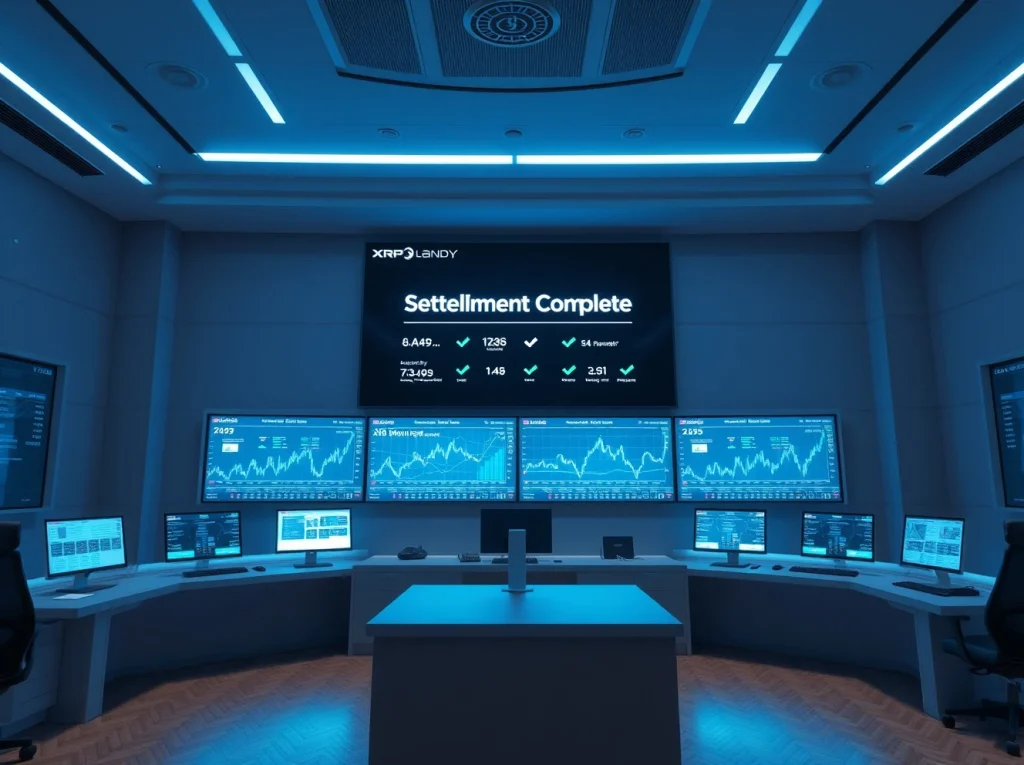
Ondo Finance has successfully completed a real-time treasury settlement on the XRP Ledger, marking a significant step forward for tokenized real-world asset infrastructure. The transaction, confirmed on February 14, 2025, demonstrates the practical viability of instant settlement for institutional-grade treasury operations using blockchain technology.
What the Settlement Means for Institutional Finance
The settlement involved Ondo Finance’s tokenized U.S. Treasury product, which represents short-term government bonds on-chain. By using the XRP Ledger’s native speed and low transaction costs, the operation was finalized in seconds rather than the traditional multi-day settlement cycle typical of conventional financial markets.
Also read: Telegram-Linked TAC Token Crashes 90% in 15 Minutes: What Happened?
This achievement is not merely a technical demonstration. It addresses a longstanding inefficiency in capital markets: the lag between trade execution and final settlement. For institutional investors managing large treasury portfolios, even a one-day delay ties up capital and introduces counterparty risk. Real-time settlement eliminates that friction.
Why XRP Ledger Was Chosen
The XRP Ledger is an open-source, decentralized blockchain known for its fast transaction finality (3–5 seconds) and extremely low fees (fractions of a cent). Unlike proof-of-work networks, XRPL uses a consensus protocol that is both energy-efficient and capable of handling high throughput — factors critical for institutional adoption.
Also read: XRP Scarcity Index on Binance Hits Highest Level Since Mid-2024, So Where Did the Coins Go?
Ondo Finance’s integration with XRPL is part of a broader trend: major financial institutions are increasingly testing tokenized securities on high-performance blockchains. The XRP Ledger’s native decentralized exchange (DEX) and automated market maker (AMM) functionality also provide liquidity infrastructure that complements Ondo’s treasury products.
Implications for Tokenized Treasury Markets
The tokenized U.S. Treasury market has grown rapidly, with issuers like Ondo Finance, BlackRock (via BUIDL), and Franklin Templeton collectively managing billions in on-chain treasury products. Real-time settlement capabilities could accelerate this growth by making tokenized treasuries more attractive to institutional treasurers who require immediate finality.
For Ondo Finance, this successful settlement validates its technical architecture and strengthens its position as a leader in the institutional DeFi space. The company has previously integrated with Ethereum, Solana, and now XRPL, demonstrating cross-chain interoperability for its tokenized products.
Conclusion
The completion of real-time treasury settlement on the XRP Ledger by Ondo Finance represents a practical milestone in the convergence of traditional finance and blockchain infrastructure. While the broader adoption of tokenized securities still faces regulatory and operational hurdles, this development provides concrete evidence that instant settlement for institutional-grade assets is technically achievable today. Market participants will be watching closely for further integrations and volume growth.
FAQs
Q1: What exactly did Ondo Finance settle on the XRP Ledger?
Ondo Finance settled a tokenized U.S. Treasury product on the XRP Ledger, representing a real-world asset (short-term government bonds) transferred and finalized in real time using blockchain technology.
Q2: Why is real-time settlement important for institutional investors?
Traditional treasury settlement can take one to two business days, tying up capital and exposing parties to counterparty risk. Real-time settlement frees capital immediately and reduces operational complexity for large portfolios.
Q3: Does this mean tokenized treasuries are now fully mainstream?
Not yet. While this is a significant technical achievement, widespread adoption still requires clearer regulatory frameworks, broader market infrastructure, and greater institutional comfort with blockchain-based settlement systems.