KOSPI Trading Halted After 8% Plunge as Samsung, SK Hynix Lead Rout
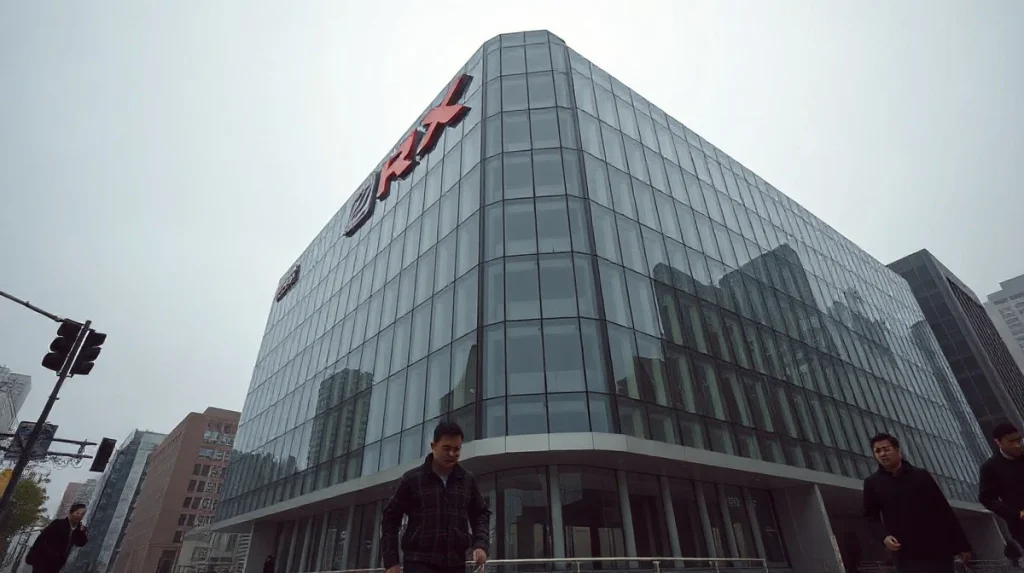
The Korea Composite Stock Price Index (KOSPI) plunged 8% on Monday, triggering an automatic trading halt for the first time in over a year, as South Korea’s two largest companies — Samsung Electronics and SK Hynix — led a broad market rout. The sell-off came amid renewed fears over global trade tensions and a sharp downturn in semiconductor demand.
The KOSPI fell 198 points to 2,286, its lowest level since November 2023, before circuit breakers kicked in at 2:15 p.m. local time, suspending trading for 20 minutes. Samsung Electronics dropped 9.2%, while SK Hynix lost 10.4%, erasing billions in market value.
Also read: Bitcoin, Ethereum, XRP Prices Pause as Treasury's 'Operation Economic Outcast' Targets Iran
Trade War Fears and Semiconductor Slump
The crash was triggered by a combination of factors. Overnight, U.S. President Donald Trump announced new tariffs on Chinese imports, escalating trade tensions that have already weighed on global markets. Meanwhile, data from China showed factory output slowing more than expected in January, raising concerns about demand for South Korean exports, particularly memory chips.
Samsung Electronics and SK Hynix are the two largest components of the KOSPI, together accounting for nearly 30% of the index’s weighting. Their steep declines dragged down the entire market, with financial, automotive, and steel stocks also suffering heavy losses. Analysts noted that the semiconductor sector, which had been a bright spot for South Korean exports, now faces headwinds from both geopolitical risks and a potential oversupply of memory chips.
Also read: Bitcoin's Path to $100K: Ex-Coinbase Analyst Sees Six-Figure BTC by Year-End
What the Trading Halt Means for Investors
The automatic trading halt, known as a circuit breaker, is designed to prevent panic selling and give investors time to reassess. Under Korea Exchange rules, trading is paused for 20 minutes if the KOSPI falls 8% or more from the previous close. The last time this happened was in March 2023, during a global banking crisis.
For retail investors, who make up a significant portion of South Korea’s stock market activity, the halt provided a brief respite but did little to calm nerves. “The circuit breaker is a cooling-off mechanism, not a solution to the underlying problems,” said Kim Jae-won, an analyst at KB Securities in Seoul. “Investors are now watching for further policy responses from the government and the Bank of Korea.”
The Bank of Korea has already signaled it may hold an emergency meeting if volatility continues. Finance Minister Choi Sang-mok said the government is “closely monitoring the situation and will take necessary measures to stabilize the market,” though he did not specify what those measures might be.
Global Ripple Effects and What to Watch Next
The KOSPI crash sent shockwaves through Asian markets. Japan’s Nikkei 225 fell 3.4%, and Hong Kong’s Hang Seng Index dropped 2.8%. U.S. futures also pointed to a lower open on Wall Street, as investors brace for further volatility.
The sell-off underscores the vulnerability of export-dependent economies like South Korea to global trade disruptions. With the U.S.-China trade war showing no signs of easing, and semiconductor demand weakening, analysts expect further downside for the KOSPI in the near term. Key levels to watch include the 2,200 support level, which if broken could trigger another circuit breaker.
For now, investors are waiting for the next catalyst — whether it’s a policy response from Seoul, a surprise in U.S. inflation data later this week, or a shift in trade rhetoric from Washington. Until then, the mood in Seoul remains cautious, with the KOSPI’s recovery dependent on factors far beyond the Korea Exchange’s control.