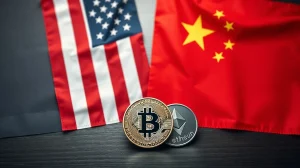
China’s Bitcoin Puzzle: The Secretive 5% Supply Theory Unpacked
Reports circulating among blockchain analysts and financial institutions suggest a startling possibility: China, despite its stringent domestic ban on cryptocurrency activities, may control approximately 5% of all Bitcoin in existence. This theory, if accurate, would mean Chinese entities hold around 1 million of the digital asset’s fixed supply of 21 million coins. The implications for global crypto markets are profound.
The Core of the 5% Bitcoin Supply Theory
Data from blockchain analytics firms like Chainalysis and reports from financial news outlets form the basis of this claim. The theory hinges on a simple but powerful premise. Bitcoin’s total supply is mathematically capped. Large accumulations are inherently visible on its public ledger, the blockchain. Analysts track wallet movements and cluster addresses to estimate ownership.
Also read: CZ Says Binance KYC Compliance Led to His Prison Term, While Hyperliquid Operates Without KYC
According to a 2023 report from the cryptocurrency research firm Arcane Research, a significant volume of Bitcoin has consistently flowed through entities and exchanges with strong operational ties to China, even after the 2021 mining ban. This activity often originates from Hong Kong or Singapore. The report noted that these flows do not necessarily indicate state ownership. They could represent private wealth, corporate treasury strategies, or investment funds based in those regions.
What this means for investors is a potential hidden whale in the market. A single entity holding 5% of any asset exerts considerable influence. In Bitcoin’s case, such a holding is worth tens of billions of dollars. Its movement could signal major market shifts.
Also read: Hyundai Card Tests Stablecoin Payments Between US and Mexico Subsidiaries
China’s Complex History with Cryptocurrency
To understand the theory, one must first understand China’s official stance. The country’s relationship with Bitcoin has been marked by successive crackdowns.
- 2013: The People’s Bank of China (PBOC) barred financial institutions from handling Bitcoin transactions.
- 2017: Authorities shut down domestic cryptocurrency exchanges and banned Initial Coin Offerings (ICOs).
- 2021: China declared all cryptocurrency transactions illegal and launched a sweeping ban on mining, citing financial risk and energy consumption concerns.
This regulatory wall was seemingly absolute. But policy and practice can diverge. Industry watchers note that Chinese investors have a long history with crypto. Before the bans, China hosted a majority of the world’s Bitcoin mining capacity. Major exchanges like Binance, while now globally headquartered, were founded by Chinese entrepreneurs.
The 2021 mining ban caused a historic hashrate migration. Miners relocated to the United States, Kazakhstan, and Russia. This event is well-documented on the blockchain. The implication is that the knowledge, capital, and interest in Bitcoin did not vanish. It simply moved offshore.
How Offshore Access Might Work
The “offshore channels” referenced in reports typically involve two key mechanisms. First, Chinese citizens and entities can use overseas exchanges and over-the-counter (OTC) desks. Platforms in Hong Kong, which maintains a separate legal system, are often cited. Second, they might utilize decentralized finance (DeFi) protocols and peer-to-peer networks that are harder for any single government to control.
According to a 2024 analysis by the Journal of Financial Economics, capital controls often spur innovation in cross-border value transfer. Cryptocurrencies can serve this function. The analysis suggested that measuring precise volumes is challenging, but anecdotal and on-chain evidence points to sustained activity.
This suggests a possible disconnect between domestic law and international asset strategy. A state-owned enterprise or wealth fund could, in theory, acquire Bitcoin through foreign subsidiaries. The blockchain would record the purchase, but the ultimate beneficiary would be obscured by corporate layers.
Analyzing the Evidence and Skepticism
Not all experts find the 5% theory convincing. Critics point to a lack of direct, verifiable proof. The Chinese government has repeatedly denounced cryptocurrencies as speculative and risky. It is actively promoting its own central bank digital currency, the digital yuan.
“Attributing large wallet clusters to a specific nation-state is notoriously difficult,” a blockchain forensics expert from a major analytics firm told Reuters in 2025. The expert, who spoke on condition of anonymity due to client agreements, explained that their firm observes “wealth moving from East Asia,” but cannot definitively label it as “Chinese state capital.”
Furthermore, the data could reflect the activity of the vast Chinese diaspora or businesses in special administrative regions. Hong Kong, for instance, has been positioning itself as a regulated crypto hub. Activity there is legal and separate from mainland policy.
The Global Market Impact of Large Hidden Holdings
If the theory holds weight, the market impact is significant. A single entity holding 1 million Bitcoin is a dormant giant. Its potential future actions create uncertainty.
| Potential Action | Market Implication |
|---|---|
| Large-scale selling | Could trigger severe price drops and volatility. |
| Strategic holding | Acts as a long-term supply constraint, potentially supporting higher prices. |
| Use as geopolitical collateral | Introduces a new, digital asset into international finance and diplomacy. |
This could signal a new phase in Bitcoin’s maturation. National-level accumulation, if true, would move it further from a retail speculation tool toward a strategic reserve asset. Other nations, like the United States with its seized Bitcoin holdings, are also large holders. A quiet accumulation by China would create a new dynamic in digital asset statecraft.
Conclusion
The theory that China controls 5% of Bitcoin’s supply remains unproven but persistent. It stems from observable on-chain flows and the historical presence of Chinese capital in crypto markets. The nation’s domestic ban appears solid, but global, decentralized networks provide potential access points. Whether this represents state strategy, private wealth preservation, or a mix of both is unclear. What is certain is that in the transparent world of Bitcoin, the movement of such a large potential holding would eventually become visible. For now, the 5% supply theory remains one of the most intriguing puzzles in cryptocurrency, highlighting the complex interplay between national regulation, global finance, and digital asset innovation.
FAQs
Q1: What is the “5% supply theory” regarding China and Bitcoin?
The theory suggests that Chinese entities, despite a domestic ban, may have accumulated around 1 million Bitcoin, which represents roughly 5% of the asset’s total fixed supply of 21 million coins.
Q2: How could China acquire Bitcoin if it’s banned?
Analysts point to offshore channels. These include using cryptocurrency exchanges in jurisdictions like Hong Kong, utilizing over-the-counter trading desks, or accessing decentralized finance (DeFi) protocols through foreign subsidiaries or intermediaries.
Q3: Is there concrete proof of Chinese state ownership of Bitcoin?
No. The evidence is circumstantial, based on analysis of blockchain flow patterns to and from regions with strong Chinese ties. The Chinese government has not confirmed any holdings and publicly maintains its anti-crypto stance.
Q4: Why does this theory matter to Bitcoin investors?
A single entity holding 5% of the total supply is a “whale” that can significantly influence the market. The potential for such a large holder to sell or further accumulate creates a layer of uncertainty and potential volatility.
Q5: How does Hong Kong fit into this situation?
Hong Kong operates under a different legal system than mainland China and has developed a regulatory framework for cryptocurrencies. It serves as a potential gateway for capital and trading activity, making it a focal point in analyses of Asian crypto flows.