China Unveils $295 Billion AI Infrastructure Plan Built Around Domestic Chips
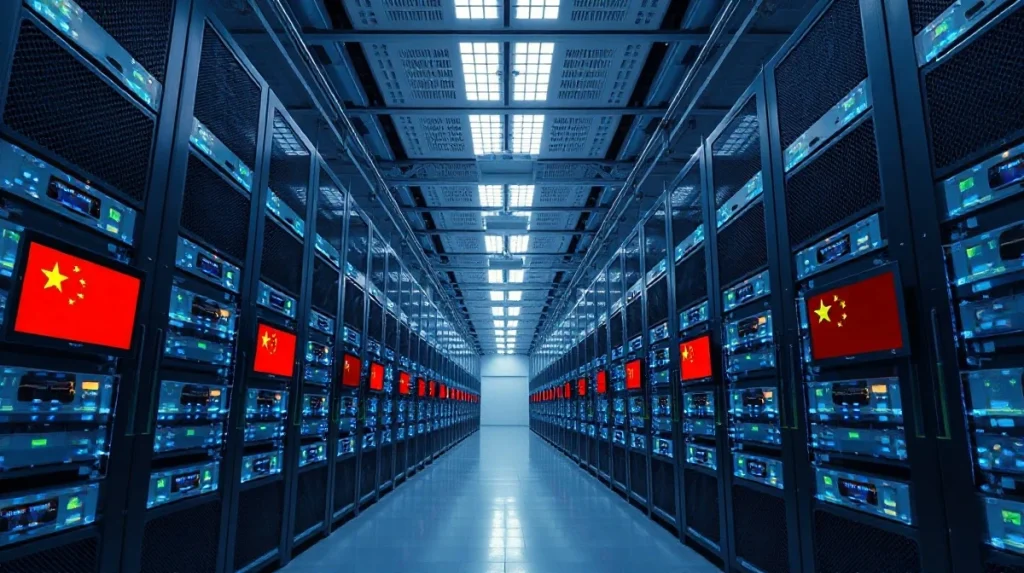
China has announced a sweeping 2.1 trillion yuan (approximately $295 billion) infrastructure investment plan aimed at building a national artificial intelligence computing network powered almost entirely by domestically produced semiconductors. The initiative, disclosed in a policy document from the National Development and Reform Commission (NDRC) on March 5, 2025, represents one of the largest single state-directed technology investments in modern history.
Scope and Strategic Rationale
The plan calls for the construction of dozens of large-scale AI data centers across 20 provinces, with a target aggregate computing capacity of 3,000 exaflops by 2028. According to the NDRC, the network will be designed to train and run large language models and other advanced AI systems using chips fabricated by Chinese companies such as Huawei, SMIC, and Loongson.
Also read: Toss Partners With Poseidon to Let 30 Million Users Earn From AI Training Data
This push for domestic chip reliance comes amid escalating U.S. export controls that have restricted Chinese access to advanced semiconductors from Nvidia, AMD, and TSMC. In October 2024, the Biden administration tightened restrictions on the sale of high-bandwidth memory chips and advanced lithography equipment to China, accelerating Beijing’s drive for technological self-sufficiency.
Market and Industry Implications
The announcement has significant implications for global semiconductor markets. Shares of Nvidia fell 3.2% in after-hours trading following the news, as investors weighed the potential long-term erosion of the company’s dominant position in China’s AI chip market. Meanwhile, shares of Huawei Technologies and SMIC saw modest gains on expectations of increased domestic procurement.
Also read: Story Rebrands as The DATA Foundation, Launches Trace Audit Layer for AI Training Data
Industry analysts note that China faces substantial technical hurdles in achieving chip independence. Huawei’s Ascend 910B chip, currently the most advanced domestically produced AI processor, offers performance roughly comparable to Nvidia’s A100, which is two generations behind the current H100 flagship. The gap in manufacturing process technology—SMIC can produce 7nm chips, while TSMC is now producing 3nm—remains a binding constraint.
Implementation Timeline and Funding
The NDRC document outlines a phased approach. The first phase, running from 2025 through 2026, allocates 500 billion yuan ($70 billion) for initial data center construction and chip fabrication facility upgrades. The second phase, through 2028, will focus on expanding network capacity and integrating AI computing resources across provincial boundaries.
Funding will come from a mix of central government bonds, state-owned enterprise investments, and preferential loans from policy banks. The plan also includes tax incentives for private companies that participate in the network, including Baidu, Alibaba, and Tencent, which are among China’s largest AI developers.
Analysts at the Peterson Institute for International Economics estimate that the investment could accelerate China’s domestic AI chip production capacity by 40% over the next five years, though they caution that yield rates and performance parity with leading-edge foreign chips remain uncertain.
Geopolitical Context
The infrastructure plan is the latest salvo in the intensifying technology competition between the United States and China. The U.S. has imposed four rounds of chip export controls since 2022, targeting everything from advanced logic chips to semiconductor manufacturing equipment. In response, China has accelerated its domestic chip development programs and increased state funding for basic research in materials science and photolithography.
Chinese officials have framed the initiative as a matter of national security and economic sovereignty. In a press briefing on March 6, NDRC Deputy Director Zhang Ming stated that the goal is to ensure China’s AI development is not constrained by external supply chain vulnerabilities. The policy document explicitly references the need to build a ‘secure and controllable’ computing infrastructure.