BlockDAG Presale Analysis: Final $0.000022 Opportunity Compared to Tron and Litecoin Trends
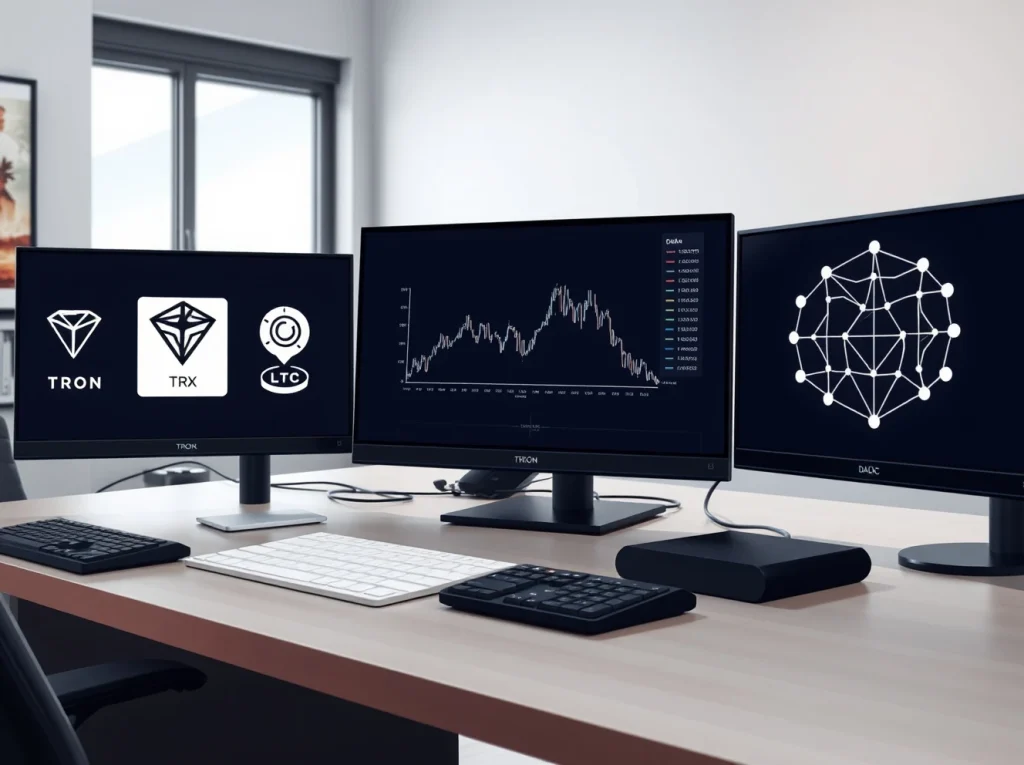
As of early April 2026, cryptocurrency investors face a complex choice between established digital assets and new, high-potential entrants. A key point of discussion is the ongoing presale for BlockDAG (BDAG), currently in its final phase at $0.000022 per coin. This price point arrives as analysts publish fresh Litecoin price predictions and monitor substantial transactions influencing the Tron price forecast. The market shows a clear divergence between utility-focused legacy coins and newer projects promising different technological approaches.
BlockDAG’s Presale Momentum and Technological Claim
BlockDAG’s presale has drawn attention for its structured fundraising approach. According to the project’s published materials, it utilizes a Directed Acyclic Graph (DAG) structure rather than a traditional linear blockchain. Proponents argue this allows for higher transaction throughput. The final presale batch, priced at $0.000022, represents the last chance for investors to acquire BDAG coins before its anticipated listing on public exchanges later in 2026. Project documentation claims the presale has raised significant capital, though these figures are self-reported and not independently audited.
Also read: BNB Chain Reveals New Layer 1 Blockchain for Agentic Trading, Mainnet Set for 2027
Market observers note several factors driving interest. First, the low entry price appeals to retail investors seeking high-multiplier opportunities. Second, the project’s roadmap emphasizes development of a hybrid consensus mechanism. However, analysts caution that presale investments carry inherent risk. “New crypto projects must demonstrate real-world utility beyond their whitepaper,” noted a recent report from analytics firm CryptoCompare. “Historical data shows that many fail to maintain momentum post-listing.”
Litecoin’s Steady Path as a Payment Utility
In contrast to new entrants, Litecoin (LTC) continues to function primarily as a digital payment system. Often called the “silver to Bitcoin’s gold,” Litecoin has maintained a consistent network for over a decade. Its price prediction for 2026 largely hinges on adoption metrics and broader Bitcoin market movements. Data from CoinMetrics shows Litecoin’s active address count has remained stable, averaging between 400,000 and 600,000 daily addresses throughout the first quarter of 2026.
Also read: Naver Financial and Dunamu Push Share Swap Deadline to December Amid Regulatory Hurdles
Transaction volume tells a similar story. According to BitInfoCharts, Litecoin regularly processes between $2 billion and $4 billion in daily transfer volume. This suggests sustained use for payments and transfers. Major payment processors like BitPay continue to support Litecoin, reinforcing its utility role. For investors, Litecoin represents a known quantity with lower volatility than many newer tokens. Its development is incremental, focusing on security and efficiency rather than radical innovation.
Comparing Market Positions and Investor Profiles
The investor base for these assets differs significantly. Litecoin often attracts users seeking a reliable transfer of value. Tron’s ecosystem, supported by its stablecoin usage, draws developers and users of decentralized applications. BlockDAG’s presale, however, appears aimed at speculative investors betting on future technological adoption and price appreciation from a low base. This distinction is critical for understanding market dynamics.
Tron’s Ecosystem and Whale Activity
Tron (TRX) presents another established model, built around a high-throughput blockchain supporting smart contracts and decentralized applications (dApps). Its price prediction is frequently tied to network activity and the growth of its stablecoin ecosystem, particularly USDT-TRON. Data from TRONSCAN shows the total value locked (TVL) in Tron’s DeFi protocols exceeded $10 billion in March 2026, demonstrating substantial use.
Whale transactions—large transfers worth over $100,000—are closely watched. Analytics platform LookonChain reported several major Tron movements in late March 2026, including a single transfer of 250 million TRX (approximately $35 million at the time). Such activity can signal accumulation by large holders or preparation for liquidity events. While whale buying can support prices, it also increases market concentration risk. Tron’s founder, Justin Sun, remains a highly visible and influential figure, whose public statements and actions can cause immediate market reactions.
Risk Assessment: New Presale vs. Established Networks
Evaluating BlockDAG against Tron and Litecoin requires a clear-eyed view of risk and potential. The table below outlines key comparative factors:
Network Age & Track Record:
- Litecoin: Launched 2011. Proven security and uptime over 15 years.
- Tron: Launched 2017. Established dApp and stablecoin ecosystem.
- BlockDAG: In presale (2026). No operational mainnet or extended track record.
Primary Use Case:
- Litecoin: Peer-to-peer digital payments.
- Tron: Smart contracts, dApps, and stablecoin transfers.
- BlockDAG: Promises high-speed transactions via DAG technology (not yet demonstrated at scale).
Liquidity & Access:
- Litecoin & Tron: Traded on all major exchanges (Binance, Coinbase, Kraken) with deep liquidity.
- BlockDAG: Available only via presale; future exchange listings are planned but not guaranteed.
This comparison highlights the fundamental trade-off. Established coins offer liquidity and a known history but potentially lower growth multiples from current prices. New presales offer lower entry prices but carry significantly higher technical and execution risk.
Regulatory Considerations for 2026
The regulatory environment adds another layer of complexity. In the United States, the SEC’s stance on cryptocurrency classification continues to evolve. Both Litecoin and Tron have existing regulatory clarity as traded commodities on regulated futures exchanges. New presale tokens like BlockDAG, however, could face scrutiny regarding their status as potential securities. This regulatory uncertainty is a material risk for early-stage projects.
Conclusion
The final call for BlockDAG’s $0.000022 presale price arrives amid a mature cryptocurrency market with clear divisions. Litecoin operates as a steady payment utility, while Tron leverages its substantial dApp and stablecoin ecosystem. BlockDAG represents a high-risk, high-reward proposition based on its promised but unproven DAG technology. For investors, the decision hinges on individual risk tolerance and belief in technological adoption. Diligence is essential. Research should extend beyond promotional materials to include independent technical analysis of the underlying protocol and the team’s ability to deliver a functional network. The cryptocurrency market rewards innovation but has historically been unforgiving of projects that fail to transition from promise to product.
FAQs
Q1: What is the current price of BlockDAG in its presale?
The final batch of the BlockDAG presale is offered at $0.000022 per BDAG coin, as of April 2026.
Q2: How does Litecoin’s use case differ from Tron’s?
Litecoin is primarily used as a peer-to-peer digital currency for payments. Tron’s blockchain is designed to host smart contracts and decentralized applications, with a major focus on stablecoin transactions.
Q3: What is a ‘whale’ in cryptocurrency markets?
A ‘whale’ is an individual or entity that holds a large enough amount of a cryptocurrency that their trading activity can significantly influence the market price.
Q4: What are the main risks of investing in a cryptocurrency presale like BlockDAG’s?
Key risks include the project failing to develop a working product, lack of subsequent exchange listings, extreme price volatility after listing, potential regulatory challenges, and the possibility of the project being fraudulent.
Q5: Where can I buy Litecoin and Tron?
Litecoin (LTC) and Tron (TRX) are listed on most major centralized cryptocurrency exchanges, including Binance, Coinbase, Kraken, and others. They can be purchased directly with fiat currency or other cryptocurrencies.