Beyond Hype: Why BlockDAG, Monero, Polygon, and Solana Are Drawing Real Interest in 2026
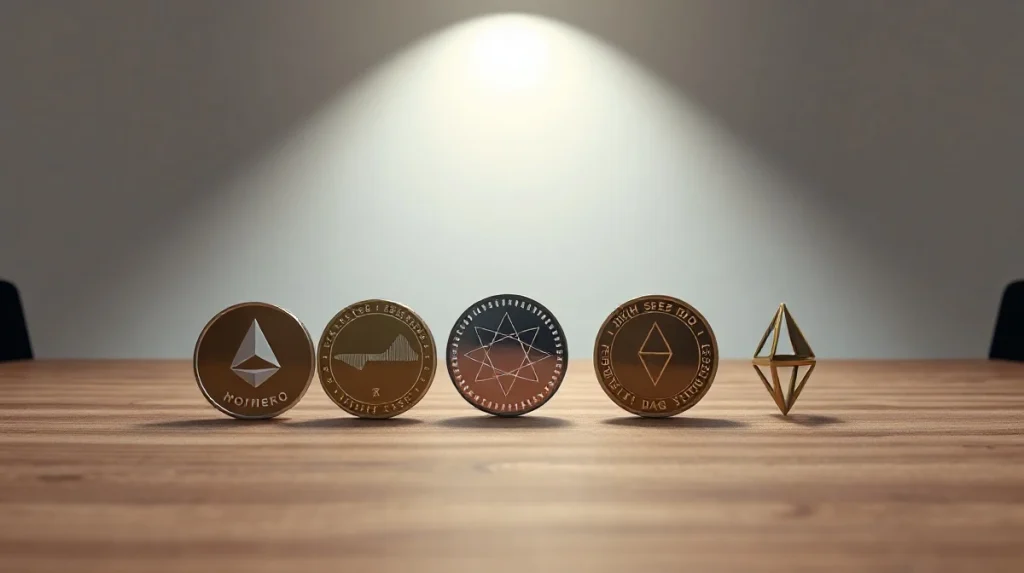
The conversation around cryptocurrency value has shifted notably in 2026. While speculative trading remains a fixture of the market, a growing number of investors and developers are focusing on projects that demonstrate tangible, real-world utility. Four networks—BlockDAG, Monero, Polygon, and Solana—are currently at the center of this discussion, each addressing a distinct problem within the broader digital asset ecosystem.
Monero’s Unwavering Focus on Financial Privacy
Monero (XMR) continues to hold its position as the leading privacy-focused cryptocurrency. In an era where blockchain analysis firms routinely track transactions on transparent ledgers like Bitcoin and Ethereum, Monero’s use of ring signatures, stealth addresses, and confidential transactions makes its blockchain effectively opaque. This functionality is not merely a feature; for users in jurisdictions with unstable currencies or those requiring financial discretion, it is the primary value proposition. Despite increased regulatory scrutiny globally, Monero’s network has maintained consistent transaction volumes, indicating a stable user base that prioritizes privacy over convenience.
Also read: Gold Price Decline Reignites Debate on Crypto Outlook as Kiyosaki Holds Out for Buy Signal
Polygon and Solana: Different Paths to Scalability
Scalability remains a critical bottleneck for widespread blockchain adoption, and two projects offer contrasting solutions. Polygon (MATIC) operates as a layer-2 scaling solution for Ethereum, bundling transactions off the main chain to reduce fees and increase speed. Its ecosystem has grown to host thousands of decentralized applications, from gaming to decentralized finance, all benefiting from Ethereum’s security model without its current congestion. In 2026, Polygon’s zk-rollup technology has become a standard for enterprises seeking efficient settlement.
Solana (SOL), by contrast, takes a monolithic approach with its proof-of-history consensus mechanism, designed to process thousands of transactions per second at minimal cost. The network has faced periods of instability in the past, but recent upgrades have improved its reliability. Solana’s high throughput has made it a favored platform for high-frequency trading applications and NFT marketplaces that require rapid finality.
Also read: Baillie Gifford Launches $BAGEY, a UK-Regulated Tokenized Fund Directly on Solana
BlockDAG: A Novel Architecture for Speed and Security
BlockDAG (Directed Acyclic Graph) represents a more recent entrant gaining traction. Unlike traditional blockchains that process blocks sequentially, BlockDAG allows multiple blocks to be added concurrently, potentially increasing transaction throughput without sacrificing decentralization. The project is still in its early stages relative to the others, but its whitepaper has attracted attention from developers seeking a base layer that can handle global-scale payment volumes. Whether it can execute on its roadmap and build a developer ecosystem comparable to Ethereum or Solana remains an open question, but its technological premise is distinct enough to warrant observation.
What This Means for the Broader Market
The rise of these four projects signals a maturation in how the market evaluates cryptocurrency. Speculative narratives around “moon” potential are being supplemented—if not replaced—by concrete metrics: transaction throughput, privacy guarantees, developer activity, and real user adoption. For investors, this shift suggests that due diligence now requires a deeper understanding of a project’s technical architecture and its specific use case. For the industry as a whole, the emphasis on utility could lead to more sustainable growth, less dependent on the boom-and-bust cycles that have historically defined the space.