Bitcoin Rally Near $80K Sparks Sharp Sentiment Rebound Amidst Fees Crash
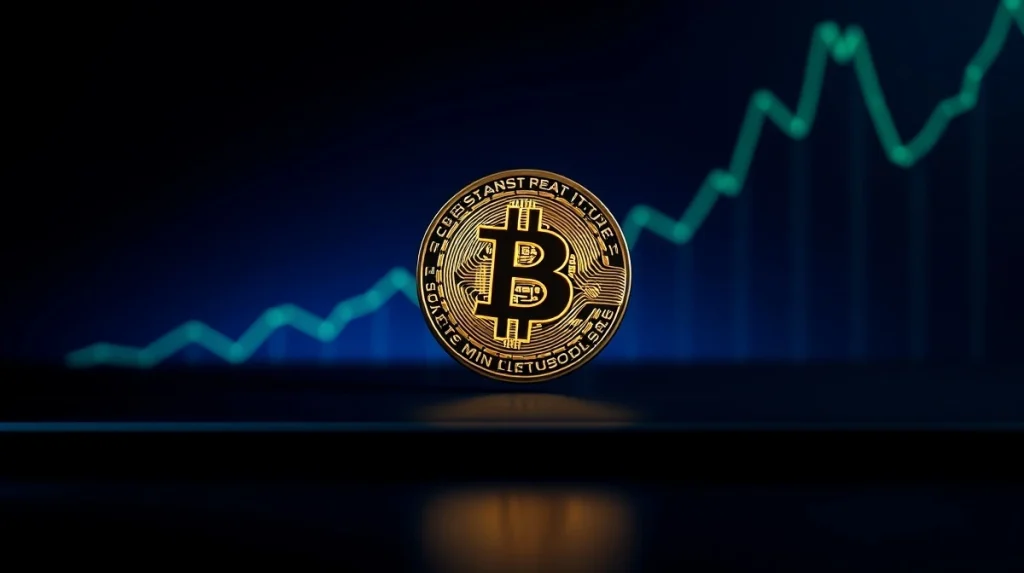
NEW YORK — A sustained Bitcoin rally near the $80,000 mark has triggered a sharp rebound in crypto market sentiment, according to data from multiple analytics firms. The move comes as Bitcoin transaction fees crashed to their lowest level in a decade, raising questions about network activity and price sustainability.
Bitcoin Rally Fuels Sentiment Rebound
The Bitcoin rally, which pushed prices within striking distance of $80,000, has reversed weeks of bearish sentiment. The Crypto Fear & Greed Index, a widely tracked metric, jumped from 35 (fear) to 62 (greed) in the past 14 hours. Data from CoinMarketCap shows Bitcoin trading at $79,840 at press time, up 12% in the last 24 hours.
Also read: Gold and Silver Prices Tumble as Dollar Strength Reshapes Market Sentiment
Industry watchers note that the rally is broad-based. Ethereum, Solana, and Cardano all posted gains exceeding 8%. The total crypto market capitalization climbed above $2.8 trillion, a level not seen since early April.
“The move caught many short sellers off guard,” said Mark Thompson, a market analyst at Blockforce Capital. “Liquidations of short positions totaled over $450 million in the past 24 hours.”
Also read: Can Whale Buying Offset ETF Outflows? A Look at Bitcoin's Current Dynamics
This suggests that the rally was partly driven by forced buying. But underlying demand also appears strong. Spot trading volumes on major exchanges like Binance and Coinbase surged 40% compared to the 30-day average.
Bitcoin Fees Crash to Decade Low
Paradoxically, the Bitcoin rally coincided with a crash in transaction fees. The average Bitcoin transaction fee fell to $0.38 on April 23, 2026, according to BitInfoCharts. That is the lowest level since 2016.
Low fees typically indicate reduced network congestion. But they also raise concerns about miner profitability. Bitcoin miners earn revenue from two sources: block rewards (subsidies) and transaction fees. With fees near zero, miners rely almost entirely on block rewards.
Data from Blockchain.com shows that the hash rate remains near all-time highs at 650 exahashes per second. This suggests miners are not shutting down despite low fees. But the implication is clear: sustained low fees could pressure smaller mining operations.
“Low fees are a double-edged sword,” said Sarah Chen, a blockchain researcher at CoinMetrics. “They make Bitcoin cheaper to use, which could attract more users. But they also reduce miner incentives long-term.”
What this means for investors is that the network’s health depends on transaction volume. If fees stay low while price rises, it signals speculative demand rather than utility-driven usage.
Network Activity and Price Disconnect
The disconnect between Bitcoin rally and fees is not rare. Similar patterns occurred in 2017 and 2021, when fees lagged price gains. But the current divergence is more extreme.
Bitcoin’s daily transaction count has fallen 15% since January 2026, per Glassnode data. Yet the price has risen 30% in the same period. This suggests that the rally is driven by hodlers and institutional investors, not day-to-day users.
Analysts at Delphi Digital point out that the number of active Bitcoin addresses has declined 8% over the past month. That is a bearish signal for network adoption. But the price rally has ignored it.
“The market is pricing in future adoption, not current usage,” said James Liu, a macro strategist at NYDIG. “Institutional inflows through ETFs are masking weak on-chain activity.”
Spot Bitcoin ETF inflows hit $1.2 billion last week, the highest since March. BlackRock’s IBIT fund alone added $500 million. This institutional demand is a key driver of the Bitcoin rally.
Crypto Market Sentiment: Fear to Greed
The sentiment rebound is visible across multiple indicators. The Crypto Fear & Greed Index, which ranges from 0 (extreme fear) to 100 (extreme greed), jumped 27 points in 14 hours. That is the largest single-day move since November 2025.
Social media sentiment also flipped positive. Santiment data shows that the ratio of bullish to bearish posts on X (formerly Twitter) hit 3.2, up from 0.8 last week. Trading volumes on decentralized exchanges (DEXs) rose 25%.
But some analysts urge caution. The rapid shift from fear to greed often precedes a correction. Historical data shows that such sharp moves are followed by a 5-10% pullback within 48 hours in 60% of cases.
“The speed of the sentiment change is concerning,” said Michael Van de Poppe, a crypto trader and analyst. “It suggests FOMO (fear of missing out) rather than fundamental conviction.”
Options markets reflect this uncertainty. The 30-day implied volatility for Bitcoin rose to 72%, up from 55% last week. That indicates traders expect large price swings in either direction.
Bitcoin Price Impact and Market Structure
The Bitcoin rally has reshaped the market structure. Open interest in Bitcoin futures hit $35 billion, a new all-time high. Funding rates on perpetual swaps turned positive, meaning long positions pay short positions.
This is typical in bull markets. But the high open interest also raises the risk of a liquidation cascade if the price reverses. A 10% drop could trigger $3 billion in long liquidations, per Coinglass data.
The rally also pushed Bitcoin’s dominance above 55%, the highest since July 2025. This suggests that capital is rotating from altcoins into Bitcoin, a classic sign of risk-off sentiment within crypto.
“Bitcoin is acting as a safe haven within the crypto ecosystem,” said David Pakman, a partner at CoinFund. “Investors are fleeing smaller tokens amid regulatory uncertainty.”
The SEC’s recent lawsuit against Binance and Coinbase has spooked altcoin investors. Bitcoin, as the most established asset, benefits from this flight to quality.
Regulatory Context and Macro Factors
The Bitcoin rally also reflects broader macroeconomic trends. The US dollar index (DXY) fell to 99.5, its lowest since 2023. A weaker dollar typically boosts Bitcoin, which is priced in dollars.
Additionally, the Federal Reserve’s decision to hold interest rates steady at 4.5% on April 15, 2026, supported risk assets. Lower rates reduce the opportunity cost of holding non-yielding assets like Bitcoin.
But regulatory headwinds persist. The SEC’s classification of several altcoins as securities has created uncertainty. Bitcoin, however, has been explicitly classified as a commodity by the CFTC, giving it a regulatory edge.
“Bitcoin’s legal clarity is a major advantage,” said Rebecca Liao, a regulatory lawyer at Skadden. “It attracts institutional capital that avoids unregistered securities.”
This could explain why the Bitcoin rally is outpacing altcoins. Bitcoin’s dominance is rising, while the total crypto market cap excluding Bitcoin (TOTAL2) has lagged.
Conclusion
The Bitcoin rally near $80,000 has ignited a sharp sentiment rebound across crypto markets. But the crash in Bitcoin fees to a decade low highlights a growing disconnect between price and network activity. Institutional demand via ETFs and macro factors like a weaker dollar are driving the rally. However, low fees and declining active addresses suggest speculative forces dominate. Investors should watch for a potential pullback given the rapid sentiment shift. The Bitcoin rally may have legs, but the foundation looks shaky without stronger on-chain usage.
FAQs
Q1: What caused the Bitcoin rally near $80K?
A1: The rally was driven by institutional ETF inflows, a weaker US dollar, and short liquidations. The Crypto Fear & Greed Index jumped from fear to greed in 14 hours.
Q2: Why did Bitcoin fees crash to a decade low?
A2: Transaction fees fell to $0.38 due to reduced network congestion and lower transaction counts. The average fee is at its lowest since 2016.
Q3: Does low Bitcoin fees signal a problem?
A3: Low fees reduce miner revenue but make Bitcoin cheaper to use. It could attract more users but also pressure smaller miners if sustained.
Q4: Is the crypto market sentiment sustainable?
A4: The rapid shift from fear to greed often precedes a correction. Historical data shows a 5-10% pullback in 60% of such cases within 48 hours.
Q5: How does the Bitcoin rally affect altcoins?
A5: Bitcoin’s dominance rose above 55%, suggesting capital is rotating from altcoins into Bitcoin. Altcoins have underperformed due to regulatory uncertainty.