Bitcoin Under $54K: A Rare Historical Signal for Savvy Investors
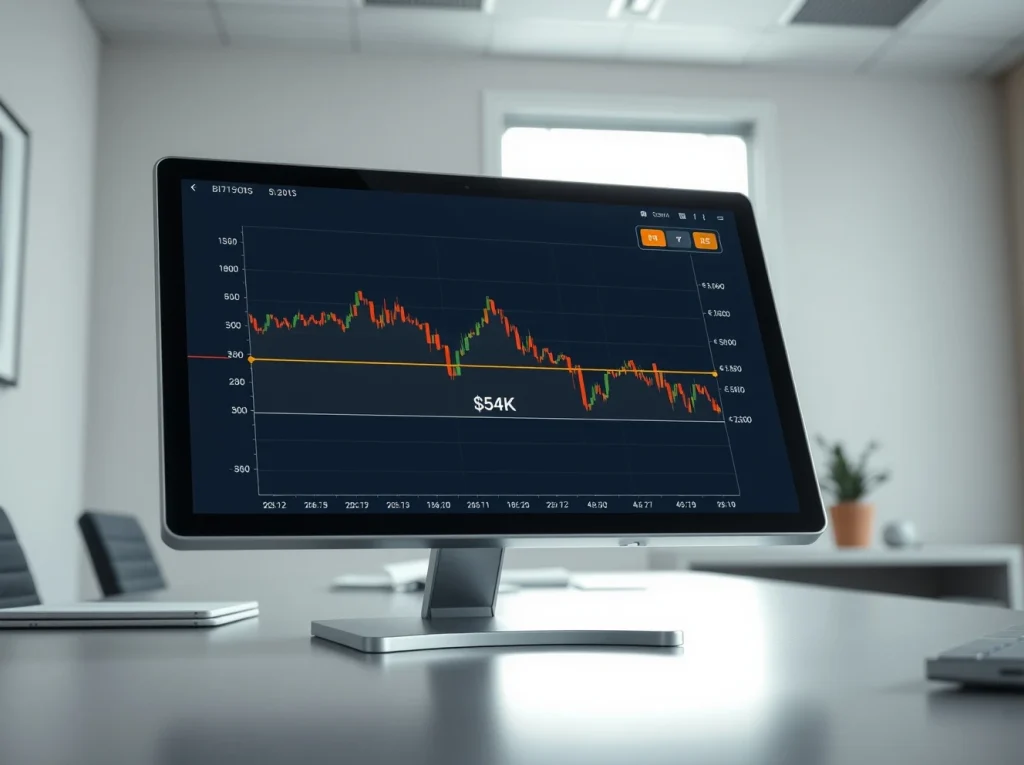
Bitcoin’s price hovering near $54,000 is more than just another market level. According to on-chain analytics, it represents a historically significant threshold that has often preceded major rallies. Data from CryptoQuant indicates that when Bitcoin trades near its ‘realized price’—currently around $54,000—it has frequently marked a prime zone for long-term accumulation. This pattern, observed across previous market cycles, suggests current prices may offer a strategic entry point for patient investors. The signal is flashing now, in early 2026, as Bitcoin consolidates following its latest halving event.
Understanding the $54,000 Realized Price Signal
The ‘realized price’ is a core on-chain metric. Unlike the spot price, which is simply the last traded value, the realized price calculates the average price at which all coins in circulation were last moved on the blockchain. Think of it as the aggregate cost basis for the entire Bitcoin network. When the market price falls near or below this level, it suggests a large portion of holders are at or near a loss on their positions.
Also read: BNB Chain Reveals New Layer 1 Blockchain for Agentic Trading, Mainnet Set for 2027
Analyst ‘Crypto Me’ at CryptoQuant highlighted this dynamic in a recent report. The platform’s data shows Bitcoin’s realized price sitting near $54,000. Historically, periods where the spot price tests this metric have been strong accumulation zones. This happens because weak hands often sell near breakeven, transferring coins to stronger, long-term holders at a relative discount. The implication is that downward pressure may be nearing exhaustion.
What Historical Data Reveals
This isn’t the first time this signal has appeared. A review of past cycles shows a consistent pattern.
Also read: Naver Financial and Dunamu Push Share Swap Deadline to December Amid Regulatory Hurdles
- 2018-2019 Bear Market: Bitcoin’s spot price spent months below its realized price after the 2017 peak. Accumulation in that zone preceded the multi-year run-up to the 2021 all-time high.
- 2022 Crypto Winter: The market crash saw Bitcoin plunge well below its realized price for an extended period. Those who bought during that deep value zone have seen significant returns as of early 2026.
- Post-Halving Periods: After previous halvings in 2016 and 2020, Bitcoin often experienced volatile periods where it revisited its realized price before beginning parabolic advances.
This historical context is vital. It transforms a simple price point into a behavioral indicator rooted in investor psychology and network economics.
On-Chain Metrics Beyond the Price
The realized price story is supported by other blockchain indicators. For instance, exchange outflow data can show when large quantities of Bitcoin are moving from trading platforms to private wallets—a sign of accumulation. Similarly, the percentage of supply held by long-term holders tends to increase when prices linger near the realized cost basis.
According to data from Glassnode, another on-chain analytics firm, the Long-Term Holder Supply metric has remained resilient even during recent market volatility. This suggests conviction among seasoned investors. Furthermore, the MVRV (Market Value to Realized Value) Z-Score, which compares market cap to realized cap, has dipped into zones historically associated with market bottoms.
These data points collectively paint a picture. They indicate that while short-term sentiment may be fearful, the underlying network health and holder behavior are displaying characteristics typical of past cycle transitions.
Market Context and Macroeconomic Factors
This on-chain signal emerges within a specific macroeconomic environment. As of April 2026, global interest rate trajectories, inflation data, and institutional adoption of Bitcoin ETFs continue to influence price action. The approval of spot Bitcoin ETFs in the United States in early 2024 created a new class of demand that interacts with these on-chain dynamics.
Industry watchers note that ETF flows have become a significant short-term price driver. However, the realized price metric reflects the behavior of the native Bitcoin network itself—the foundational layer of holders who custody their own coins. This creates a tension between new, exchange-traded demand and the cost basis of the legacy holder base. When the price aligns with this legacy cost basis, it often creates a equilibrium point.
What this means for investors is a potential convergence of a positive on-chain signal with evolving institutional infrastructure. The risk, of course, is that macroeconomic shocks could override historical patterns. Past performance is never a guarantee.
How Investors Are Responding
The reaction to this signal appears mixed, which is typical for such inflection points. On-chain data shows some accumulation, but not the frenzied buying seen at cycle tops. This measured response aligns with the ‘smart money’ narrative often associated with these zones.
Conversely, derivatives markets show caution. Funding rates in perpetual swap markets have been neutral to slightly negative, indicating a lack of aggressive employ from speculative traders. This could signal a healthy reset. Open interest has also consolidated, suggesting a reduction in overheated positional bets.
This suggests a market in a state of reassessment. The bullish case hinges on history repeating its pattern of the realized price acting as support. The bearish case points to the potential for new macroeconomic pressures to break historical precedents.
Conclusion
The $54,000 level for Bitcoin is significant. Analysis of the realized price metric and historical cycles indicates it has often been a high-probability accumulation zone. Data from CryptoQuant and other on-chain sources shows the market is testing this level in early 2026. While no indicator is foolproof, the combination of this signal with resilient long-term holder behavior provides a data-driven framework for investors. Market context, including ETF flows and macro conditions, will determine if history rhymes once again. For those with a long-term view, understanding this Bitcoin price signal is a key part of working through volatile markets.
FAQs
Q1: What exactly is Bitcoin’s ‘realized price’?
The realized price is an on-chain metric. It calculates the average price at which every Bitcoin in circulation was last transacted on the blockchain. It represents the overall cost basis of the network, unlike the spot price which is simply the current market quote.
Q2: Why is the $54,000 level considered important?
According to CryptoQuant’s data in early 2026, Bitcoin’s network-wide realized price is approximately $54,000. Historically, when the market price trades near or below this average cost basis, it has often signaled a value zone for long-term investors.
Q3: Has this signal worked in the past?
On-chain analysis shows similar patterns in prior cycles, notably after the 2018 and 2022 bear markets. In those instances, extended periods where price was at or below realized price preceded major bull market advances. However, historical patterns do not guarantee future results.
Q4: How does this differ from technical analysis?
This is a fundamental on-chain analysis. It uses blockchain data to assess the economic behavior and cost basis of all network participants. Technical analysis, in contrast, primarily studies price charts and trading volume patterns.
Q5: What are the main risks of relying on this signal?
The primary risk is that external macroeconomic factors—such as sharp interest rate hikes, regulatory changes, or a global recession—could disrupt historical correlations. On-chain metrics reflect network health but cannot fully predict external shocks.